
Most ATV owners know that proper battery care is vital for optimal performance, especially during long periods of storage. If you want your ATV battery to remain in top condition and extend its life, implementing effective maintenance practices is key. In this guide, you’ll discover vital tips to prepare your battery for storage, ensuring that it’s ready to go when you are. From checking the charge to ensuring it’s stored correctly, these strategies will help you avoid surprises when riding season returns.
Types of ATV Batteries
Before storing your ATV, it’s vital to understand the different types of batteries, as this knowledge can help you ensure proper maintenance during the off-season. Here’s a breakdown of the common battery types for ATVs:
| Type | Description |
| Flooded Lead-Acid | Traditional, cost-effective, require regular maintenance. |
| AGM | Absorbent Glass Mat, maintenance-free, better performance. |
| Gel Batteries | Sealed, spill-proof, excellent for deep cycling. |
| Lithium-Ion | Lightweight, high energy density, longer lifespan. |
| Nickel Metal Hydride | More environmentally friendly, moderate performance. |
Perceiving these distinctions will aid you in selecting the best battery for your ATV and optimizing its maintenance during long storage.
Flooded Lead-Acid Batteries
Some ATV owners opt for flooded lead-acid batteries due to their affordability and availability. However, these batteries require regular upkeep, including checking the electrolyte levels and adding distilled water as needed. You’re tasked with maintaining proper fluid levels to prevent damage, which can extend the lifespan of your battery. Without frequent monitoring, their performance may decline, leading to unnecessary inconvenience when you’re ready to ride again.
AGM and Gel Batteries
Flooded lead-acid batteries may be familiar, but AGM and gel batteries offer distinct advantages. Both types are sealed and maintenance-free, making them convenient options for ATV owners. With AGM batteries, absorbent glass mats help retain the electrolyte, while gel batteries use a thick gel-like substance to prevent spills.
Another significant benefit of AGM and gel batteries is their resistance to vibration and extreme temperatures, making them ideal for rugged outdoor conditions. They also provide faster recharge times and are less prone to sulfation, which can degrade battery performance. Investing in these battery types can enhance your ATV’s reliability and ensure you enjoy hassle-free adventures on the trails.
Important Factors for Battery Maintenance
Some imperative considerations for ATV battery maintenance include:
- Regularly check and clean battery terminals.
- Ensure the battery is charged before storage.
- Use a compatible trickle charger for optimal performance.
- Inspect for any signs of corrosion or leakage.
Recognizing these factors will help prolong your battery’s lifespan. For detailed guidelines, check out How to Prepare an ATV for Long Term Storage.
Environmental Considerations
Environmental factors can significantly impact your battery’s performance during long-term storage. Ensure your ATV is kept in a dry, temperature-controlled area to mitigate risks such as extreme heat or cold. Exposure to moisture can lead to corrosion, while very high temperatures might cause battery fluids to evaporate. Taking these precautions can aid in preserving your battery’s condition.
Battery Age and Condition
An old or poorly maintained battery may struggle to hold a charge, impacting your ATV’s functionality. Evaluating your battery’s age is vital, as most batteries last between three to five years. If your battery shows signs of wear, such as swelling or diminished performance, consider replacing it before storage.
Factors influencing a battery’s age and condition include usage patterns, charging habits, and environmental exposure. Regular maintenance and monitoring can help you identify when it’s time for a replacement. Additionally, older batteries are more susceptible to failure, so always evaluate battery life before planning any long storage periods. This proactive approach can help you avoid inconvenient surprises when you’re eager to hit the trails.
Step-by-Step Maintenance Tips
Many ATV owners overlook battery maintenance, but following these steps can prolong battery life:
| Inspect battery connections | Ensure terminals are clean and tight |
| Check electrolyte levels | If low, refill with distilled water |
| Battery trickle charging | Use a smart charger if storing for long periods |
Thou can keep your ATV battery in optimal condition by adhering to this maintenance strategy.
Cleaning the Battery
If your ATV battery has corrosion or dirt buildup, it can affect performance. Use a mixture of baking soda and water to gently scrub the terminals and connections. Ensure all residue is rinsed away and dry thoroughly before reattaching.
Proper Charging Techniques
Even if you don’t plan to use your ATV for a prolonged time, keeping your battery charged is important. Regularly charge your battery according to the manufacturer’s instructions to avoid sulfation, which can reduce battery lifespan.
Another imperative aspect of proper charging techniques involves using the right charger for your battery type. If your battery is lead-acid, opt for a charger that delivers slow, steady power. For lithium batteries, use a charger designed specifically for them to prevent potential damage from overcharging.
Long-Term Storage Preparation
Not preparing your ATV battery properly for long-term storage can lead to performance issues. Before storing, make sure to check out this guide to Keep the Fun Going with Proper Battery Maintenance. This includes cleaning the battery terminals, ensuring it’s fully charged, and topping off any fluids to prevent damage during the dormant months.
Disconnecting and Safeguarding
Clearly, disconnecting your ATV battery is a key step in safeguarding its integrity. Start by removing the negative terminal first followed by the positive. This prevents accidental short circuits. Store the battery in a safe, dry place, away from direct sunlight and extreme temperatures, to maximize its lifespan.
Optimal Storage Conditions
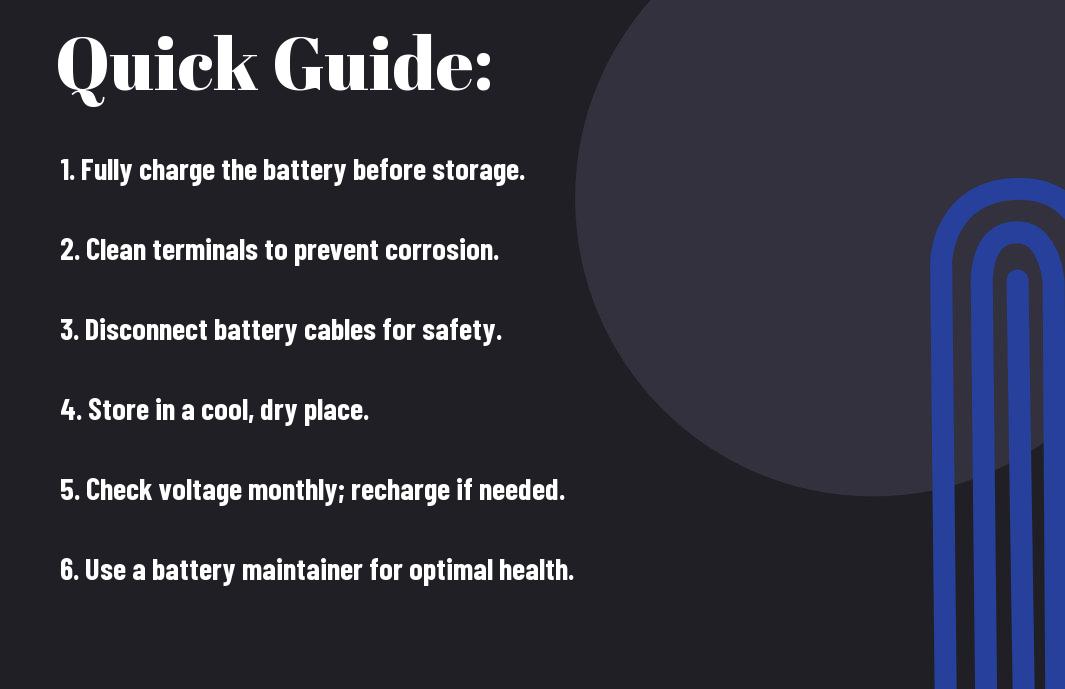
Clearly, storing your ATV battery in optimal conditions is necessary for its longevity. Keep it in a cool, dry area, ideally between 32°F and 80°F (0°C and 27°C) to prevent freezing or overheating. High temperatures can cause electrolyte evaporation, while extreme cold can lead to irreversible damage. Consider using a battery maintainer to keep the charge levels stable during storage.
Long-term storage may seem straightforward, but attention to detail can significantly impact your ATV battery’s health. Ideally, you should place your battery on a wooden shelf or in a padded box to avoid contact with moisture or metal surfaces. Regularly check on the battery’s voltage level and top it off if needed; this proactive approach ensures optimal performance when you’re ready to ride again.
Pros and Cons of Different Battery Types
Unlike conventional lead-acid batteries, lithium and gel batteries each offer unique advantages and drawbacks that may impact your ATV’s performance during storage. Understanding these aspects can help you make informed choices for battery maintenance.
| Battery Type | Pros and Cons |
|---|---|
| Lead-Acid | Inexpensive, widely available; heavy and shorter lifespan. |
| Lithium-Ion | Lightweight, long-lasting; higher initial cost. |
| Gel | Leak-proof, good cycle life; sensitive to overcharging. |
| AGM | No maintenance, stable; can be more expensive. |
| Nickel-Cadmium | Durable, can withstand deep discharges; less common and heavier. |
Advantages
An understanding of the advantages of various battery types can help enhance your ATV experience. Lithium batteries offer a longer lifespan and lightweight properties, while gel and AGM batteries are maintenance-free and provide stable performance throughout their lifecycle.
Disadvantages
Clearly, each battery type has its downsides that you should consider before making a choice. For instance, while lithium batteries offer longevity, they come with a higher price tag, and lead-acid batteries, though economical, tend to be heavier and less durable.
Battery types like lead-acid can be prone to sulfation if not periodically charged, making them less ideal for extended storage. Gel batteries, while convenient, may require specific chargers to avoid overcharging, impacting their overall usability. By weighing these disadvantages against the benefits, you can select the best battery technology for your ATV’s long-term performance and overall maintenance efficiency.
Common Mistakes to Avoid
Despite your best intentions, it’s easy to make mistakes that can compromise your ATV battery during long storage. Being aware of common pitfalls can help you maintain the longevity and efficiency of your battery. Pay close attention to the following errors to ensure that your ATV is ready for action whenever you need it.
Overcharging
Avoid overcharging your ATV battery, as this can lead to overheating, electrolyte loss, and ultimately, a shorter battery life. Utilizing a smart charger can help you monitor the charging process and prevent excessive charging, ensuring your battery remains in great condition.
Ignoring Maintenance
Ignoring maintenance tasks can lead to a decline in your battery’s performance over time. Regular checks on your battery’s terminals, fluid levels, and connections will help you detect potential problems early and avoid unnecessary replacements.
Overcharging can negatively affect your battery’s lifespan and performance. When left unattended, a battery may draw more current than necessary, which can cause damage to its internal components. Make it a habit to regularly check your battery’s charge and utilize a charger that automatically shuts off once the battery is fully charged, providing peace of mind during your storage period.
Final Words
Hence, by following these ATV battery maintenance tips for long storage, you can ensure your battery remains in optimal condition for your next adventure. Regularly check the voltage, keep the terminals clean, and consider using a trickle charger to prevent sulfation. Store the battery in a cool, dry place and ensure it’s fully charged before storage. By taking these steps, you not only prolong your battery’s lifespan but also enhance your ATV’s performance when you’re ready to hit the trails again.
FAQ
Q: How should I prepare my ATV battery for long-term storage?
A: To prepare your ATV battery for storage, start by fully charging it with a compatible charger. Ensure the terminals are clean and free of corrosion. It’s best to remove the battery from the ATV to avoid drain from any connected electronics. Store the battery in a cool, dry location, away from direct sunlight and extreme temperatures. If possible, use a battery maintainer or trickle charger to keep it at an optimal charge level.
Q: What type of battery maintenance is necessary before storing?
A: Before storing, perform a thorough inspection of the battery. Check for any signs of damage, leaks, or cracks. Clean the terminals using a mixture of baking soda and water to remove corrosion, then dry them completely. Applying some petroleum jelly or grease can help protect the terminals during storage. This maintenance helps ensure the battery remains in good condition throughout its storage period.
Q: Is it important to fully charge the ATV battery before storing?
A: Yes, fully charging the battery before storage is important. A fully charged battery is less likely to freeze in colder temperatures and will have a longer lifespan. When a battery is left partially charged, it can lead to sulfation, which reduces its capacity and performance over time. Always ensure your battery is charged to its maximum before storing it away.
Q: Can I store my ATV battery outdoors?
A: Storing your ATV battery outdoors is not advisable. Changes in temperature and moisture can negatively affect the battery’s performance and lifespan. Instead, choose a cool, dry indoor environment for storage. If you must store it in a garage or shed, ensure it’s protected from potential hazards like pooling water or extreme temperatures.
Q: How often should I check the battery during storage?
A: It is a good practice to check the battery every 1-2 months during prolonged storage. Look for any signs of swelling, leakage, or corrosion at the terminals. Additionally, check the charge level; if the battery falls below 12.4 volts, recharge it to maintain its health. Regular maintenance checks can prevent issues and ensure readiness for when you want to use your ATV again.
Q: What if I notice my battery is leaking during storage?
A: If you notice any leakage, it is crucial to handle the situation with care. First, ensure that you wear protective gloves and eyewear. Dispose of the leaking battery properly, as it can be hazardous. Do not attempt to repair or use a leaking battery. You can replace it with a new one, ensuring it is suitable for your ATV model. Dispose of the old battery at a recycling center that handles hazardous materials.
Q: What type of charger should I use for my ATV battery during storage?
A: Use a smart charger or battery maintainer designed specifically for the type of battery in your ATV, whether it’s lead-acid or lithium-ion. Smart chargers can automatically adjust the charge level and prevent overcharging. Following the manufacturer’s guidelines for both the charger and the battery type is important for optimal results while maintaining the battery during storage.
Leave a Reply