
Did you know the U.S. has over 2.7 million all-terrain vehicles (ATVs)? These rugged machines are loved by many for outdoor fun and work. If you’re thinking about getting an ATV, choosing the right one is key. Our guide will offer helpful tips to find your ideal ATV.
Key Takeaways:
- Research and compare different ATV brands and models to find the best fit for your needs.
- Consider your budget, location, riding terrain, and skill level when making an ATV purchase.
- Understand the different types of ATVs available, such as utility, sport, youth, entry-level, and high-performance.
- Explore pricing and financing options to ensure your ATV purchase aligns with your financial goals.
- Take into account accessories, upgrades, safety measures, and maintenance requirements for a complete ATV ownership experience.
The Benefits of Owning an ATV
ATVs, also known as four-wheelers, are great for fun and work. You can use them for trail riding or for jobs like farming. They are good for many things.
These vehicles can go over different kinds of ground. They can handle mud and water thanks to their tires and suspension. They can tow and carry loads, making them very helpful.
Want adventure or a work vehicle? An ATV can be both. They let you explore places cars can’t go. You can see new trails, mountains, and forests.
ATVs are also great for jobs. Farmers use them to move stuff and take care of animals. Hunters reach far places and carry their gear. This makes hunting easier.
ATVs help with more than just fun and work. They are good for clearing snow and keeping places looking nice. An ATV can do many tasks.
ATVs are tough and keep going strong on rough paths. If you take good care of them, they will last a long time. They give good value for years.
Riding an ATV is very exciting. They have strong engines and move quickly. They make you want to ride more, whether slowly or fast.
Having an ATV offers many good things. It brings fun outdoors and helps with work. An ATV is a good choice for many reasons. It opens up new chances for adventures and tasks.
Understanding Different Types of ATVs
ATVs come in various types, suited for different needs. Knowing the types helps you choose better.
1. Utility ATV
Utility ATVs are great for heavy jobs. They have storage racks and hitches. Perfect for hauling, farm work, and rough terrain.
2. Sport ATV
Sport ATVs are made for speed and fun. They’re light, fast, and powerful. Great for racing and trail riding.
3. Youth ATV
Youth ATVs are smaller and safe for kids. They help young riders learn safely. A good start for ATV driving.
4. Entry-Level ATV
Entry-level ATVs are best for beginners. They’re comfortable and easy to drive. They have softer suspensions for a smooth ride.
5. High-Performance ATV
High-performance ATVs are for the tough tasks. They have strong engines and can go off-road. Chosen by experienced riders.
Knowing about ATVs helps pick the right one for you. Whether it’s for work, racing, or learning, there’s an ATV that fits.

Considerations When Buying an ATV
Before you buy an ATV, think about some key things. This will help you make the best choice. Important things to consider are:
- Budget for Buying an ATV:
- Location for Riding and Storing an ATV:
- Riding Terrain and Frequency:
- Skill Level:
First, decide how much money you can spend on an ATV. Think about the buy cost and extra costs too. This includes money for upkeep, insurance, and fun extras. This helps you find an ATV that you can afford.
Think about where you live and where you’ll ride your ATV. Are there places to ride close by? Do you have a spot to keep your ATV safe when you’re not using it? These things will help you pick the right ATV and make riding easy.
Think about where you’ll ride your ATV the most. Will it be on smooth paths, hilly areas, or tough off-road spots? Pick an ATV that is right for these places. Also, think about how often you will ride your ATV. This ensures it fits how much you’ll use it.
Think about how good you are at riding an ATV. If you’re new, pick an ATV that’s good for beginners. Look for one with easy-to-use parts and controls. This will help you feel more sure as you get better at riding.
Thinking about these things will help you choose the best ATV. This way, it will match your money, where you live, where you’ll ride, how often, and your skills.
Researching ATV Brands and Models
Looking into ATV brands and models is key before you buy one. You can pick the best ATV by comparing them. Here are some great ATV brands and models to think about:
Top ATV Brands
- Polaris
- Can-Am
- Honda
- Yamaha
- Kawasaki
- Suzuki
These brands are top players in the ATV world. They have a big range of models, so there’s something for every rider.
Popular ATV Models
“The Polaris Sportsman 450, Can-Am Outlander, Honda FourTrax Foreman Rubicon, Yamaha Grizzly, Kawasaki Brute Force, and Suzuki KingQuad are among the most popular ATV models available.”
These models are loved for their performance, lasting quality, and features. Make sure to look into what each model offers to see which one fits your needs.
Consider these things when looking at ATVs:
- Engine power: Check the horsepower and torque ratings to ensure the ATV has enough power for your intended use.
- Suspension: Look for adjustable suspension that can handle different terrains and provide a comfortable ride.
- Towing capacity: If you plan on using your ATV for hauling or towing, consider the towing capacity of different models.
- Durability: Read reviews and consider the reputation of the brand to ensure that the ATV is built to last.
By doing your homework and weighing your options, you can find the right ATV. It’ll fit what you’re looking for and how you want to use it.
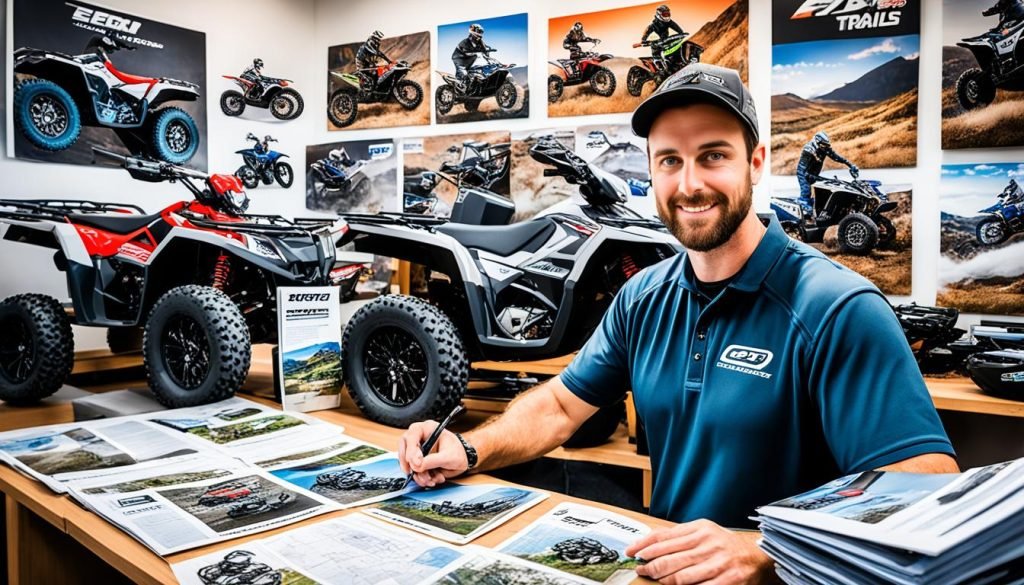
| Brand | Popular Models |
|---|---|
| Polaris |
|
| Can-Am |
|
| Honda |
|
| Yamaha |
|
| Kawasaki |
|
| Suzuki |
|
Pricing and Financing Options for ATVs
Buying an ATV involves looking at prices and how you can pay for it. Prices for ATVs change based on their brand, model, and what they offer. Most new ATVs cost between $6,000 and $16,000. Some are even under $10,000. Decide how much you want to spend first.
But, buying an ATV means more than just its price tag. You’ll also pay for things like licenses, insurance, and upkeep. Don’t forget to add these costs to your budget. This helps you see if you can really afford an ATV.
Worried about paying all at once? Financing lets you pay a little every month. This way, it’s easier to handle the cost. Many places that sell ATVs have payment plans. This spreads the cost over time.
Consideration for Monthly Payments
Think about how much you can pay each month if you finance your ATV. Find a monthly payment that fits your budget. Also, compare interest rates from different lenders to get the best deal.
Picking the right payment plan matters too. Some plans have low monthly costs but last longer. This could mean paying more interest. Look at your money situation and pick what works best.
There are ATVs that won’t break the bank. Whether you want something basic or more advanced, there’s an ATV for you. There are choices for every budget.
“Financing options allow you to make monthly payments, making it more feasible to own an ATV within your budget.” – ATV Enthusiast Magazine
Average Pricing for Different ATV Brands and Models
| Brand | Average Price Range |
|---|---|
| Polaris | $6,000 – $15,000 |
| Can-Am | $7,000 – $16,000 |
| Honda | $6,500 – $14,000 |
| Yamaha | $7,500 – $15,000 |
| Kawasaki | $6,500 – $13,000 |
| Suzuki | $6,000 – $12,000 |
The table shows different brands have different prices. Research and compare prices to find the best deal. Remember, the model and extra features affect the cost too.
To sum up, know how much ATVs and their costs. Set a budget, think about all costs, and look at payment options. With good options and ways to pay, getting an ATV is in reach.
Choosing ATV Accessories and Upgrades
There are many ATV accessories and upgrades you can get. These include items for storage, bumpers, winch kits, plows, lights, and speakers. They help you make your ATV suit your needs and likes.
When picking ATV tires and wheels, think about where you’ll ride. Different designs help with traction and how well it performs. Whether on trails, mud, sand, or rocks, the right tires and wheels help a lot.
Don’t forget about ATV storage options. Good storage keeps your ATV safe and in great shape. You can pick from boxes, racks, or covers. This ensures your ATV is ready for whatever comes next.
Choosing the right ATV upgrades and accessories can make riding more fun. They boost your ATV’s function and look, letting you personalize it. You can find both practical items and things just for looks. The choices are many.
ATV Accessories and Upgrades
| Accessory/Upgrade | Description |
|---|---|
| Storage Box | Provides secure storage for gear and equipment during rides |
| Bumpers | Offer added protection for your ATV’s front and rear |
| Winch Kit | Allows you to easily pull or extract your ATV from various situations |
| Plows | Enables you to clear snow or move debris with your ATV |
| Lights | Improves visibility during night rides or low-light conditions |
| Speakers | Provides entertainment for longer rides or outdoor adventures |
Getting the right ATV accessories and upgrades lets you tailor your ATV. Whether for better function, looks, or both, lots of options exist. Take time to research. Find what makes your ATV perfect for you.
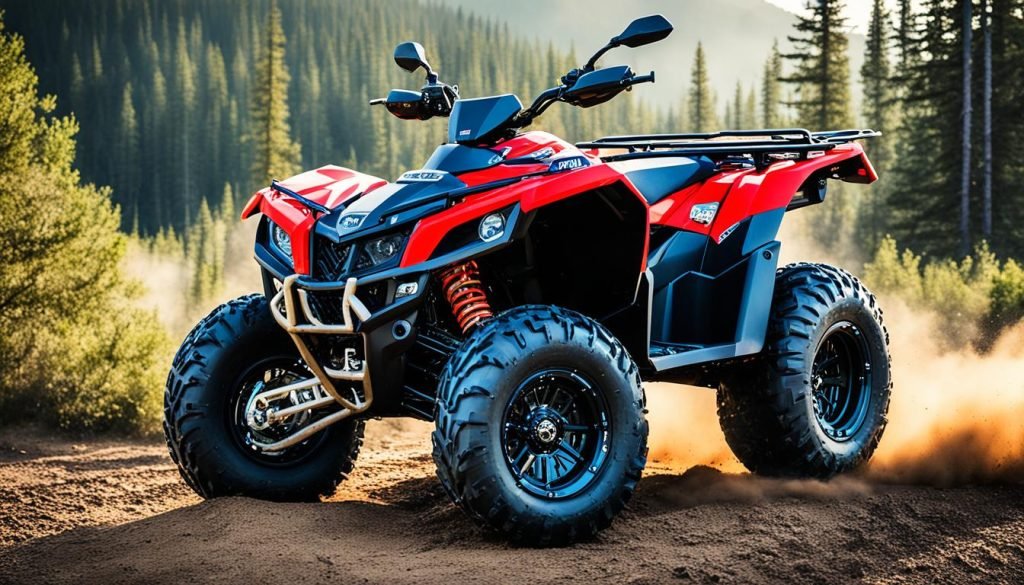
The Advantages of Buying a New ATV vs. Used ATV
When buying an ATV, you can pick new or used. Each has its pros and cons. Let’s explore them:
Buying New ATVs
Buying a new ATV has benefits. You get a warranty which means no worries about breakdowns. This warranty keeps you stress-free while enjoying your ride.
Buying new also means getting the latest tech and safety features. You can enjoy top-notch performance. You stay current with the newest ATV models.
But, new ATVs cost more. Think about your budget before deciding. The price changes based on brand and features.
Buying Used ATVs
Used ATVs are less expensive. This is great if you’re watching your spending. You might get a fancier model or extras without spending more.
But buying used has challenges. You might not know the ATV’s past or if it has issues. Unlike new ones, used ATVs don’t come with a warranty for peace of mind. Always inspect it well or have a mechanic check it.
The choice between new or used depends on what you value most. If you want the latest features and a warranty, go new. If saving money is key, consider used.
To sum up:
| New ATVs | Used ATVs |
|---|---|
| Warranty protection | Cost savings |
| Access to the latest models and features | Potentially higher-end models within budget |
| Higher initial cost | Risk of unknown history/condition |
Think about what matters to you. Research well and weigh the pros and cons. This will help you choose the right ATV for you.

Tips for Making an Informed ATV Purchase
When buying an ATV, making an informed decision is key. Here are some tips to help you pick the right ATV for your needs:
1. Do Your Research
Researching ATVs is vital to find the best match. Take time to compare different options. Read reviews and ratings from reliable sources. You will learn about the ATV’s performance, durability, and overall worth.
2. Consider Factors When Buying an ATV
Several factors matter when buying an ATV. Consider your budget, where you’ll ride, and your riding skills. These factors help choose the right ATV and features for you.
3. Test Drive Before You Buy
Testing an ATV before buying is important. It lets you feel its performance and how it handles. Find a dealer offering test drives or go to ATV demo events. This hands-on experience ensures the ATV meets your needs.
4. Consider Dealer Reputation and Customer Service
It’s crucial to consider the dealer’s reputation and customer service. A good dealer will offer help and answer questions during the buying process. Choose dealers with positive reviews and proven customer service.
5. Review Warranty Coverage
Before buying your ATV, check the warranty coverage. A good warranty gives you peace of mind and protects your investment. Knowing the warranty details helps make a better choice.
6. Testimonials from Customers or Friends
Ask friends or other riders about their ATVs for recommendations. Testimonials from those you trust offer valuable insights. Their experiences can highlight various ATV models, brands, and dealers.
“Testimonials serve as social proof, offering firsthand accounts that can help validate your decision and provide peace of mind.” – ATV enthusiast
Follow these tips for an informed ATV purchase. Research, test drive, and consider all important factors to find your ideal ATV. Happy riding!
| ATV Buying Tips | Factors to Consider When Buying an ATV | Researching ATV Reviews | Test Driving an ATV |
|---|---|---|---|
| Do your research Consider dealer reputation and customer service |
Think about your budget Consider the terrain you’ll be riding on Assess your skill level |
Read reviews and ratings from reliable sources Take testimonials and recommendations into account |
Test drive the ATV before purchasing Experience its performance and handling firsthand |

ATV Safety and Responsible Riding
Keeping safe is key when owning and riding an ATV. It doesn’t matter if you’re new or have experience. It’s crucial to follow ATV safety tips for a fun time. Here are some important tips:
- Always wear the right safety stuff like a helmet, goggles, gloves, and boots. This gear can keep you from getting hurt.
- If you’re new, take an ATV class. These classes teach you lots of important stuff to ride safe and sure.
- Keep an eye out and ride right. Be awake to other riders, people walking, and animals. Follow the trail rules and stay on the right paths.
- Know what you can do. Make sure you don’t try things that are too hard before you’re ready. Stay away from too tough trails until you can handle them.
Riding ATVs the right way is good for you, nature, and keeping things cool with other riders and people who own the land. Stick to these tips to have fun without trouble.
ATV Training Courses
Taking an ATV class is a great idea to learn to ride safely. You’ll learn how to ride right, take care of your ATV, and follow safety rules. Everyone from newbies to those who know how to ride can learn.
“For new riders, ATV classes are a must. They give you hands-on learning and advice from experts for a safe ride.” – ATV Riding Expert
ATV classes are usually given by certified trainers or groups. They cover things like how to sit properly, control speed, stop right, get past obstacles, and how to behave on trails. Learning more will make you better at handling different riding spots.
To pick a class, look for ones with a good name. Make sure they have the right papers and check what others have said who took the class. Learning more will make the ATV world safer for everyone.
ATV Riding Gear
The right gear keeps you safe on an ATV. Here’s what you must wear every ride:
- Helmets: This is the most needed gear. It keeps your head safe if you crash or bump into something.
- Goggles: They keep your eyes clear from dirt, bits of stuff, and sticks. They also block bad sun rays.
- Gloves: Gloves help you hold on tightly and keep your hands from getting hurt or scratched.
- Boots: Good boots help stop your feet from sliding off. They also guard them against rocks and sticks.
Spending money on good ATV gear is like investing in your safety. Pick items made just for ATV rides, making sure they fit right and are safe.
The picture above shows different ATV gear like helmets, goggles, gloves, and boots. Wearing these can greatly lower the chance of getting hurt while riding.
Being responsible on an ATV means putting safety first. Gear up right, learn through classes, and ride in a way that matches your skills. This way, ATV rides can be exciting and safe for you and others.
Maintenance and Care for Your ATV
Keeping your ATV in top shape is very important. Follow ATV maintenance tips and service it often. This keeps your vehicle great for a long time.
Regular Servicing
Servicing your ATV often is key. Follow what the maker says for oil changes and brake checks. These steps keep your engine at its best. They also make your ATV safe.
Also, check the battery, spark plugs, and drive belt often. Fixing problems early stops bigger issues later.
Proper Storage and Winterization
Storing your ATV right is important, especially in cold places. Here are some tips:
- Clean your ATV: Clean it well to take off dirt and mud.
- Change the oil and filter: New oil and a filter protect the engine.
- Remove the battery: Take out the battery and keep it in a dry, warm place.
- Protect exposed metal parts: Use spray on metal parts to stop rust.
- Invest in a quality ATV cover: A cover keeps your ATV safe from dust and water.
These steps make sure your ATV is ready for spring.
Recommended ATV Maintenance Schedule
| Maintenance Task | Frequency |
|---|---|
| Oil changes | Every 25-50 hours of operation or as recommended by the manufacturer |
| Filter replacements | Every 25-50 hours of operation or as recommended by the manufacturer |
| Brakes checks and adjustments | Every 25-50 hours of operation or as recommended by the manufacturer |
| Battery maintenance | Every 6 months or as needed |
| Tire pressure check | Before each ride |
| Spark plug replacements | Every 100 hours of operation or as recommended by the manufacturer |
| Drive belt inspection | Every 100 hours of operation or as recommended by the manufacturer |
Following this schedule helps avoid breakdowns. It keeps your ATV running well.
Time and effort in maintenance pays off. It makes your ATV last longer and perform better. Always do regular servicing to keep it safe and smooth.
Conclusion
Picking the right ATV takes careful thought and study. You need to know the different ATVs, think about your budget and how you’ll use it. Then, research the brands and models. Also, remember the safety and upkeep tips.
If you need an ATV for tough jobs or for fun off-road trips, the perfect one is out there. Begin your search for an ATV today. Enjoy the thrill and freedom of having your own ATV.
FAQ
How do I choose the right ATV?
Think about your money, where and how often you’ll ride, and your skill level. Look at different brands and test drive the ATV. This will help you choose wisely.
What are the benefits of owning an ATV?
ATVs are good for many things like fun, work, and hunting. They can go on rough land and carry things. You’ll enjoy exploring and doing tough jobs with them.
What are the different types of ATVs?
There are many ATVs like those for work, racing, kids, beginners, and tough terrain. Each kind is made for different uses.
What factors should I consider when buying an ATV?
Think about your money, where you’ll ride and keep the ATV, and how good you are at riding. These will help you pick the right ATV.
How should I research ATV brands and models?
Look into ATV brands like Polaris, Can-Am, and Honda. Compare their ATVs. Think about engine, how smooth it rides, and how much it can pull.
What is the price range for ATVs?
New ATVs cost between ,000 and ,000. Some cost less than ,000. Remember to also think about licenses, insurance, and keeping your ATV.
What accessories and upgrades are available for ATVs?
You can get many things for your ATV like storage, lights, and wheels. Pick the right tires for where you’ll ride. Choose accessories that meet your needs.
Should I buy a new or used ATV?
A new ATV comes with a warranty and the latest features. It can cost more. A used ATV is less money but might have problems. Think about what you prefer.
What tips should I follow when making an ATV purchase?
Research and read reviews. Try riding an ATV. Think about the dealer’s service and the warranty. This will help you make a good choice.
How can I ride an ATV safely and responsibly?
Follow safety rules and wear protective gear. Beginners should take a training course. Know where you are, follow trail rules, and ride right for your skill.
How should I maintain and care for my ATV?
Keep your ATV well-maintained and follow the service schedule. Do routine checks. Store it right in the cold. This will keep your ATV running well.
Leave a Reply