
Welcome to our beginner-friendly ATV riding guide! If you’ve always wanted to learn how to ride an ATV or are looking for some ATV riding techniques, you’ve come to the right place. Riding an ATV can be an exhilarating experience, but it’s important to have the proper knowledge and skills to ensure your safety on the trails. In this guide, we’ll cover essential ATV safety tips and beginner riding techniques that will help you confidently navigate any terrain.
Learning how to ride an ATV begins with understanding proper posture and positioning. By keeping your head and eyes up, relaxing your shoulders, and maintaining a firm grip on the handlebars, you’ll have better control over your ATV. Additionally, mastering turning techniques, weight shifting, and throttle control are key aspects of safe and enjoyable ATV riding.
To ensure your safety, it’s important to fully grasp ATV safety basics. This includes investing in ATV safety training, wearing appropriate riding gear, and riding only in designated off-highway areas. We’ll also discuss the importance of choosing the right ATV for beginners and understanding how to shift gears on manual ATVs.
Throughout this guide, we’ll provide you with valuable ATV riding tips and precautions to keep in mind while you’re out on the trails. We’ll cover the importance of wearing protective gear, maintaining proper ATV posture, and how to enhance your riding skills through deliberate practice.
Now, let’s dive into the exciting world of ATV riding and equip you with the knowledge and skills you need. Whether you’re a beginner or looking to brush up on your skills, this guide will help you become a confident and skilled ATV rider.
Key Takeaways:
- Proper posture and positioning are essential for ATV riding.
- Invest in ATV safety training and wear appropriate riding gear.
- Understand throttle control and shifting gears on manual ATVs.
- Practice deliberate and focused ATV riding to improve your skills.
- Always prioritize safety, follow ATV riding tips, and obey all rules and regulations.
Understanding ATV Safety Basics
Before hopping on an ATV and hitting the trails, it is crucial to prioritize safety. By familiarizing yourself with ATV safety practices, investing in the right gear, and obtaining proper training, you can ensure a safe and enjoyable riding experience.
Choosing the Right ATV and Reading the Owner’s Manual
When starting out, opt for a simple ATV suited for beginners. Familiarize yourself with the ATV’s features, functions, and operating instructions by carefully reading the owner’s manual. Understanding how your ATV works is essential for safe riding.
Investing in ATV Safety Training
ATV safety training courses are available and highly recommended for both beginner and seasoned riders. These training programs cover essential safety techniques, riding skills, and emergency procedures. By participating in ATV safety training, you can gain confidence and improve your abilities on the trails.
Wearing the Right Protective Gear
Proper protective gear is essential to minimize the risk of injuries while riding an ATV. Wear a helmet that meets the DOT (Department of Transportation) standards to protect your head in case of accidents or falls. Additionally, a protective jacket, boots that cover the ankles, gloves, and goggles are crucial for shielding your body and enhancing your overall safety.
Staying Off the Street: Ride in Designated Off-Highway Areas
The thrill of riding an ATV should be confined to designated off-highway areas and trails. Stay off the streets, roads, and sidewalks, as ATVs are not designed for on-road use. Abiding by this rule ensures your safety and helps protect others.
“Riding an ATV can be exhilarating, but always remember that safety should be your top priority. Equip yourself with the necessary knowledge, gear, and training to ensure a safe and enjoyable ride.” – ATV enthusiast
By following these ATV safety basics, you can minimize the risk of accidents and injuries, allowing you to fully enjoy the adrenaline and adventure that ATV riding offers.
Learning the Throttle on Your ATV
Becoming familiar with the throttle is essential for new ATV riders. The throttle controls the speed and power of your ATV, so it’s important to learn how to use it properly. Here are a few ATV throttle tips to help you get started:
- Start Slow: When you first start riding an ATV, take it slow and gradually increase your speed. Practice easing the throttle on to avoid sudden acceleration, which can be dangerous, especially for beginners.
- Use High-Test Gasoline: Using high-test gasoline can help improve the performance of your ATV’s throttle. It provides better fuel combustion, resulting in smoother acceleration and throttle response.
- Ride with an Experienced Friend: Riding with an experienced friend can be beneficial, especially if they can provide guidance and coaching on throttle control. They can help you understand the various throttle positions and assist you in mastering the right amount of throttle for different riding conditions.
By practicing these ATV throttle tips, you’ll gain confidence in controlling your ATV’s speed and power. Remember to always prioritize safety and practice in a controlled environment before venturing into more challenging terrains.
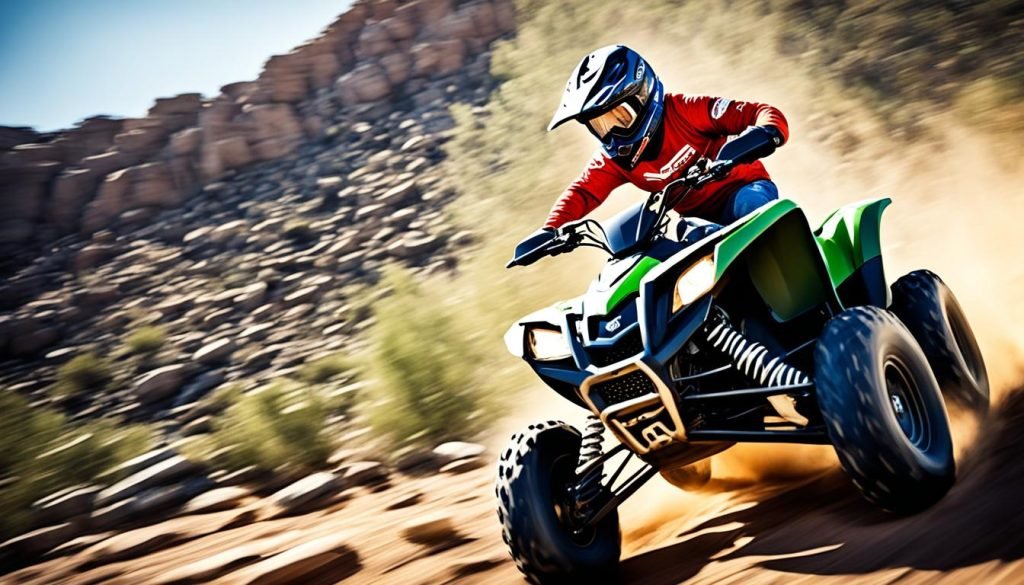
Expert Tip:
“Mastering throttle control is crucial in optimizing your ATV’s performance and ensuring a smooth ride. By gradually increasing your speed and practicing throttle modulation, you’ll be able to confidently navigate different terrains.”
The Importance of ATV Riding Gear
When it comes to ATV riding, safety should always be a top priority. One essential aspect of ensuring your safety is investing in the right ATV riding gear. This gear not only protects you from potential dangers but also enhances your riding experience.
ATV Riding Gear:
- ATV Helmet: A DOT-certified helmet is a must-have for ATV riders. It provides crucial head protection in case of accidents or falls, reducing the risk of serious head injuries.
- Protective Jacket: A sturdy, well-fitted protective jacket shields your upper body from impacts, abrasions, and debris. Look for jackets with appropriate padding and armor for enhanced protection.
- Boots with Ankle Coverage: Proper footwear is vital for ATV riding. Invest in boots that cover and support your ankles, providing stability and protection against ankle injuries.
- Gloves: A good pair of gloves offers grip, dexterity, and protection for your hands. They should be designed to withstand the rigors of ATV riding and protect your hands in case of falls or accidents.
- Goggles: Riding off-road can expose you to dust, debris, and flying objects. Goggles protect your eyes from these hazards, ensuring clear vision throughout your ride.
- Chest Protectors and Knee/Shin Guards: Depending on your riding style, additional protection like chest protectors and knee/shin guards can provide extra defense against impacts and injuries.
Investing in a high-quality ATV helmet is of utmost importance. It serves as your primary defense against head injuries, reducing the risk of concussions, skull fractures, and other severe trauma.
Remember, accidents can happen at any time, even to experienced riders. Wearing the right ATV riding gear not only safeguards your well-being but also sets a good example for others. So, gear up properly before every ATV ride and enjoy a safe and exhilarating adventure!
ATV Riding Gear Checklist:
| Essential Gear | Recommended Brands |
|---|---|
| Helmet | Arai, Bell, Shoei |
| Protective Jacket | Fly Racing, Fox Racing, Alpinestars |
| Boots | Thor, O’Neal, Alpinestars |
| Gloves | 100%, Fox Racing, Fly Racing |
| Goggles | Oakley, 100%, Scott |
| Chest Protectors | Troy Lee Designs, Leatt, Fox Racing |
| Knee/Shin Guards | Leatt, Alpinestars, Fox Racing |
Choosing the right ATV riding gear can be overwhelming with the abundance of options available. Research reputable brands, read reviews, and consult experienced riders or experts for recommendations. Remember, investing in quality gear not only ensures your safety but also provides long-term durability and comfort.
Understanding ATV Shifting
When it comes to riding an ATV, understanding how to shift gears is crucial for maneuvering through different terrains effectively. Depending on the type of ATV you’re riding, manual shifting may be required. By mastering ATV shifting, you’ll have greater control over your ride and be able to tackle challenging off-road trails with ease.
Before you hit the trails, it’s important to practice changing gears and familiarize yourself with the controls. This way, you’ll be well-prepared to handle the ATV’s transmission while riding on varied terrain.
Developing a good understanding of clutch and throttle coordination is key to prevent stalling and ensuring a smooth shift. Coordinating the use of the clutch lever and throttle will help you shift gears seamlessly, enabling you to navigate different obstacles and maximize the performance of your ATV.
Remember, shifting gears on an ATV requires precision and timing. Practice shifting in controlled environments to build your skills and confidence. As you become more comfortable with manual shifting, you’ll be ready to take on more challenging rides and experience the full capabilities of your ATV.
Proper shifting techniques and control are essential for ATV riders, especially when conquering difficult terrains. Mastering the art of ATV shifting will open up a world of possibilities, allowing you to explore and conquer varied off-road trails.
ATV Shifting Tips:
- Practice changing gears in a safe environment, gradually building up your shifting skills.
- Focus on coordinating the clutch and throttle to avoid stalling and achieve smooth gear transitions.
- Stay in the recommended RPM range for each gear to maintain optimal performance and avoid strain on the ATV’s engine.
- Keep your feet firmly on the footrests during shifting to maintain balance and control.
- Always follow the ATV manufacturer’s recommendations for shifting and operating your specific ATV model.
| Gear | Speed |
|---|---|
| 1st Gear | Low |
| 2nd Gear | Medium |
| 3rd Gear | High |
| 4th Gear | High |
| 5th Gear | High |
Mastering ATV Posture and Riding Positions
Maintaining proper posture and riding positions is crucial for maintaining balance and control while riding an ATV. By adopting the correct posture, you can enhance your riding experience and minimize the risk of accidents.
Here are some essential ATV riding positions and posture tips to keep in mind:
- Sit Up Straight: When riding an ATV, maintain an upright sitting position. Avoid slouching or leaning too far forward or backward. Sitting up straight allows for better control and stability.
- Feet Placement: Place your feet firmly on the ATV footrests. This provides a solid foundation and helps you maintain balance during turns and maneuvers.
- Grip the Handles: Hold the handlebars with a firm grip, keeping your hands positioned near the center. This allows for better control and maneuverability.
- Leaning into Turns: When taking turns, lean your body in the direction of the turn while keeping your weight centered. This helps with balance and prevents the ATV from tipping over.
Proper weight distribution is also critical for ATV riding. Depending on the terrain and situation, you may need to adjust your body positioning:
- Forward Weight Distribution: When climbing hills or riding uphill, shift your body weight slightly forward. This helps to maintain traction on the front wheels and prevents the ATV from flipping backward.
- Backward Weight Distribution: When descending hills or riding downhill, slide your body weight towards the rear of the ATV. This improves stability and prevents the ATV from nosediving.
Remember, practicing these ATV riding positions and posture techniques will help you ride with confidence and control. Now, take a look at the image below to reinforce what you’ve learned:

| ATV Posture and Riding Positions | Description |
|---|---|
| Sit Up Straight | Maintain an upright position while riding the ATV to improve control and stability. |
| Feet Placement | Keep your feet firmly on the footrests for better balance and control. |
| Grip the Handles | Hold the handlebars with a firm grip to maintain control of the ATV. |
| Leaning into Turns | Lean your body into turns to improve balance and prevent tipping. |
| Forward Weight Distribution | Shift your weight slightly forward when climbing hills to maintain traction. |
| Backward Weight Distribution | Slide your weight towards the rear when descending hills to improve stability. |
ATV Riding Practice for Skill Development
Becoming a skilled ATV rider takes time and practice. By dedicating yourself to regular practice sessions, you can improve your ATV riding skills and build confidence on the trails. In this section, we will explore some effective ATV riding practice techniques that can help you take your skills to the next level.
Set Goals for Your Practice Rides
When it comes to improving your ATV riding skills, setting goals for each practice ride is essential. Whether it’s mastering a new maneuver or perfecting your control on challenging terrains, having specific objectives will give your practice sessions direction and focus.
Begin by identifying areas where you want to improve. This could include cornering, hill climbs, descents, or navigating obstacles. Once you have insight into your weaknesses, create a plan to target those areas during your practice sessions.
Focus on Specific Skills
During your ATV riding practice, it’s important to focus on improving specific skills. Rather than aimlessly riding around, dedicate time to work on specific techniques or maneuvers that need improvement.
For example, if you struggle with cornering, focus on mastering the proper body positioning, weight distribution, and throttle control required for smooth and controlled turns. By breaking down complex skills into smaller components and practicing each one individually, you’ll develop a deeper understanding and muscle memory for those actions.
Deliberate Practice for Mastery
Deliberate practice is a technique used by experts in various fields to maximize skill development. When applied to ATV riding, deliberate practice means focusing on quality rather than quantity. Instead of mindlessly riding for long periods, concentrate on specific skills and execute them repeatedly with intention and precision.
During deliberate practice, it’s essential to remain fully present and engage your mind while riding. Pay attention to your body positioning, throttle control, and overall technique. This heightened awareness will help you identify areas for improvement and make necessary adjustments to refine your ATV riding skills.
Gradually Increase Difficulty
As you become more proficient in your ATV riding skills, it’s crucial to challenge yourself by gradually increasing the difficulty of your practice sessions. Start by practicing on easier terrains and gradually progress to more demanding trails as your skills improve.
By exposing yourself to varied terrains and conditions, you’ll develop the ability to adapt and handle different situations confidently. This will make you a more versatile ATV rider and enhance your overall riding skills.
ATV Riding Practice Table
| ATV Riding Skill | Practice Technique |
|---|---|
| Cornering | Focus on body positioning, weight distribution, and throttle control during turns. |
| Hill Climbs | Practice shifting your body weight forward and maintaining momentum while climbing steep inclines. |
| Descents | Master sliding your body forward towards the gas tank to maintain control and prevent flipping. |
| Navigating Obstacles | Practice maneuvering over rocks, tree roots, and other obstacles, focusing on maintaining balance and control. |

Remember, improving your ATV riding skills takes time and dedication. By setting goals, focusing on specific techniques, practicing deliberately, and gradually increasing the difficulty, you can become a skilled ATV rider. Practice regularly, stay safe, and have fun exploring the world on your ATV!
ATV Riding Tips and Precautions
To ensure a safe and enjoyable ATV riding experience, it is important to follow these ATV riding tips and precautions. By taking the necessary steps to prepare and ride responsibly, you can minimize risks and have a great time exploring off-road terrains.
1. Prepare Before You Ride
Before heading out on your ATV adventure, make sure to inspect your ATV thoroughly. Check for any mechanical issues or worn-out parts that may affect its performance. Additionally, ensure that your tires are properly inflated and the brakes are in good working condition.
Don’t forget to wear appropriate gear to protect yourself in case of accidents or falls. This includes a helmet, sturdy protective clothing, boots, gloves, and goggles. Wearing the right gear can significantly reduce the risk of injuries.
Lastly, pack essential items such as water, food, a first aid kit, and a toolkit. You never know when you might need them, so it’s better to be prepared.
2. Observe Safety Signs and Ride Responsibly
When riding an ATV, always obey all posted signs and follow local regulations. Stay on designated trails and avoid venturing off-trail paths or private properties. Stick to authorized areas to not only protect the environment but also ensure your own safety.
Ride responsibly by avoiding reckless behavior such as speeding, excessive jumps, or riding under the influence of drugs or alcohol. Being in control of your ATV and maintaining a safe speed will help prevent accidents and injuries.
3. Give Space to Others
Whether you encounter animals, hikers, or other vehicles while riding your ATV, always give them space and respect their right of way. Slow down when approaching pedestrians or other vehicles and pass them safely while maintaining a safe distance.
Remember that ATV riding is a shared experience, and being considerate of others can help create a positive and safe environment for everyone.
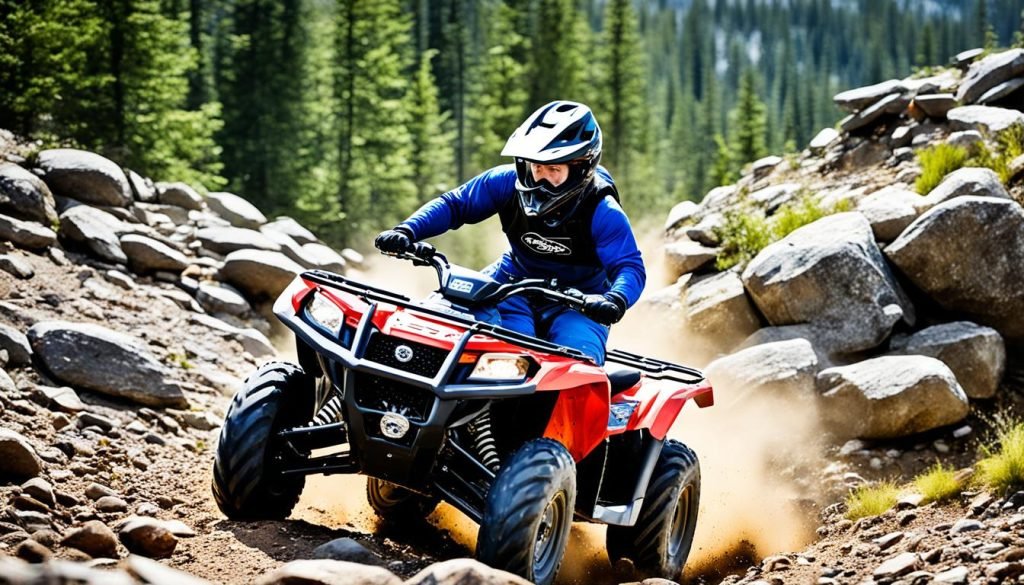
4. Be Aware of Your Surroundings
Stay vigilant and keep an eye out for any potential hazards or obstacles on the trail. This can include rocks, tree branches, or uneven terrain. By staying aware of your surroundings, you can react quickly and avoid accidents.
Additionally, be mindful of weather conditions. Avoid riding in extreme weather conditions like heavy rains, snowstorms, or thunderstorms that could make the trails unsafe or difficult to navigate.
5. Ride Within Your Skill Level
As a beginner rider, it is important to ride within your skill level. Gradually increase the difficulty of your rides as you gain more experience and confidence. Pushing yourself too hard or attempting advanced maneuvers before you are ready can lead to accidents and injuries.
Consider taking an ATV safety course or getting lessons from experienced riders to learn proper techniques and skills. This can help you develop a solid foundation of ATV riding abilities, ensuring a safer and more enjoyable experience.
By following these ATV riding tips and precautions, you can have a great time exploring off-road trails while prioritizing safety. Remember to respect the environment, be mindful of others, and always be prepared for your rides. Happy riding!
Conclusion
Riding an ATV can be an exciting and exhilarating adventure. However, it is crucial to have the proper knowledge and take necessary precautions to ensure your safety. By following the tips and guidelines outlined in this comprehensive guide, beginners can master the art of ATV riding and develop the essential skills and confidence needed to navigate various terrains.
Always prioritize safety by wearing the appropriate ATV riding gear, including a DOT-certified helmet, protective clothing, and goggles. It is also essential to undergo ATV safety training to understand the nuances of operating an ATV safely.
Regular practice is key to improving your ATV riding abilities. Gradually challenge yourself by exploring different terrains and mastering new techniques. Remember to maintain good posture and riding positions, distribute your weight properly, and familiarize yourself with ATV shifting if necessary.
Ultimately, with the right mindset, dedication to safety, and continuous practice, you can embark on thrilling ATV adventures while ensuring your well-being. So gear up, embrace the journey, and enjoy the freedom of ATV riding!
FAQ
How do I ride an ATV correctly?
To ride an ATV correctly, you need to maintain proper posture and positioning. Keep your head and eyes up, shoulders relaxed, and hands on the handlebars. Avoid lowering your foot for stability while turning, and instead, shift your body weight. When climbing hills, shift your body weight forward, and when going downhill, slide your body forward towards the gas tank. Also, ensure the load on the ATV is properly distributed and only ride under conditions for which you have been trained and qualified.
What are some ATV safety tips for beginners?
Before riding an ATV, it’s important to familiarize yourself with safety practices. Choose a simple ATV suited for beginners and read the owner’s manual for operating instructions. Consider investing in ATV safety training for added knowledge. Wear appropriate protective gear such as a helmet, protective jacket, boots, gloves, and goggles. Make sure to ride only in designated off-highway areas and stay off the street.
What are some tips for learning the throttle on an ATV?
For new ATV riders, it’s crucial to become familiar with the throttle. Start by going slowly and practice easing the throttle on to avoid sudden acceleration. Using high-test gasoline can help improve throttle performance. It’s also beneficial to ride with an experienced friend who can provide guidance and coaching.
How important is ATV riding gear?
Wearing appropriate ATV riding gear is crucial for safety. This includes a DOT-certified helmet, protective jacket, boots that cover the ankle, gloves, goggles, and additional protection like chest protectors and knee/shin guards. Investing in a high-quality helmet is especially important to prevent head injuries.
Do I need to learn manual shifting for an ATV?
Depending on the type of ATV, manual shifting may be required. It’s essential to practice changing gears and familiarize yourself with the controls before riding on challenging terrains. Develop a good understanding of clutch and throttle coordination to prevent stalling.
What is the importance of proper posture and riding positions on an ATV?
Maintaining proper posture and riding positions is essential for balance and control while riding an ATV. Keep your feet planted and hands firmly gripping the handles. Understand how to lean into turns and distribute weight properly to enhance your riding experience.
How can I improve my ATV riding skills?
Becoming a skilled ATV rider takes time and practice. Set goals for your practice rides and focus on improving specific skills. Deliberate practice, focusing on quality instead of quantity, is key to mastering ATV riding. Gradually increase your skill level and coordination by practicing on various terrains.
What are some ATV riding tips and precautions to follow?
To ensure a safe riding experience, it’s important to follow ATV riding tips and precautions. Always be prepared before heading out by inspecting your ATV, wearing appropriate gear, and carrying essential items like water, food, and a toolkit. Obey all posted signs, ride responsibly, and avoid off-trail paths. Additionally, give ample space to animals, hikers, and other vehicles.
What should beginners keep in mind when riding an ATV?
Riding an ATV can be an exciting and enjoyable experience, but it requires proper knowledge and precautions for safety. By following the tips outlined in this guide, beginners can develop essential riding skills and confidence. Always prioritize safety and practice regularly to enhance ATV riding abilities.
Leave a Reply