
Most new riders may feel overwhelmed when it comes to choosing the right safety gear for ATV riding. This checklist is designed to help you ensure that you have all the necessary equipment to protect yourself as you navigate the trails. Proper gear not only enhances your comfort but also provides imperative protection against potential hazards. If you’re asking yourself New to ATV’s, what gear do you wear?, this guide will help you prioritize the items you need to ride safely and confidently.
Types of ATV Safety Gear
The right safety gear ensures a more enjoyable ride and helps protect you from potential injuries. Here’s a checklist of important ATV safety gear:
| Helmets | Protects your head from impacts |
| Protective Clothing | Provides coverage and reduces abrasions |
| Gloves | Enhances grip and protects hands |
| Boots | Offers ankle support and protection |
| Eye Protection | Prevents debris and wind from harming your eyes |
After gathering your gear, make sure it fits properly for maximum protection and comfort.
Helmets
The helmet is your foremost layer of protection while riding an ATV. It absorbs impacts and protects your head during falls or collisions. Investing in a good-quality helmet that meets safety standards can significantly reduce the likelihood of head injuries.
Protective Clothing
Helmets alone don’t provide comprehensive safety; protective clothing plays a significant role too. Gear such as long sleeves, pants, and durable jackets shields you from abrasions and reduces the risk of injury in the event of a crash.
Understanding the materials and design of protective clothing is important. Look for reinforced fabrics that resist tearing, as well as clothing that allows for airflow while keeping you protected. Choose clothing that fits snugly without being constrictive to ensure comfort during your ride.
Gloves
With proper gloves, you can improve your grip on the handlebars, enhance comfort, and shield your hands from cold and debris. Gloves designed for ATV riding provide padding and support, allowing for better control over your vehicle.
A well-fitted pair of gloves can help you maintain dexterity while also protecting your hands from potential injuries. Look for gloves made from durable materials that can withstand wear and grip well, ensuring a secure hold on the handlebars.
Boots
You should wear sturdy boots designed specifically for ATV riding to ensure adequate protection for your feet and ankles. Good boots offer traction, support, and durability, helping you navigate tough terrains more safely.
Gear that includes higher ankle coverage can prevent injuries from twisting or rolling your ankles while riding. Choose boots with good tread to provide grip and stability, which is especially helpful when dismounting or walking in rugged areas.
Eye Protection
Protection for your eyes is important while riding an ATV. High-speed rides can expose your eyes to dust, debris, and bugs, making eye protection a key component of your safety gear.
Plus, consider goggles with anti-fog and UV protection to maintain clear vision in various conditions. Selecting eye protection that fits well will keep debris out while ensuring comfort as you navigate obstacles and enjoy your ride.
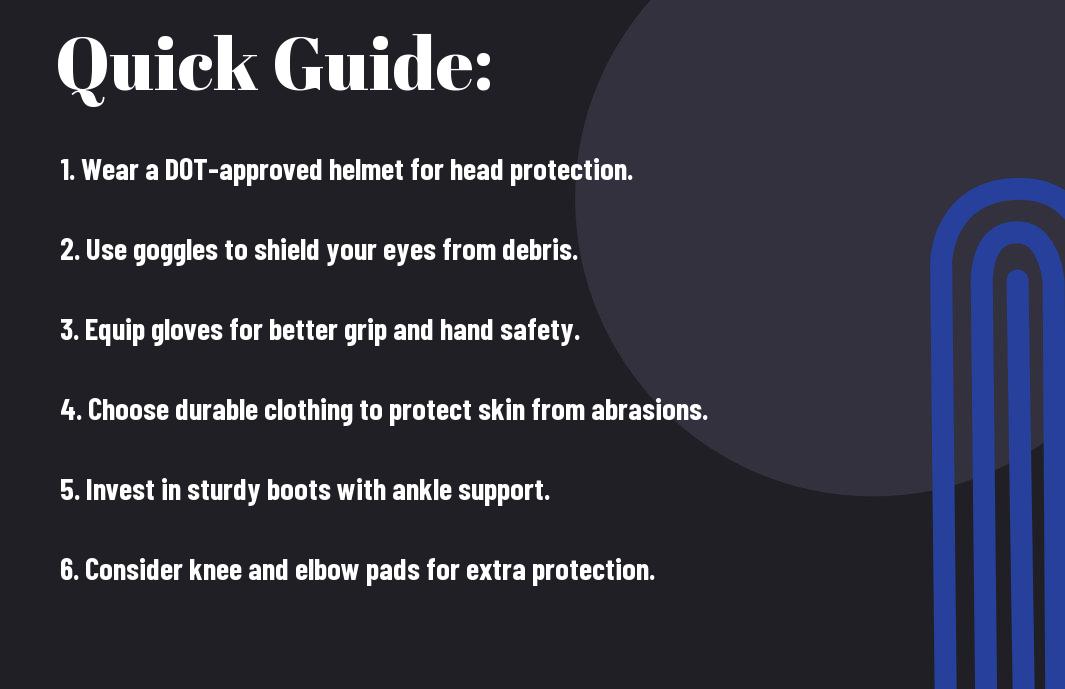
Tips for Choosing the Right Safety Gear
Once again, selecting the right safety gear is vital for a safe riding experience. Keep the following tips in mind:
- Assess your riding style and the type of terrain you’ll encounter.
- Choose gear that meets safety certifications and standards.
- Try on gear to ensure proper fitting and comfort.
- Opt for padding in critical areas for extra protection.
- Consider visibility through bright colors or reflective materials.
Any gear that does not fit right will compromise your safety while riding.
Fit and Comfort
You should prioritize fit and comfort when choosing your ATV safety gear. Ill-fitting equipment can lead to distractions or even accidents while on the trail. Be sure to try on various sizes and styles to find what feels best for your body type.
Weather Considerations
Little things like the weather can significantly impact your choice of safety gear. It’s vital to have gear that can handle different conditions, such as hot or cold temperatures, rain, or snow. Make sure to select layers that will keep you comfortable in varying climates.
Comfort is a key factor when riding in different weather conditions. Invest in moisture-wicking and breathable materials to keep you dry and cool in hot weather. In colder conditions, consider thermal layers to retain body heat while maintaining your range of motion. Proper gear helps you stay focused, regardless of the weather conditions.
Quality and Standards
Assuming you want gear that will last, invest in high-quality items that meet safety standards. Look for equipment that has been tested for impact resistance, abrasion resistance, and other crucial safety factors. This will not only enhance your protection but also ensure the longevity of your gear.
A combination of quality materials and adherence to safety standards will provide you with a reliable safety net while riding. Evaluate the reputation of manufacturers, read reviews, and choose gear that aligns with your needs, ensuring you are well-protected during your outdoor adventures.
Step-by-Step Checklist for New Riders
Keep your riding experience safe and enjoyable by following this checklist. Make sure to gather all the necessary gear before hitting the trails. A detailed breakdown will help ensure you don’t overlook any crucial items.
ATV Safety Gear Checklist
| Helmet | Full-face options provide maximum protection. |
| Goggles | Keep dust and debris out of your eyes. |
| Gloves | Choose padded gloves for better grip and protection. |
| Protective Clothing | Long sleeves and pants reduce injury risk. |
| Boots | Sturdy, ankle-high boots provide support and protection. |
| Chest Protector | Adds an extra layer of safety for your torso. |
Pre-Ride Gear Check
Gear up by inspecting all your equipment before starting your ride. Check the fit and integrity of your helmet, ensure your goggles are clear, and verify your gloves are in good condition. Make it a habit to run through this checklist to get familiar with your gear.
Recommended Gear for Beginners
Now, consider investing in gear that suits your skill level as a new rider. A good quality helmet, comfortable gloves, and protective clothing are necessary for safe riding. Getting comfortable in your gear will enhance your confidence and performance on the trails.
Gear that is designed with beginners in mind often prioritizes comfort and usability. Look for helmets with adjustable chin straps and ventilation for comfort. Opt for gloves that provide flexibility while ensuring protection. Also, choose clothing made of durable materials that can withstand rugged conditions while allowing you to move freely. Investing in quality beginner gear can lead to a safer and more enjoyable riding experience.

Factors Influencing Gear Selection
For new riders, selecting the appropriate ATV safety gear depends on various factors that impact both comfort and protection. Consider the following elements:
- Riding environment
- Experience level
- ATV type
Thou must weigh these factors carefully to ensure a safe riding experience.
Riding Environment
One of the most significant considerations when choosing your ATV gear is the riding environment. Whether you are riding on rugged trails, flat fields, or mountainous terrain, the gear you select must be suitable for the specific conditions you encounter.
Experience Level
For beginners, your experience level directly influences the type of gear you need. As you gain proficiency, your gear requirements may evolve to accommodate varying challenges and riding styles.
Environment plays a pivotal role in helping you determine what safety gear you should wear based on your skill level. As a novice, you may prioritize full protective suits, helmets, and gloves to prevent injury during learning. As your skills develop, you might feel confident using lighter gear, although comprehensive protection remains necessary.
ATV Type
Experience with your specific ATV type also significantly influences your gear choices. Some ATVs are designed for high-speed racing, while others prioritize off-road durability or leisure riding.
Selection of safety gear should align with the specifications and features of your ATV. For example, a racing-focused ATV demands lightweight, but highly protective gear to accommodate higher speeds, whereas a trail ATV may have different protective requirements to deal with obstacles and rugged terrain.

Pros and Cons of Different Gear Options
Despite the wide variety of ATV safety gear available, each option comes with its own benefits and drawbacks. Understanding these can help you make informed decisions about the gear you choose. Below is a breakdown of pros and cons for different types of ATV gear.
| Pros | Cons |
|---|---|
| High protection levels | Can be bulky |
| Durable materials | May cause overheating |
| Custom fit is often available | Higher price point |
| Weather-resistant options | Less breathable |
| Style options for personalization | Limited mobility |
Hard-Shell vs. Soft-Shell
Assuming you are weighing the options between hard-shell and soft-shell gear, it’s crucial to consider your riding environment and personal comfort. Hard-shell gear offers more substantial protection against impacts but may restrict movement. On the other hand, soft-shell gear provides ease of mobility and comfort, which can be beneficial in varying conditions.
Impact Resistance vs. Flexibility
To choose between impact resistance and flexibility, evaluate your riding style and terrain. Rigid gear provides better protection from harsh impacts, while flexible gear allows for greater freedom of movement, which can enhance your riding experience.
For instance, if you’re frequently riding on rugged trails or in competitive settings, opting for gear with higher impact resistance may be beneficial to safeguard against accidents. Conversely, if you prefer leisurely rides or trails where falls are less likely, more flexible options will allow for easier maneuverability and long-term comfort. Balancing these factors will ensure that you stay safe without compromising your enjoyment.
Maintenance and Care for Safety Gear
To ensure your safety gear remains effective and reliable, regular maintenance is vital. Inspect your equipment for signs of wear and tear and replace any damaged components promptly. Keeping up with maintenance not only enhances your safety but also extends the life of your gear. For comprehensive insights on the best practices, check out A Guide to ATV/UTV Safety Gear | Dairyland Off-Road.
Cleaning
You should clean your safety gear after each use to remove dirt, mud, and debris that can compromise its effectiveness. Use mild soap with water to wipe down hard surfaces and follow the manufacturer’s instructions for more delicate materials like textiles or padding.
Storage
An important aspect of maintaining your safety gear is proper storage. Store your equipment in a cool, dry place away from direct sunlight and extreme temperatures to prevent deterioration.
It is advisable to use breathable storage bags for textiles to avoid moisture buildup, which can lead to mold and mildew. Always hang helmets on a secure hook instead of placing them on surfaces, which may scratch or damage them. Following these storage tips will help you keep your safety gear in top condition for your next ride.
Conclusion
Conclusively, ensuring your safety while riding an ATV begins with a comprehensive gear checklist tailored for new riders. By equipping yourself with a properly fitted helmet, gloves, protective clothing, sturdy boots, and goggles, you significantly enhance your safety on the trails. You should also consider additional gear such as knee and elbow pads for extra protection. Prioritize these items to enjoy a safe and exhilarating ATV experience while mitigating potential risks associated with off-road riding.
FAQ
Q: What is the primary purpose of wearing safety gear when riding an ATV?
A: The primary purpose of wearing safety gear when riding an ATV is to protect the rider from potential injuries that can occur in the event of an accident. Properly fitting gear can minimize the impact of falls, collisions, and other hazards that riders may encounter on trails or uneven terrain.
Q: What type of helmet should I choose as a new ATV rider?
A: As a new ATV rider, you should choose a DOT-approved helmet specifically designed for off-road use. Look for features such as a full-face design that offers maximum coverage, ventilation for comfort, and a fitted chin strap for security. It’s important to ensure the helmet fits snugly and doesn’t move around while you wear it.
Q: Are there specific types of gloves I should wear when riding an ATV?
A: Yes, when riding an ATV, it’s advisable to wear gloves made from durable materials that provide protection against abrasions. Look for gloves that have padding on the knuckles and palms for added safety and grip. Waterproof or insulated gloves are also recommended if you plan to ride in varying weather conditions.
Q: Do I need to wear long pants and a long-sleeve shirt when riding?
A: Yes, wearing long pants and a long-sleeve shirt is highly recommended for ATV riding. These clothing items should be made of durable materials to provide a barrier against scrapes, branches, and hot engine parts. Look for breathable fabrics that will keep you comfortable while providing protection.
Q: What kind of footwear should I wear when operating an ATV?
A: Footwear should include sturdy boots that cover the ankles and have a non-slip sole. Avoid wearing open-toed shoes like sandals, as they do not provide adequate protection. The boots should be reinforced for added protection against impacts and should have a firm grip to ensure stability while operating the ATV.
Q: Is it necessary to wear eye protection while riding an ATV?
A: Yes, wearing proper eye protection is important when riding an ATV. Goggles or other protective eyewear can guard against dust, debris, and wind that can obstruct vision. Make sure the eyewear fits securely and provides a wide field of vision to enhance safety while riding.
Q: How can I ensure that my safety gear fits properly?
A: To ensure that your safety gear fits properly, try on each item before purchasing and refer to sizing charts provided by manufacturers. Helmets should fit snugly without being too tight, while clothing should allow for ease of movement without excessive bagginess. It’s best to wear safety gear over a base layer for accurate fitting and comfort.
Leave a Reply