
Welcome to our comprehensive ATV size guide! If you’re considering buying an ATV, it’s essential to understand the dimensions and size comparisons. Whether you’re a seasoned rider or new to the world of ATVs, knowing how big an ATV is can make a significant difference in your riding experience. In this section, we’ll explore ATV dimensions, including engine displacement, physical dimensions, and seat height, to help you make an informed purchasing decision.
When it comes to ATV sizes, it’s crucial to consider various factors such as engine displacement, physical dimensions, and the appropriate size for your height and riding experience. This guide will provide you with the necessary information to ensure your safety and comfort during your outdoor adventures. Let’s dive in!
Key Takeaways:
- Understanding the dimensions of an ATV is crucial for both safety and comfort.
- ATV sizes are determined by engine displacement, physical dimensions, and seat height.
- Engine size impacts towing capacity and top speed of an ATV.
- Matching ATV dimensions to rider height ensures better control and reduces the risk of accidents.
- Age and experience are crucial considerations when choosing the right size ATV for riders.
ATV Sizes According to Engine Displacement
The size of an ATV is primarily determined by its engine displacement, which is measured in cubic centimeters (cc). ATV manufacturers offer a range of engine sizes to cater to riders of different ages, sizes, and skill levels. Understanding the specifications and measurements of an ATV is crucial when determining the right size for your needs.
ATVs come in various sizes, each corresponding to a specific engine displacement. Here is a breakdown of ATV sizes based on engine displacement:
- Small ATVs: Engine displacements range from 50cc to 90cc. These ATVs are suitable for young riders and beginners. They are lightweight and easy to handle, making them ideal for learning and recreational use.
- Mid-Size ATVs: Engine displacements range from 125cc to 400cc. These ATVs are versatile and can accommodate riders of different experience levels. They strike a balance between power and agility, making them suitable for a variety of off-road activities.
- Large ATVs: Engine displacements range from 450cc to 1000cc or more. These ATVs are designed for experienced riders and are capable of handling challenging terrains and heavy-duty tasks. They offer superior power, towing capacity, and performance.
The size of an ATV is not only determined by its engine displacement but also by its physical dimensions. The length, width, height, and weight of an ATV can vary depending on the model and its intended purpose. It’s important to consider these measurements to ensure a comfortable and safe riding experience.
Here is a table summarizing the approximate measurements and weights of ATVs based on their engine sizes:
| Engine Size | Length (in inches) | Width (in inches) | Height (in inches) | Weight (in pounds) |
|---|---|---|---|---|
| 50cc – 90cc | 50 – 60 | 30 – 40 | 30 – 40 | 100 – 200 |
| 125cc – 250cc | 60 – 70 | 40 – 50 | 40 – 50 | 200 – 400 |
| 300cc – 400cc | 70 – 80 | 50 – 60 | 50 – 60 | 400 – 600 |
| 450cc – 1000cc+ | 80 – 90 | 60 – 70 | 60 – 70 | 600 – 900+ |
Keep in mind that these measurements and weights are approximate and can vary slightly between different ATV models. It is always recommended to refer to the manufacturer’s specifications for precise measurements before making a purchase.
The Impact of Engine Size on Towing and Speed
Choosing the right ATV involves considering various factors, one of which is the engine size. The engine size directly influences the performance capabilities of an ATV, particularly its towing capacity and top speed. By understanding how different engine sizes affect these aspects, you can make an informed decision when selecting the right ATV for your needs.
Engine size plays a crucial role in determining an ATV’s towing capacity. A larger engine typically translates to a higher towing capacity, allowing you to handle heavier loads with ease. On the other hand, smaller engine sizes may limit the ATV’s ability to tow heavier objects.
An ATV with a higher engine size, such as a 1000cc model, will have a greater towing capacity suitable for heavy-duty tasks. This makes it ideal for hauling equipment during farming or construction work.
Similarly, the engine size also impacts the ATV’s top speed. A larger engine generally provides greater power, resulting in a higher top speed. This makes it suitable for riders who desire faster off-road experiences.
For example, an ATV with a 600cc engine can reach speeds of up to 70 miles per hour, offering an exhilarating ride for adventure enthusiasts.
On the other hand, smaller engine sizes may have lower top speeds, which can be preferable for novice riders or those who prioritize control and safety over speed.
Understanding the relationship between engine size and performance is essential when selecting an ATV. It ensures that you choose a vehicle with the towing capacity and top speed that aligns with your intended use. Whether you require an ATV for heavy-duty tasks or thrilling off-road adventures, considering the engine size and its impact on towing capacity and top speed helps you find the perfect ATV to meet your requirements.
Relationship Between ATV Dimensions and Rider Height
In addition to engine size, the physical dimensions of an ATV play a crucial role in ensuring rider comfort and safety. Matching the ATV’s dimensions, such as length, width, and height, to the rider’s height is essential for better control and minimizing the risk of accidents.
Riders of different heights require ATVs with varying dimensions to ensure a proper fit. Riding an ATV that is too big or too small for the rider can compromise stability, maneuverability, and overall riding experience. Therefore, it’s important to carefully consider the dimensions of the ATV when choosing the right size for yourself or others.
Length: The length of an ATV affects its stability and handling. Longer ATVs provide more stability on straightaways and over rough terrain. However, they may be more challenging to maneuver in tight spaces or narrow trails. On the other hand, shorter ATVs offer increased agility and easier maneuverability in tight spots.
Width: The width of an ATV determines its stability while cornering and navigating through obstacles. Wider ATVs provide better stability, particularly when traversing uneven terrain or making sharp turns. Narrower ATVs, on the other hand, are more suitable for trails with limited space or obstacles.
Height: The height of the ATV is another crucial dimension to consider. The seat height should be comfortable and allow the rider’s feet to easily reach the ground for balance while stationary or maneuvering. A proper seat height ensures better control and confidence while riding.
It’s important to note that manufacturers often provide recommended height ranges for each ATV model to guide riders in selecting the appropriate size. These guidelines can serve as a starting point, but it’s always best to personally test ride an ATV to ensure a comfortable fit. Don’t forget to wear your riding gear during the test to get accurate measurements of how the ATV fits you.
ATV Dimensions and Rider Height Recommendations
| ATV Model | Recommended Rider Height | Seat Height | Length | Width | Height |
|---|---|---|---|---|---|
| ATV Model A | 4’6″ – 5’2″ | 30″ | 60″ | 40″ | 38″ |
| ATV Model B | 5’3″ – 5’8″ | 32″ | 65″ | 42″ | 40″ |
| ATV Model C | 5’9″ – 6’1″ | 34″ | 68″ | 44″ | 42″ |
| ATV Model D | 6’2″ and above | 36″ | 72″ | 46″ | 44″ |
Remember, choosing the right-sized ATV is essential for a safe and enjoyable riding experience. By considering the dimensions of the ATV and matching them to the rider’s height, you can ensure better control, maneuverability, and overall comfort on your outdoor adventures.

Matching Rider to Machine: Age and Experience Considerations
When it comes to choosing the right ATV, age and experience are key factors to consider. Different ages and levels of experience require different ATV sizes to ensure safety and enjoyment for riders. Let’s explore the important considerations for both youth and adult riders.
Youth Riders: Safety First
For young riders, it’s crucial to prioritize safety by selecting an ATV that is appropriate for their age and physical development. Choose an ATV that provides the right level of control without overwhelming them. Consider factors such as seat height, weight, and engine size to find the perfect match.
“Safety should always be the top priority when choosing an ATV for children.”
Adult Riders: The Perfect Balance
Adult riders with varying levels of experience have different needs when it comes to ATV size. It’s important to find an ATV that offers a balance of power and control. Consider factors such as engine size, weight, and handling capabilities to ensure a comfortable and thrilling riding experience.
Choosing the Right Size ATV
Whether you’re selecting an ATV for a child or an adult, choosing the right size is crucial. Factors such as physical development, emotional maturity, and riding experience should guide your decision-making process. Here’s a helpful table to assist in choosing the appropriate ATV size:
| Age Group | ATV Size |
|---|---|
| 4-6 years old | 50cc-70cc |
| 7-11 years old | 70cc-90cc |
| 12-15 years old | 90cc-150cc |
| 16 and above | 150cc and above |
Remember that this table provides a general guideline, and factors such as height, weight, and riding experience should also be taken into account when choosing the right ATV size for the rider.
By selecting an ATV that matches the rider’s age, physical development, and riding experience, you can ensure a safe and enjoyable experience for both youth and adult riders.
Youth Riders: Safety First
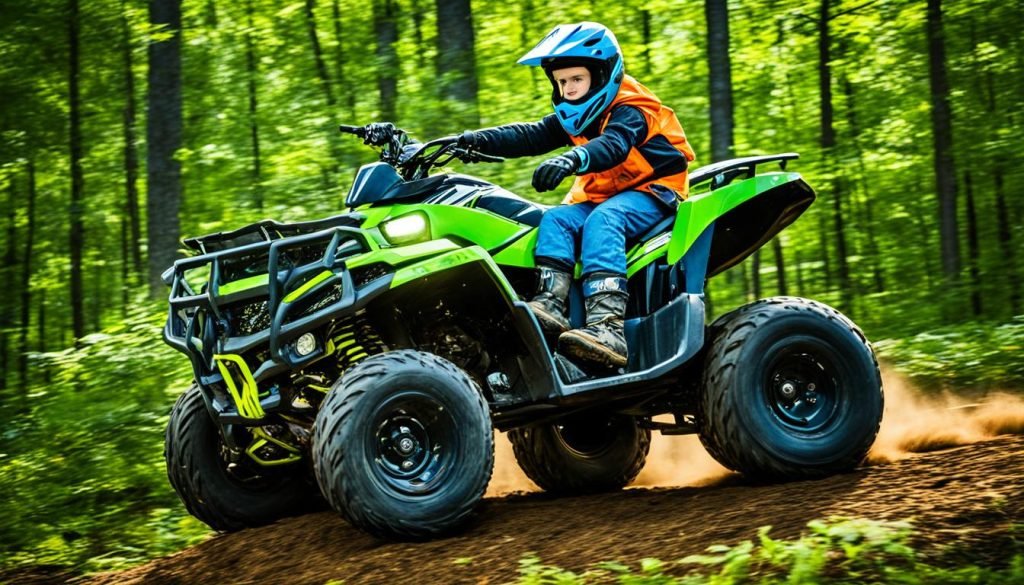
When it comes to youth riders, safety should always be the top priority. ATVs designed specifically for young riders are equipped with essential safety features to ensure their well-being on the trails. Engine limiters and power cut-off tether switches are two key safety features that are commonly found in ATVs for youth riders.
The engine limiter is a vital safety mechanism that restricts the ATV’s maximum speed, allowing parents or guardians to control the vehicle’s performance and prevent young riders from exceeding safe speeds. This feature ensures that children can enjoy their ATV experience while keeping within safe limits.
“The engine limiter is a crucial safety feature that enables parents to adjust the ATV’s speed according to their child’s skill level, providing a controlled and safe riding experience.”
In addition to the engine limiter, power cut-off tether switches are another important safety feature in youth-oriented ATVs. These switches automatically shut off the engine when the rider becomes separated from the ATV. By preventing the vehicle from moving when the rider is not in control, power cut-off tether switches help reduce the risk of accidents.
Choosing the Appropriate Engine Size for Children
When selecting an ATV for children, it is crucial to consider the appropriate engine size. An engine that is too powerful can make it challenging for young riders to control the vehicle, leading to potential accidents or injuries. Conversely, an engine that lacks sufficient power might not provide the necessary excitement or enjoyment for children.
It is recommended to choose an ATV with an engine size that is appropriate for the child’s age, size, and skill level. Manufacturers typically categorize youth ATVs based on engine size, ensuring that there are options suitable for riders of all ages. Here are the general recommendations for engine size based on age:
- Ages 6-8: ATVs with engine sizes between 50cc and 70cc
- Ages 9-12: ATVs with engine sizes between 70cc and 90cc
- Ages 13 and above: ATVs with engine sizes between 90cc and 125cc
It is important to note that these recommendations are not set in stone. It is essential to consider the child’s size, experience, and confidence level when selecting the appropriate engine size. Always ensure that the child can comfortably reach the handlebars and controls and has the necessary physical strength to maneuver the ATV safely.
Ensuring Safe and Enjoyable Riding Experiences
By prioritizing safety features and selecting an ATV with an appropriate engine size, parents and guardians can provide youth riders with safe and enjoyable experiences. It is crucial to educate young riders on proper ATV operation, including wearing helmets, protective gear, and adhering to safe riding practices at all times. Investing in ATV safety courses and supervised practice sessions can further enhance their skills and understanding of responsible riding.
Adult Riders: Balancing Power and Control
When it comes to ATV sizing, adult riders need a careful balance of power and control. The size of the ATV, including the engine size, is a critical factor in providing an optimal riding experience. No matter the rider’s skill level, selecting the right ATV size ensures both safety and enjoyment on the trails.
Choosing an ATV with an appropriate engine size is crucial for adult riders. The engine size determines the power and performance capabilities of the ATV. As an adult rider, you want sufficient power to tackle challenging terrains while maintaining control over the vehicle.
Here are the recommended engine sizes based on the rider’s experience level:
Beginners: If you are new to ATV riding, it is best to start with a smaller engine size that offers manageable power. A common engine size for beginners is around 250cc. This allows you to get comfortable with the ATV’s controls and build your riding skills gradually.
Intermediate Riders: For riders with some experience, an engine size between 400cc and 500cc provides a good balance between power and control. These ATV sizes are suitable for riders who have mastered the basics and are ready to take on more challenging trails.
Experienced Riders: If you are an experienced rider looking for maximum power and performance, an engine size of 700cc or higher is recommended. These ATVs are designed to handle tough terrains and demanding riding conditions. However, it is crucial to match the increased power with proper riding skills and caution.
By selecting an ATV with the right engine size, adult riders can optimize their riding experience and enjoy the thrill of off-road adventures. It is essential to consider your skill level, riding preferences, and the type of terrain you plan to tackle before making a decision.
Remember, as with any motorized vehicle, safety should always be a top priority. Wear appropriate protective gear, follow all safety guidelines, and never underestimate the importance of proper training and experience.
ATV Engine Sizes for Adult Riders
| Experience Level | Recommended Engine Size |
|---|---|
| Beginners | 250cc |
| Intermediate Riders | 400cc – 500cc |
| Experienced Riders | 700cc or higher |

Mid-Size ATV Options
When it comes to combining trail riding with light utility work, mid-size ATVs, also known as utility ATVs, are the perfect choice for outdoor enthusiasts. These versatile vehicles offer a balance of power and maneuverability, making them suitable for a variety of activities. Whether you’re exploring off-road trails or tackling light utility tasks, mid-size ATVs are designed to deliver a reliable performance.
Let’s take a closer look at some examples of mid-size ATVs and their exceptional features:
Polaris Sportsman 570 EPS
The Polaris Sportsman 570 EPS is a top contender in the mid-size ATV segment. With its 567cc engine and Electronic Power Steering (EPS), this ATV provides smooth handling and precise control. It boasts a high ground clearance and excellent suspension, allowing riders to navigate rough terrains with ease. The Sportsman 570 EPS also comes equipped with a front storage compartment and a towing capacity of up to 1,225 pounds, making it ideal for light utility work.
Honda FourTrax Foreman 4×4
The Honda FourTrax Foreman 4×4 is a reliable and durable mid-size ATV that excels in both trail riding and light utility tasks. Powered by a 475cc engine, this ATV delivers efficient performance and excellent fuel economy. With its selectable 2WD/4WD capabilities and front and rear racks, it offers versatility for carrying equipment and tackling light hauling jobs. The FourTrax Foreman 4×4 also features Honda’s TraxLok system, providing easy shifting between 2WD and 4WD modes to adapt to changing terrain conditions.
These mid-size ATVs are just a glimpse of what the market has to offer. Depending on your specific preferences and requirements, there are various other models available from different manufacturers. Remember to research and compare the features and specifications of each ATV to find the one that best suits your needs.
Large ATV Options
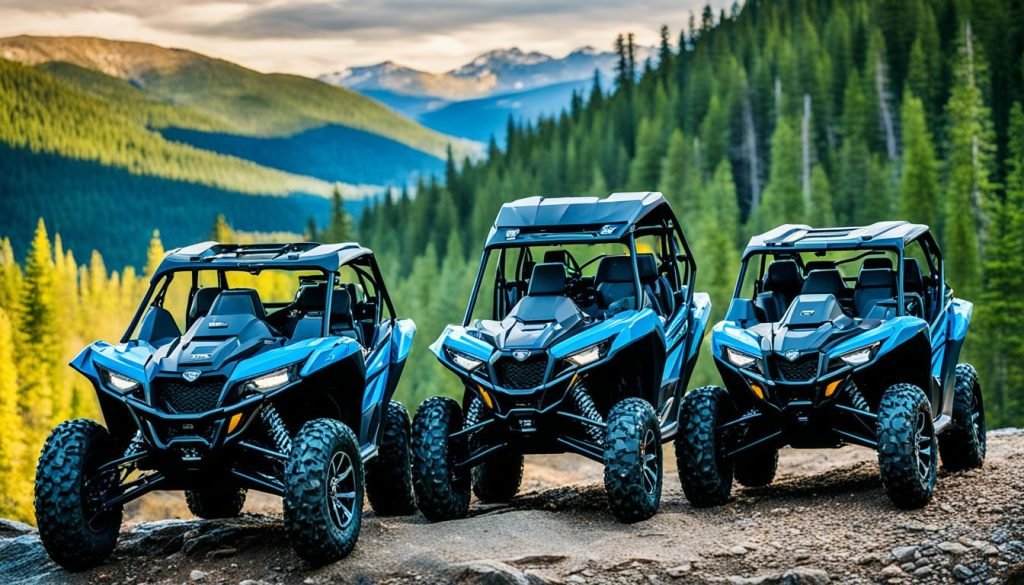
For riders seeking more power and capability, there are large ATVs available that are designed for heavy-duty tasks and challenging terrain. These large ATVs offer higher towing capacities and are perfect for tackling demanding jobs and navigating rough terrains.
Top Large ATV Models for Heavy-Duty Tasks
When it comes to large ATVs, there are several standout models that excel in heavy-duty performance. These models combine power, durability, and advanced features to handle various tasks effectively. Here are some popular options:
- 1. Yamaha Grizzly 700: With its robust 686cc engine, the Yamaha Grizzly 700 is built to conquer difficult terrain and tackle heavy-duty tasks. It offers impressive towing capacity and advanced suspension for a smooth ride even in challenging conditions.
- 2. Polaris Sportsman XP 1000: The Polaris Sportsman XP 1000 is a powerhouse ATV equipped with a 952cc engine. It provides exceptional torque and acceleration, making it ideal for hauling heavy loads and traversing rugged landscapes with ease.
- 3. Can-Am Outlander Max XT-P: The Can-Am Outlander Max XT-P boasts a powerful 1000cc engine and features an innovative suspension system for superior handling in rough terrains. It offers excellent towing capabilities and is perfect for heavy-duty tasks.
These large ATVs are designed to handle demanding applications such as landscaping, farming, and snow removal. Their robust engines, rugged construction, and advanced features make them reliable companions for conquering challenging tasks and exploring demanding terrains.
The Price Point of Smaller vs. Larger ATVs
When it comes to purchasing an ATV, one important factor to consider is the cost. The price of ATVs can vary significantly depending on their size and additional features. Let’s take a closer look at the price ranges for both smaller and larger ATVs to help you budget for your ATV purchase.
Price Range for Smaller ATVs
If you’re looking for an ATV on a budget, smaller models can provide a more cost-effective option. These ATVs typically have lower engine displacements and are great for recreational or lighter work purposes. Below is a price range breakdown for smaller ATVs:
| ATV Size | Price Range |
|---|---|
| 50cc – 150cc | $1,000 – $3,000 |
| 150cc – 250cc | $2,500 – $5,000 |
These price ranges are just an estimate and may vary depending on the brand, model, and additional features included with the ATV.
Price Range for Larger ATVs
If you require more power and capability for heavy-duty tasks or tackling challenging terrains, larger ATVs are worth considering. These ATVs generally come with higher engine displacements and offer increased towing capacities. Here’s an overview of the price range for larger ATVs:
| ATV Size | Price Range |
|---|---|
| 400cc – 700cc | $5,000 – $10,000 |
| 700cc – 1000cc+ | $10,000 – $15,000+ |
Again, it’s important to note that these price ranges are approximate and can vary based on various factors such as brand, model, and additional features offered by different ATV manufacturers.
When setting a budget for your ATV purchase, consider your specific needs, intended usage, and the price range that aligns with your financial situation. It’s always a good idea to compare prices, read reviews, and visit authorized dealerships to explore the available options within your budget.
Remember, investing in a reliable and quality ATV is essential for a safe and enjoyable riding experience. Balance your budget with the features and specifications that meet your requirements.
Continue reading to discover the key takeaways and conclusion of our comprehensive ATV size guide.
Conclusion
Choosing the right size ATV is essential for a safe and thrilling riding experience. In this article, we have provided an in-depth ATV size guide, covering key factors such as engine size, dimensions, rider height, and age/experience considerations.
By understanding how these factors interplay, you can confidently select the ATV that best suits your needs and preferences. Taking into account engine size ensures that you have the right amount of power and control for your skill level and desired performance. Considering the dimensions of an ATV, such as length, width, and height, in relation to your height and body type, guarantees comfort and maneuverability during your outdoor adventures.
Additionally, we have highlighted the importance of taking into account age and experience when choosing an ATV. For youth riders, selecting an appropriate engine size and prioritizing safety features ensures their well-being and enjoyment. Adult riders, on the other hand, strive to strike a balance between power and control in their ATV selection, aligning the machine’s capabilities with their experience level.
Remember, safety should always be a top priority. Before making a final purchase, we encourage you to test ride the ATV to ensure it feels comfortable and meets your expectations. Armed with the knowledge gained from our ATV size guide, you can confidently embark on your ATV journey, ready to conquer the great outdoors.
FAQ
How big is an ATV?
The size of an ATV can vary depending on its engine displacement, physical dimensions, and weight. ATV manufacturers offer a range of sizes to cater to riders of different ages, sizes, and skill levels.
What are the specifications of an ATV?
The specifications of an ATV include engine displacement, physical dimensions (length, width, and height), weight, towing capacity, and top speed. These specifications vary based on the size and model of the ATV.
How do I determine the dimensions of an ATV?
The dimensions of an ATV, including its length, width, and height, are typically provided by the manufacturer. It is essential to consider these dimensions to match the ATV’s size to the rider’s height for better control and safety.
How does engine size affect an ATV’s performance?
Engine size directly impacts an ATV’s towing capacity and top speed. Larger engine sizes provide more power and higher towing capacities, while smaller engines are suitable for lighter tasks and lower speeds.
What should I consider when choosing an ATV for a child?
When choosing an ATV for a child, it is essential to consider their age, size, and experience level. Safety features such as engine limiters and power cut-off tether switches should be present. Appropriate engine sizes for children should be selected to ensure their safety and enjoyment.
What engine size is recommended for adult riders?
The recommended engine size for adult riders can vary depending on their experience level. Those with more experience may opt for larger engine sizes, while beginners may prefer smaller engines that provide a balance of power and control.
What are mid-size ATVs used for?
Mid-size ATVs, also known as utility ATVs, are popular options for riders who want to combine trail riding with light utility work. These ATVs offer a balance of power and versatility, making them suitable for various outdoor activities.
What are large ATVs used for?
Large ATVs are designed for heavy-duty tasks and challenging terrain. They are commonly used for tasks such as landscaping, farming, and snow removal due to their higher towing capacities and power capabilities.
How much do ATVs cost?
The cost of ATVs can vary significantly depending on their size and additional features. Smaller ATVs generally have a lower price range, while larger, more powerful ATVs tend to be more expensive. It is important to budget for an ATV purchase based on the desired size and features.
How do I choose the right size ATV?
To choose the right size ATV, consider factors such as engine size, physical dimensions, rider height, age, and experience level. Matching these factors to the ATV’s specifications ensures a safe and enjoyable riding experience.
Leave a Reply