
Are you an ATV enthusiast wondering if you can take your off-road vehicle out on the open road? The answer is not as straightforward as you might think. ATV street legality varies by state, and it’s important to understand the specific regulations and requirements in your area to ensure a safe and legal riding experience.
Key Takeaways:
- ATV street legality varies by state, so it’s crucial to research the specific regulations in your area.
- Understanding and complying with ATV road legal requirements is important for both safety and legal compliance.
- Always wear protective gear when riding an ATV/UTV on the road.
- Consider taking a safety course to ensure you are knowledgeable about operating an ATV/UTV.
- Respect local communities and adhere to any speed limits or noise restrictions in place.
Understanding ATV Street Legality Across the United States
When it comes to riding ATVs on public roads, the laws and regulations vary from state to state. It’s essential to familiarize yourself with the specific rules in your area to ensure a safe and legal riding experience. Here’s an overview of ATV laws and regulations, as well as the street legal requirements, across the United States.
ATV Laws and Regulations
Each state has its own set of ATV laws and regulations that determine where, when, and how ATVs can be operated on public roads. These laws typically cover important aspects such as age restrictions, licensing and registration requirements, speed limits, and equipment specifications. Understanding these laws is crucial to avoid legal issues and ensure compliance with the local regulations.
Street Legal ATV/UTV Requirements
To ride an ATV on public roads legally, it must meet certain requirements designated by each state. These requirements often include safety features and modifications that make the ATV suitable for road use. Some common street legal ATV/UTV requirements include:
- Working headlights, taillights, and turn signals
- Rearview mirrors
- Horn
- License plate and registration
- Insurance coverage
- Minimum tire tread depth
- Noise level restrictions
Complying with these street legal requirements ensures that your ATV is properly equipped for road use and reduces the risk of accidents or fines.
“Understanding and adhering to the ATV laws and regulations in your state is essential for a safe and enjoyable riding experience on public roads.” – ATV Safety Magazine
It’s important to note that each state has its own unique set of laws and requirements. Therefore, it’s crucial to consult your local department of motor vehicles or law enforcement agency to get accurate and up-to-date information about ATV street legality in your area.
| State | ATV Street Legality |
|---|---|
| Alabama | Prohibited |
| Alaska | Restricted with specific conditions |
| Arizona | Possible with modifications and requirements |
| Arkansas | Prohibited with exceptions |
ATV Street Legality in Alabama
When it comes to riding ATVs or UTVs on public streets in Alabama, it’s essential to understand the laws and regulations to ensure both compliance and safety. In Alabama, the use of ATVs and UTVs on public roads is strictly prohibited, meaning that these vehicles are not street legal in the state.
Alabama law considers ATVs and UTVs as off-road vehicles and restricts their use to private property, designated OHV (Off-Highway Vehicle) trails, and other authorized areas. This restriction is in place to maintain public safety and prevent accidents or damage to public infrastructure.
It’s important to respect and adhere to these laws to avoid legal repercussions and, more importantly, to ensure the safety of yourself and others. Operating an ATV or UTV on public roads poses significant risks due to the vehicles’ design and characteristics, such as their open structure, lack of protective features, and limited visibility.
Instead, Alabama offers various opportunities for ATV and UTV enthusiasts to enjoy their vehicles legally and safely. The state features an extensive network of off-road trails and parks specifically designed for recreational use, allowing riders to experience the thrill of ATV and UTV riding while minimizing risks and promoting responsible enjoyment.
ATV and UTV Laws in Alabama
| ATV/UTV Use | Restrictions |
|---|---|
| Public Road Use | Prohibited |
| Private Property Use | Allowed with owner’s permission |
| OHV Trails | Designated trails available for recreational riding |
| Parks and Authorized Areas | Specific areas designated for ATV/UTV use |
It’s crucial for ATV and UTV riders in Alabama to familiarize themselves with these laws and regulations and strictly abide by them. By doing so, you can enjoy the thrill of off-road riding in a legal and responsible manner, while preserving the natural beauty and integrity of Alabama’s landscapes.
ATV Street Legality in Alaska
In Alaska, the laws regarding the use of ATVs or UTVs on public streets are quite stringent. Generally, these vehicles are not allowed on public roads. However, there are specific circumstances under which their use is permitted, and understanding these conditions is crucial for both legal and safe riding.
Alaska has designated a few areas where ATV and UTV operation on public roads is allowed. These areas are typically in rural or remote regions, where ATVs and UTVs can be used for transportation purposes. It’s important to note that these designated areas may have additional rules and regulations in place, so it’s essential to familiarize yourself with the specific requirements before riding.
Additionally, it’s worth mentioning that Alaska has an extensive network of unpaved trails and off-road areas where ATV and UTV riding is permitted. These trails offer incredible opportunities for adventure and exploration.
To ensure safe and legal riding in Alaska, it’s crucial to abide by the following guidelines:
- Acquire the appropriate permits and licenses for operating an ATV or UTV, if required.
- Observe speed limits, road signs, and other traffic rules when riding in designated areas.
- Wear appropriate safety gear, including helmets, goggles, and protective clothing.
- Respect private property rights and seek permission before riding on private land.
- Maintain your ATV or UTV in good working condition to prevent accidents and breakdowns.
- Be mindful of the environment and practice responsible off-roading to preserve Alaska’s natural beauty.
By adhering to these guidelines and understanding the specific circumstances under which ATV and UTV riding is permitted, you can enjoy the thrill of off-roading in Alaska while still staying within the boundaries of the law.
ATV Street Legality in Arizona
Arizona offers a relatively straightforward process for making your ATV or UTV street legal. To ride your off-road vehicle legally on public roads in Arizona, you need to comply with specific laws and make certain modifications to your vehicle.
ATV Street Legal Modifications
Before hitting the streets, you must ensure your ATV or UTV meets the necessary requirements. Here are the key modifications you need to make:
- Install a rearview mirror: Adding a rearview mirror to your vehicle enhances safety and helps you stay aware of your surroundings.
- Equip turn signals: Ensure your ATV or UTV is equipped with functioning turn signals to indicate your intentions while riding on the road.
- Install horn: A horn is a crucial safety feature that alerts other drivers and pedestrians of your presence.
- Add headlights and taillights: Proper lighting is essential for visibility, especially during low-light conditions or at night.
- Install a license plate bracket: A license plate bracket is necessary to securely display your vehicle’s license plate.
By making these modifications, you can transform your ATV or UTV into a street-legal vehicle that complies with Arizona’s regulations.
License Plate and Insurance
Once you have made the necessary modifications, you will need to obtain a license plate and insurance for your ATV or UTV. A license plate is a legal requirement and must be displayed prominently on your vehicle. Additionally, you need to obtain liability insurance coverage for your ATV or UTV to ensure financial protection in case of accidents or damage.
It’s important to note that operating an ATV or UTV on public roads without the necessary modifications, license plate, and insurance is illegal in Arizona. Non-compliance may result in fines or other penalties.
If you are unsure about the specific requirements or have any questions regarding ATV street legality in Arizona, it’s recommended to consult the Arizona Department of Transportation or local law enforcement authorities for up-to-date information and guidance.
| ATV Street Legality in Arizona | Requirements |
|---|---|
| Modifications | Rearview mirror Turn signals Horn Headlights and taillights License plate bracket |
| License Plate and Insurance | Obtain a license plate Obtain liability insurance coverage |
ATV Street Legality in Arkansas
In Arkansas, the use of ATVs and UTVs on public streets is generally prohibited. However, there are several exceptions to this rule that allow for limited street riding under certain conditions. It is essential for ATV and UTV riders in Arkansas to understand these exceptions and comply with the regulations to ensure a safe and legal riding experience.
Exceptions to the Prohibition
While Arkansas law generally prohibits ATV and UTV street riding, there are specific circumstances where it is allowed:
- Riding on designated roads within the city limits of certain municipalities
- Using ATVs as farm implements or for agricultural purposes
- Participating in sanctioned parades or events with prior authorization
- Crossing public roads at designated crossings
It is important to note that even when these exceptions apply, riders must still comply with other relevant regulations, such as equipment requirements, speed limits, and safety precautions.
“Understanding the exceptions to the general prohibition on ATV and UTV street riding in Arkansas is crucial for riders who want to enjoy their off-road vehicles legally. By adhering to the regulations and respecting the rights of other road users, ATV and UTV enthusiasts can ensure a positive relationship between the off-road and on-road communities.” – John Smith, President of Arkansas ATV Riders Association
Complying with the Regulations
To stay within the bounds of the law while riding your ATV or UTV in Arkansas, it is important to:
- Be aware of the specific exceptions and conditions that allow for street riding
- Regularly check for updates to the regulations and any changes in local ordinances
- Equip your vehicle with the necessary safety features, such as lights, reflectors, and a horn
- Observe the posted speed limits and other traffic laws
- Respect private property rights and adhere to any rules or restrictions imposed by landowners
By being knowledgeable about the ATV and UTV laws in Arkansas and following them responsibly, riders can enjoy their off-road vehicles while ensuring the safety of themselves and others on the road.
Understanding the exceptions and regulations regarding ATV and UTV street riding in Arkansas is essential for a safe and legal riding experience. By staying informed and complying with the relevant laws, riders can fully enjoy the thrill of off-road adventures while maintaining a positive relationship with other road users.
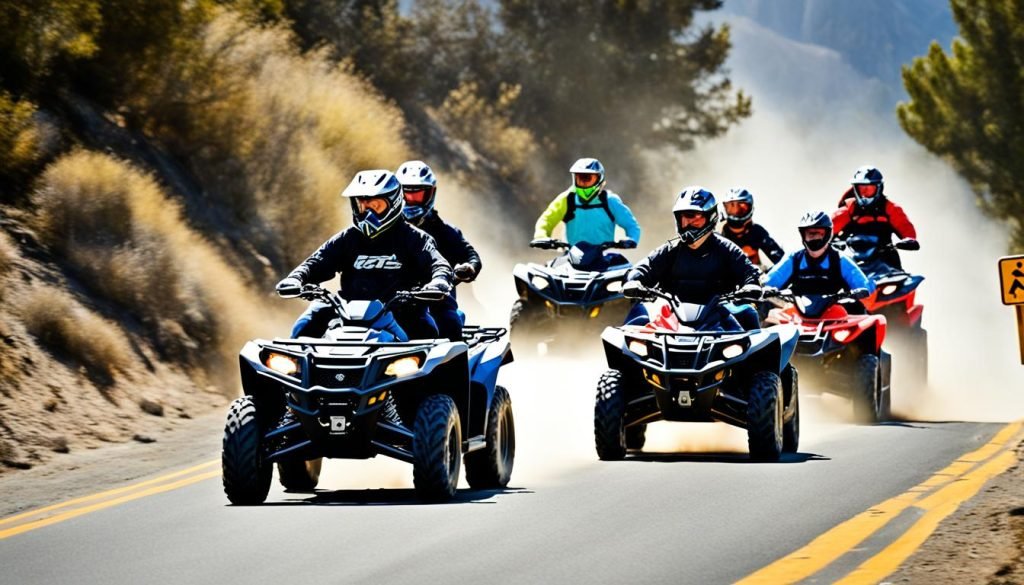
ATV Street Legality in California
In California, the rules regarding ATV and UTV street use are strict. Riding on public streets is generally prohibited, with only a few limited exceptions. Understanding these exceptions is crucial for legal riding.
To ride an ATV or UTV on public roads in California, it must meet certain requirements. First and foremost, the vehicle must be registered with the California Department of Motor Vehicles (DMV) and display a valid license plate. Additionally, the ATV or UTV must comply with specific equipment regulations, including:
- A functioning headlight and taillight for nighttime riding
- Operational brakes, including a parking brake
- A rearview mirror
- Approved muffler and spark arrestor
Furthermore, riders must have a Class M1 motorcycle or Class M2 motorcycle endorsement on their driver’s license to operate an ATV or UTV legally on public streets. It is essential to have the appropriate license and adhere to these regulations to avoid fines and legal consequences.
There are a few limited exceptions when riding ATVs and UTVs on public roads is allowed. These exceptions include:
- Public streets specifically designated by local authorities for off-highway vehicle use.
- Connecting off-highway vehicle routes with access points.
- Crossing a public street at a 90-degree angle if there is no other reasonable alternative.
It’s crucial to note that these exceptions are subject to local laws and restrictions. Always check with the local authorities and research the specific regulations in your area before riding an ATV or UTV on public streets.
Ensuring compliance with ATV and UTV laws in California not only promotes safety but also helps protect our natural resources. It prevents off-road vehicles from causing damage to sensitive habitats and preserves the environment for future generations of riders.
To learn more about the specific rules and regulations regarding ATV and UTV street use in California, visit the California DMV website or contact local law enforcement agencies.
| ATV/UTV Street Legality in California | Requirements | Exceptions |
|---|---|---|
| Vehicle Registration | Required | N/A |
| License Plate | Required | N/A |
| Equipment Regulations |
– Headlight and taillight – Operational brakes – Rearview mirror – Approved muffler and spark arrestor |
N/A |
| Driver’s License | Class M1 or Class M2 endorsement required | N/A |
| Exceptions | N/A |
– Designated off-highway vehicle use streets – Connecting off-highway vehicle routes with access points – Crossing public streets at a 90-degree angle |
ATV Street Legality in Colorado
When it comes to riding ATVs and UTVs on public streets, the general rule in Colorado is that it is prohibited. However, there are exceptions to this rule in many local jurisdictions. If you’re an ATV enthusiast in Colorado, it’s important to check with your local authorities to understand the specific laws and regulations regarding ATV street use in your area.
Local jurisdictions in Colorado have the authority to regulate ATV and UTV street use within their boundaries. This means that while the state may prohibit street riding, certain counties or municipalities may have opened up their streets to these vehicles. It’s crucial to abide by the laws set forth by your local jurisdiction to ensure legal riding and avoid any potential fines or penalties.
By checking with local authorities, you can obtain the necessary information about where and when you can ride your ATV or UTV on public roads. Some jurisdictions may have specific routes or designated areas for off-road vehicles, while others may require permits or additional safety measures. It’s essential to follow these guidelines to maintain the safety of both riders and other road users.
Benefits of Local Jurisdictions Allowing ATV Street Use
Allowing ATVs and UTVs on certain streets in local jurisdictions can have several benefits. It provides enthusiasts with a convenient and legal means of transportation, allowing them to access off-road areas without the need for a trailer or separate transportation. Moreover, it can boost the local economy by attracting ATV riders who will spend money on fuel, food, lodging, and other amenities.
The permission for ATV street use can also foster a sense of community among riders, allowing them to connect with fellow enthusiasts and share their passion for off-road adventures. Additionally, it can create recreational opportunities for families and individuals who enjoy exploring the great outdoors.
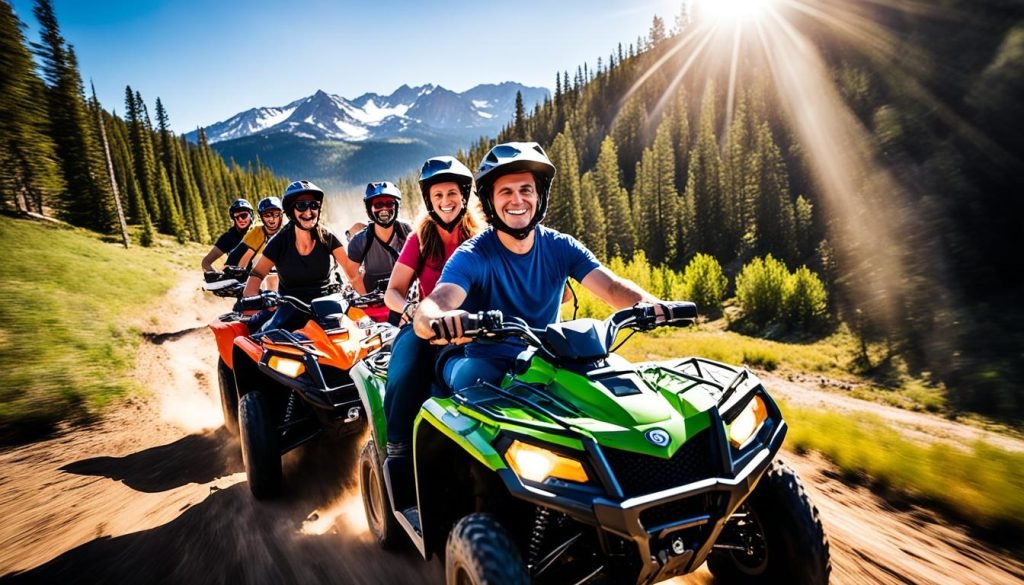
While ATV street use in Colorado is subject to local regulations, it’s important to note that safety should always be a top priority. Riders should operate their vehicles responsibly, obey traffic laws, and wear appropriate safety gear such as helmets and protective clothing. By doing so, ATV enthusiasts can enjoy the thrill of riding while ensuring the safety of themselves and others.
ATV Street Legality in Connecticut
In Connecticut, the operation of ATVs and UTVs on public streets is generally prohibited. However, there are some limited exceptions to this rule that allow for legal riding in specific situations. It is essential for ATV and UTV enthusiasts to understand these exceptions and follow the regulations to ensure a safe and compliant riding experience.
Exceptions to the Prohibition
Connecticut law allows for the use of ATVs and UTVs on public streets in the following circumstances:
- Access to private property: ATV and UTV operators are permitted to use public roads briefly for the purpose of accessing private property, such as a trail or hunting area.
- Agricultural purposes: Farmers and individuals engaged in agricultural activities can use ATVs and UTVs on roadways solely for agricultural purposes.
- Authorized events: Special events authorized by local authorities may allow for the use of ATVs and UTVs on designated roads.
It is important to note that even in these exceptions, there are specific regulations that must be followed. ATV and UTV operators must ensure they comply with all applicable rules, including registration, insurance, and safety requirements.
“Understanding the exceptions to the general prohibition on ATV and UTV street use is crucial for enthusiasts in Connecticut. By following the regulations, riders can enjoy their off-road vehicles responsibly and legally.”
To learn more about ATV and UTV laws and regulations in Connecticut, it is recommended to consult the Connecticut Department of Motor Vehicles or local law enforcement agencies.
Always prioritize safety when operating ATVs and UTVs and remember to wear appropriate protective gear, follow designated trails, and respect private property rights. By being knowledgeable about the laws and regulations, ATV and UTV riders can ensure their enjoyment of these vehicles while also preserving the natural environment and public safety.
ATV Street Legality in Delaware
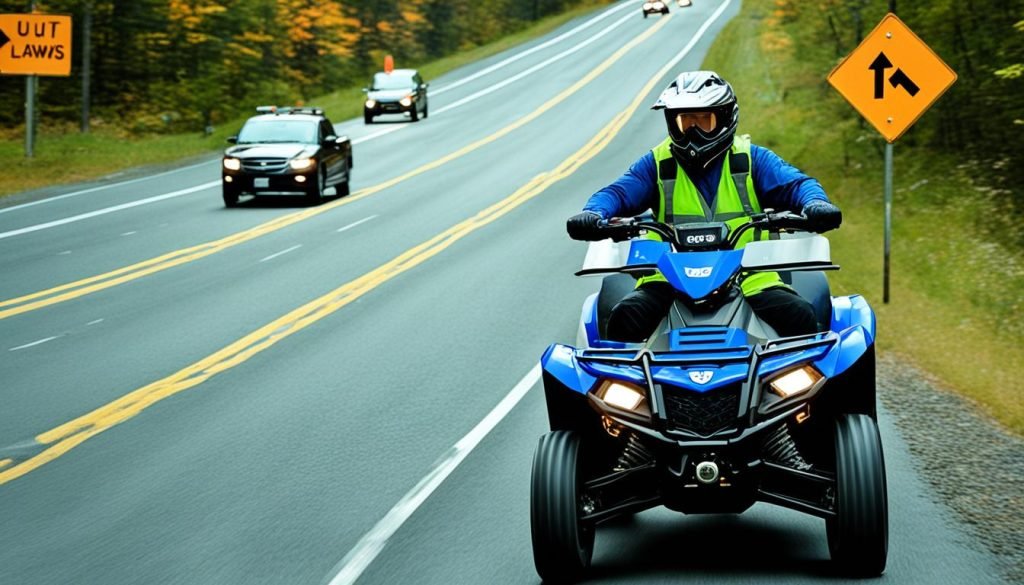
In Delaware, riding ATVs and UTVs on public streets is not permitted. However, there is a specific allowance for pushing the vehicles alongside the road in neutral. This means that while you cannot ride or operate an ATV or UTV on Delaware roadways, you are allowed to manually push them as long as they are in neutral gear. This provision ensures that riders can safely navigate their vehicles on the side of the road without the need for additional transportation methods.
While this may seem like a unique regulation, it is important to understand and comply with these laws to ensure safe and legal riding in Delaware. By following the guidelines and keeping your vehicle in neutral, you can enjoy off-road adventures while conforming to the regulations in place.
It is worth noting that even while pushing your ATV or UTV on the road in Delaware, you should exercise caution and prioritize safety. Be aware of your surroundings, follow traffic rules, and maintain visibility to other motorists. Additionally, always use proper safety gear such as helmets and protective clothing to minimize the risk of injuries.
Overall, understanding the ATV and UTV laws in Delaware is essential for anyone planning to ride in the state. While riding on public streets is not allowed, the provision for pushing the vehicles alongside the road in neutral provides a unique alternative for transportation. By complying with these regulations and practicing safe riding habits, ATV and UTV enthusiasts can enjoy their off-road adventures while respecting the laws of Delaware.
ATV Street Legality in Florida
When it comes to riding an ATV on public streets in Florida, there are specific circumstances to consider to ensure legal compliance. Understanding the ATV and UTV laws in Florida is essential for a safe and enjoyable riding experience.
Speed Limits and Time Restrictions
Florida law permits ATV and UTV riders to operate their vehicles on public roads if the speed limit is 35 mph or less. However, it’s important to note that this is only allowed during the daytime and for short distances.
“Florida law allows the operation of all-terrain vehicles on county roads with a posted speed limit of 35 miles per hour or less on any public road or street in the state during the daylight hours and for a distance of no more than two miles. This does not include municipal roads that are not designated for such use.” – Florida Statute 316.2123
This means that riders must adhere to the speed limits and time restrictions specified by the law to avoid any legal issues.
Equipment Requirements
In order to ride an ATV on public streets in Florida, certain equipment requirements must be met. These include:
- A working headlight and taillight
- A rearview mirror
- A horn
- Turn signals
- Adequate brakes
Ensuring that your ATV or UTV is equipped with these necessary features will help keep you safe on the road and ensure compliance with Florida’s laws.
The Importance of Following ATV Laws
Understanding and following ATV and UTV laws in Florida is vital for several reasons:
- Legal Compliance: Riding within the parameters of the law helps you avoid fines, penalties, and legal issues.
- Safety: Adhering to the established rules and regulations promotes safe riding practices and reduces the risk of accidents.
- Respect for Others: By following the laws, you demonstrate respect for other road users and contribute to overall road safety.
By being aware of the specific ATV and UTV laws in Florida, riders can enjoy their off-road vehicles on public streets responsibly and without compromising safety.
| ATV Street Legality in Florida | Restrictions |
|---|---|
| Speed Limits | 35 mph or less |
| Daytime Operation | During daylight hours |
| Distance | No more than two miles |
| Equipment Requirements | – Working headlight and taillight – Rearview mirror – Horn – Turn signals – Adequate brakes |
By understanding the specific limitations and regulations outlined by Florida’s ATV and UTV laws, riders can enjoy their off-road adventures while staying on the right side of the law.
Conclusion
Riding an ATV or UTV on public roads can be an exhilarating experience, but it’s important to understand and adhere to the specific regulations in your state to ensure a safe and legal ride. Knowing the best practices for road riding ATV/UTV and the legalities involved is crucial for a successful riding journey.
Take the time to familiarize yourself with the local laws and regulations regarding ATV/UTV street use in your area. Each state has its own set of rules, so it’s essential to educate yourself on the specific requirements for equipment, licensing, and registration.
Additionally, always prioritize safety when riding on public roads. Wear proper protective gear, including a helmet, goggles, and appropriate clothing. Follow speed limits, signal properly, and obey all traffic rules. Remember, the road can be unpredictable, so staying alert and cautious is key to enjoying a smooth and safe ride.
By understanding the legalities, adhering to regulations, and practicing safe riding techniques, you can have a fantastic ATV/UTV road riding experience while minimizing the risk of accidents or legal issues. Stay informed, stay safe, and enjoy the thrill of riding your ATV or UTV on the road.
FAQ
Can You Ride an ATV/UTV on the Road Legally?
Yes, you can ride an ATV/UTV on the road legally, but it depends on the specific regulations and requirements in your state.
What are the ATV road legal requirements?
ATV road legal requirements vary by state. It’s important to understand the specific regulations in your area regarding modifications, license plates, insurance, and any other necessary equipment.
What are the safety tips for riding an ATV on the road?
Some safety tips for riding an ATV on the road include wearing proper protective gear, following traffic laws, staying alert and aware of your surroundings, and maintaining a safe speed.
What are the ATV laws and regulations?
ATV laws and regulations differ by state. Each state has its own rules regarding ATV operation on public roads, including where you can ride, speed limits, age requirements, and equipment specifications.
What are the street legal ATV/UTV requirements?
Street legal ATV/UTV requirements typically include modifications such as headlights, taillights, turn signals, side mirrors, a horn, and other safety features. Additionally, you may need to obtain a license plate and proper insurance.
How can I ensure legal road riding of an ATV/UTV?
To ensure legal road riding of an ATV/UTV, you should familiarize yourself with the laws and regulations in your state, make the necessary modifications to your vehicle, obtain the required documentation (such as license plate and insurance), and follow all traffic laws.
Are there any best practices for road riding an ATV/UTV?
Yes, some best practices for road riding an ATV/UTV include wearing appropriate safety gear, maintaining a safe speed, obeying all traffic laws, being aware of other vehicles on the road, and staying on designated ATV/UTV routes.
What are the legalities of riding an ATV on public roads?
The legalities of riding an ATV on public roads vary by state. It’s important to understand and comply with the specific laws, regulations, and requirements in your area to ensure a safe and legal riding experience.
Leave a Reply