
Overheating can lead to serious performance problems and costly repairs for your ATV. Understanding the causes of overheating and addressing them promptly is important for maintaining its longevity and performance. In this guide, you will learn practical steps to diagnose and resolve overheating issues in your ATV, ensuring a smooth and enjoyable ride on any terrain. From maintaining proper coolant levels to checking for blockages, these insights will help you keep your ATV cool and running efficiently.
Understanding ATV Overheating Issues
Before you tackle overheating problems, it’s vital to understand the main reasons your ATV might be running hot. ATV overheating can lead to performance issues, reduced lifespan, and potential engine damage if not addressed promptly. Knowing the fundamentals of overheating can help you identify early signs and take corrective measures.
Common Causes of Overheating
While various factors can contribute to your ATV’s overheating, some of the most prevalent include inadequate coolant levels, clogged air filters, and engine wear. Addressing these issues early on can save you from more extensive repairs down the line.
Types of ATVs Prone to Overheating
On the market, certain types of ATVs tend to overheat more frequently than others due to their designs and usages. High-performance models, especially those used in extreme conditions, are typically more vulnerable to overheating. Understanding the characteristics of these models can help you take preventive measures.
- Sport ATVs
- Utility ATVs
- Heavy-duty ATVs
- Modify-and-race ATVs
- Older ATV models
Recognizing the specific threats based on your ATV’s type can guide your maintenance and riding techniques.
| Type of ATV | Prone to Overheating? |
| Sport ATVs | Yes |
| Utility ATVs | Sometimes |
| Heavy-duty ATVs | Yes |
| Modify-and-race ATVs | Yes |
| Older ATV models | Often |
Understanding which types of ATVs are prone to overheating can empower you to implement specific preventative steps in your maintenance routines. Models that are pushed to their limits, such as sport and racing ATVs, often experience higher temperatures. This makes it vital for you to ensure regular checks and proper adjustments.
- Check fluid levels regularly
- Inspect for air flow restrictions
- Monitor your riding conditions
- Upgrade cooling systems if needed
- Maintain your engine
Recognizing these models can ensure that you are adequately prepared to prevent overheating during your rides.
| Preventive Measure | Purpose |
| Regular fluid checks | Maintain coolant levels |
| Clean air filters | Enhance airflow |
| Monitor riding conditions | Adjust for terrain |
| Upgrade cooling systems | Improve temperature management |
| Routine engine maintenance | Extend your ATV’s lifespan |
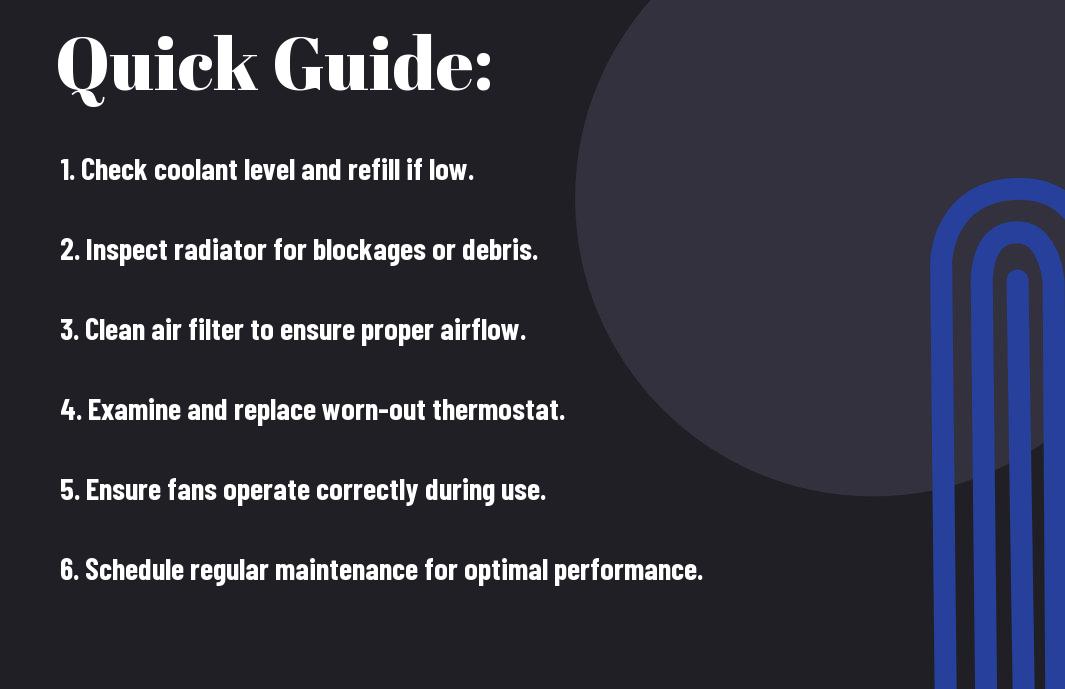

Step-by-Step Guide to Diagnose Overheating
While diagnosing overheating issues in your ATV, it’s important to take a systematic approach. Start by performing a thorough examination of your vehicle’s components and consider checking Overheating High Temperature Fixes for additional insights. Below is a structured guide to help you pinpoint the problem:
| Initial Checks | Inspect fluid levels and ensure air vents are not blocked. |
| Cooling System Inspection | Examine hoses, radiator and fan operation. |
| Final Assessment | Evaluate any fault codes and assess performance. |
Initial Checks
Initial checks should involve assessing the coolant levels and inspecting for leaks. Make sure your ATV’s air intake vents are clear of debris and that there is sufficient airflow when the engine runs. This simple step may help identify obvious issues before you proceed to more in-depth diagnostics.
Cooling System Inspection
Assuming your initial checks yield no simple solutions, a more detailed cooling system inspection is warranted. Look for signs of wear or damage in the hoses and ensure that the radiator is free of blockages. You should also verify that the cooling fan is functioning properly, as this component is important for regulating engine temperature.
Diagnose the cooling system thoroughly to identify any potential malfunctions. Pay attention to any signs of leaks or corrosion, as these can impede the performance of the system. Testing the coolant for proper concentrations and replacing it if necessary can also enhance your ATV’s cooling efficiency. Properly maintained cooling systems are vital for avoiding overheating and ensuring your ATV runs smoothly.
Tips for Preventing Overheating
For better ATV performance and longevity, consider these tips for preventing overheating:
- Avoid prolonged idling
- Keep your ATV clean, especially the radiator
- Monitor fluid levels regularly
- Use your ATV within its power range
- Take breaks during long rides
Thou will ensure a smoother riding experience by following these tips.
Regular Maintenance Practices
Even routine maintenance can dramatically decrease the chances of overheating your ATV. Regularly check and replace air filters, oil, and coolant to keep your engine running smoothly. Pay attention to the condition of the radiator and ensure it is free from dirt and debris. Scheduled inspections help in identifying potential issues before they lead to overheating.
Proper Riding Techniques
Preventing overheating also involves adopting proper riding techniques. Maintain a steady speed and avoid sudden accelerations that strain the engine. Take time to rest your ATV during long rides, allowing it to cool down. Be mindful of terrain; tackling steep or challenging trails can cause your machine to work harder, leading to overheating.
With a few mindful adjustments to your riding style, you can significantly reduce the strain on your ATV’s engine. Try not to push the limits of your machine by overloading it or riding at high RPMs for extended periods. Instead, shift gears smoothly and throttle gently to maintain engine efficiency. Understanding your ATV’s capabilities will also help you choose the right trail conditions that won’t hinder your ride or lead to overheating.

Factors Affecting Engine Temperature
To manage your ATV’s overheating issues effectively, you must consider several factors that influence engine temperature. These include:
- Engine design and efficiency
- Cooling system functionality
- Ambient temperature
- Fuel quality
- Operating conditions
Knowing these factors will help you take the necessary steps in addressing potential overheating problems.
| Factor | Impact on Temperature |
|---|---|
| Engine Design | Affects heat distribution |
| Cooling System | Regulates heat removal |
| Ambient Temperature | Influences engine cooling |
| Fuel Quality | Affects combustion efficiency |
| Operating Conditions | Elevates stress on engine |
Environmental Influences
On the trail, environmental factors play a significant role in your ATV’s performance and temperature management. High temperatures, humidity, and elevation can affect cooling efficiency. Additionally, riding in dense vegetation or dusty conditions may obstruct airflow to the engine, further increasing the risk of overheating. Keeping an eye on these environmental influences can help you maintain a stable engine temperature.
Load and Terrain Considerations
On varied terrains, such as steep inclines or rocky paths, your ATV experiences different levels of stress which can lead to increased engine temperatures. Heavy loads or additional passengers exert pressure on the engine, amplifying the potential for overheating. Ensuring your ATV is suitable for the terrain you navigate is imperative to preventing excessive heat buildup.
Environmental factors also play a role in how load and terrain affect engine temperature. When traversing challenging landscapes with heavy loads, the engine works harder, generating more heat. It’s important to assess both the terrain and your load capacity before heading out. Doing so can minimize overheating risk and enhance your overall riding experience.
Pros and Cons of Aftermarket Cooling Solutions
All aftermarket cooling solutions can enhance your ATV’s performance, but they come with both advantages and disadvantages. Consider the following pros and cons before making a decision:
| Pros | Cons |
|---|---|
| Improved cooling efficiency | Higher cost than stock options |
| Better performance in extreme conditions | Installation complexity |
| Longer lifespan of components | Potential compatibility issues |
| Enhanced aesthetic appeal | May void warranties |
| Customizable to your needs | Requires regular maintenance |
Benefits of Upgrading
With an upgraded cooling system, you can experience better performance and reliability. Your ATV will be better equipped to handle demanding terrains and weather conditions, ultimately extending its lifespan. These enhancements can provide peace of mind during your off-road adventures, ensuring your vehicle functions optimally under pressure.
Potential Drawbacks
Drawbacks of aftermarket cooling solutions should not be overlooked. While they offer benefits, there are important considerations to keep in mind that could impact your overall experience.
For instance, the installation of aftermarket cooling systems may require technical skills or professional assistance, leading to additional expenses. Furthermore, certain upgrades might not be compatible with your specific ATV model, creating a scenario where your investment fails to deliver the desired results. Additionally, some aftermarket parts may void your vehicle’s warranty, meaning you’ll have to weigh the benefits against potential risks carefully.
Troubleshooting Common Overheating Problems
Once again, you may encounter several common issues that lead to your ATV overheating. Start by checking the coolant levels, inspecting for leaks, and ensuring that the radiator is clean and free of debris. Don’t overlook the importance of proper airflow around the engine; blocked vents can trap heat. For more comprehensive guidance on dealing with Overheating, consider joining forums for shared experiences and solutions from fellow ATV enthusiasts.
Quick Fixes
To address minor overheating issues, start by letting your ATV cool down and inspect the airflow. Ensure your vehicle’s air filter is clean and that the radiator is not obstructed by mud or debris. Checking and topping off coolant levels can also help. You can also take short breaks during usage if you’re riding in particularly hot conditions, allowing your ATV some time to cool down.
When to Seek Professional Help
Professional assistance may be necessary if you’ve troubleshot basic issues without success. If your ATV continues to overheat despite your efforts, you need to consult a technician.
Problems such as significant leaks, a malfunctioning thermostat, or a damaged water pump can lead to critical overheating issues that require expert repairs. Ignoring these signs can lead to severe engine damage, so if you notice persistent overheating, it’s best to schedule a visit with a qualified technician who can perform comprehensive diagnostics and repairs.
To wrap up
Taking this into account, addressing ATV overheating issues involves regular maintenance and attention to detail. Ensure you check the coolant levels, clean the air filter, and inspect the radiator for blockages. Monitor the engine temperature during rides and avoid overloading your ATV. If temperatures continue to rise, consider consulting a professional mechanic. By staying proactive and taking these steps, you can enjoy smoother rides without the hassle of overheating problems.
FAQ
Q: What are common symptoms of an ATV overheating?
A: Common symptoms of ATV overheating include the engine temperature gauge rising into the red zone, steam or smoke coming from the engine compartment, loss of power or performance, unusual engine noises, and coolant leaks. If you notice any of these signs, it’s important to address the issue promptly.
Q: What are some immediate steps to take if my ATV starts to overheat?
A: If your ATV begins to overheat, the first step is to turn off the engine and allow it to cool down. Move to a safe location and avoid driving until the temperature returns to normal levels. Check the radiator and hoses for visible damage or leaks, and inspect the coolant levels to determine if any refilling is necessary.
Q: How can I prevent my ATV from overheating during use?
A: To prevent overheating, ensure that your ATV is regularly maintained. This includes checking and replacing coolant, cleaning the air filter, and performing routine oil changes. Additionally, avoid riding in heavy traffic, excessive heat, or steep inclines for extended periods, as these conditions can contribute to overheating.
Q: How does coolant affect ATV engine temperature?
A: Coolant is important for regulating the engine temperature in an ATV. It absorbs heat from the engine and dissipates it through the radiator. If the coolant level is low, old, or contaminated, it may not effectively cool the engine, leading to overheating. Always check the coolant level and quality before a ride.
Q: Are there any specific parts that can cause overheating?
A: Yes, several components can contribute to overheating, including a malfunctioning thermostat, a clogged radiator, a broken water pump, or damaged hoses. Inspect these parts regularly for signs of wear and replace them as needed to ensure proper cooling system function.
Q: What role does riding style play in my ATV’s temperature?
A: Your riding style can significantly impact your ATV’s temperature. Aggressive riding, frequent stops and starts, and riding at high speeds can generate excess heat. To minimize overheating, adopt a smoother riding style, use lower gears on challenging terrains, and take breaks during long rides to give the engine time to cool down.
Q: When should I seek professional help for my ATV overheating issues?
A: If you’ve tried common troubleshooting steps, such as checking the coolant level and inspecting hoses, and your ATV continues to overheat, it may be time to consult a professional. Persistent overheating can indicate a more serious problem, such as internal engine issues or a malfunctioning cooling system that requires specialized diagnosis and repair.
Leave a Reply