
Many ATV enthusiasts are passionate about exploring the great outdoors, but it’s important to consider the environmental impact of your adventures. You have the power to minimize this impact through informed choices and responsible riding practices. By understanding how your actions affect the ecosystem, you can enjoy your off-road experiences while preserving nature for future generations. This guide will provide you with practical tips to help you make environmentally-friendly decisions on your ATV journeys.
Types of ATVs and Their Environmental Impact
Before you choose an ATV, it’s important to understand how different types affect the environment. Here are some key characteristics:
- Gasoline-Powered ATVs emit higher levels of CO2 and pollutants.
- Electric ATVs produce zero tailpipe emissions.
- Hybrid ATVs combine gasoline and electric, reducing fuel consumption.
- Weight and design impact fuel efficiency and emissions.
- Usage patterns influence overall environmental effects.
Perceiving the environmental impact of your ATV choice can help you make an informed decision.
| Type of ATV | Environmental Impact |
|---|---|
| Gasoline-Powered | High emissions and noise pollution |
| Electric | Zero emissions, low noise |
| Hybrid | Moderate emissions, fuel-efficient |
| Utility | Varies based on engine type |
| Sport | Higher emissions due to performance focus |
Gasoline-Powered ATVs
For those who opt for gasoline-powered ATVs, you’re likely to face higher emissions levels. These vehicles typically run on combustion engines, resulting in significant CO2 emissions and particulate pollution. Additionally, their noise levels can disrupt wildlife and degrade the natural experience. The choice of engine size and your riding habits will further impact the overall environmental footprint.
Electric and Hybrid ATVs
Electric models are increasingly popular due to their reduced environmental impact. These ATVs use electric motors, producing zero tailpipe emissions while often offering quieter rides. Hybrid ATVs, on the other hand, combine both gasoline and electric systems, leading to improved fuel efficiency compared to traditional gasoline-only models.
Types of electric and hybrid ATVs provide a compelling alternative to gasoline-powered options. With advances in battery technology, electric ATVs are becoming more capable, offering longer ranges and faster charging times. This means you can enjoy off-road adventures with minimal environmental consequences, fostering a greater sense of responsibility toward nature while still experiencing the thrill of riding.
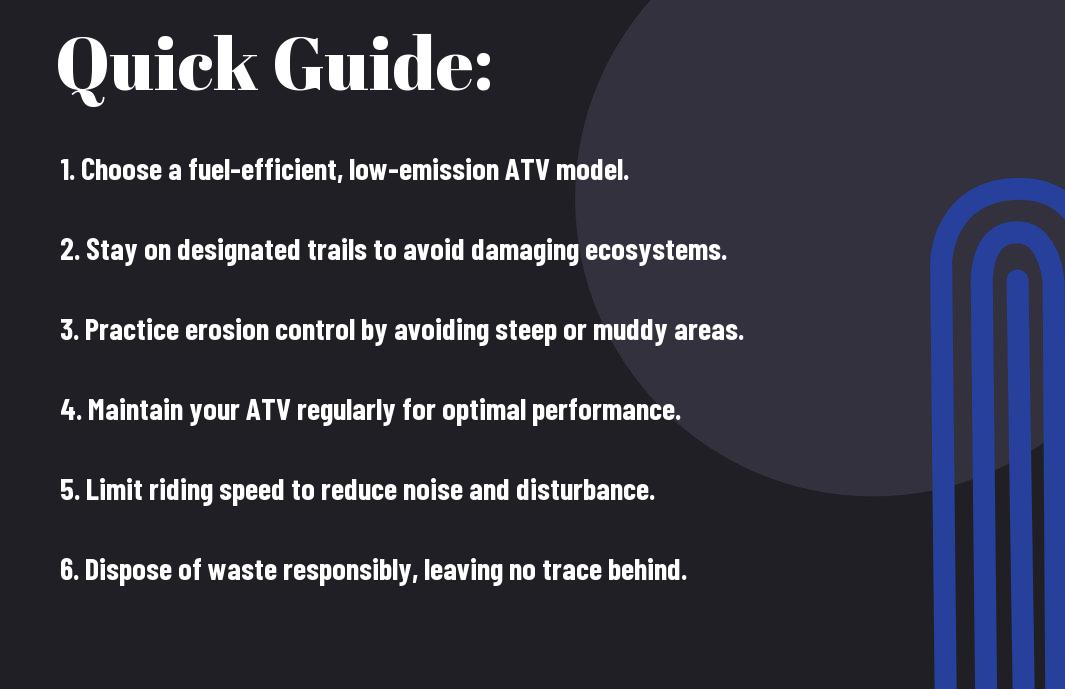

Key Factors Affecting ATV Environmental Impact
It is imperative to understand the key factors that contribute to your ATV’s environmental impact. These factors often determine how responsibly your vehicle is used and the extent of its ecological footprint. Consider the following aspects:
- Terrain type
- Frequency of use
- Fuel type
- Waste management
- Operational techniques
Recognizing these elements can help you make informed decisions while enjoying off-road activities.
Terrain and Usage
Factors that affect ATV environmental impact include the type of terrain you ride on and how often you use your vehicle. Riding in sensitive environments, like wetlands or forested areas, can lead to soil erosion and habitat destruction. Additionally, regular usage in these areas amplifies the negative effects on local ecosystems. Always choose appropriate trails and minimize your ATV’s presence in fragile habitats.
Maintenance Practices
Practices regarding your ATV’s maintenance significantly influence its environmental impact. Regular servicing ensures optimal performance, reducing emissions and fuel consumption. Neglected engines can release harmful pollutants, while improper waste disposal can contaminate surroundings. Efficient maintenance not only enhances your vehicle’s lifespan but also lessens its ecological footprint.
This emphasis on maintenance is vital for minimizing your ATV’s impact on the environment. Engaging in routine checks, such as monitoring tire pressure and oil levels, promotes efficient fuel usage and reduces harmful emissions. You should also dispose of fluids and parts correctly, ensuring they don’t harm the ecosystem. By adopting responsible maintenance habits, you can enjoy your ATV adventures while protecting the planet for future generations.

Tips for Reducing Environmental Impact
After considering your time on an ATV, you can implement several strategies to lessen its environmental footprint:
- Follow designated trails to minimize soil disturbance.
- Maintain your vehicle to reduce emissions and improve efficiency.
- Use biodegradable cleaning products for maintenance.
- Plan trips to minimize travel distances and save fuel.
Recognizing your impact can lead you to make more sustainable choices while enjoying the outdoors.
Responsible Riding Techniques
If you adopt responsible riding techniques, your adventures can be enjoyable without harming the environment. Always stick to marked trails and avoid driving through sensitive areas, like wetlands or meadows. Keeping speeds down can help reduce erosion and water runoff, and encouraging others to follow these practices will further promote eco-friendly riding.
Eco-Friendly Accessories
For your ATV experience to be eco-conscious, consider investing in eco-friendly accessories. These can include products designed to reduce noise pollution, like quieter exhaust systems or specialized tires that minimize soil compaction. Additionally, using GPS devices can help you navigate efficiently without needing to blaze new trails, reducing your overall environmental impact.
A variety of eco-friendly accessories are available that not only enhance your riding experience but also promote sustainability. Solar-powered chargers for your devices can keep you connected without draining the environment. You can even find eco-conscious gear such as clothing made from recycled materials that align with your environmental values while providing comfort and safety during your outings.
Step-by-Step Guide to Eco-Friendly ATV Use
Despite the thrill of ATV riding, you can still enjoy this activity while minimizing its environmental impact. For a comprehensive approach, check out the Guide to Minimizing ATV Environmental Impact. Follow these steps to ride responsibly:
| Choose designated trails | Protect wildlife habitats |
| Maintain your ATV | Reduce emissions |
| Practice safe riding | Enhance safety for others |
Planning Your Route
The key to reducing your ATV’s environmental impact starts with planning your route. Choose established trails that minimize disturbance to wildlife and vegetation. Research local regulations to ensure you’re riding legally and responsibly. This helps protect sensitive areas and promotes sustainable riding practices.
Proper Disposal and Recycling
Disposal of waste materials and recycling is your responsibility as an ATV rider. It’s important to dispose of items like used oil, tires, and batteries properly to avoid harming the environment.
Another way to minimize your environmental footprint is by recycling parts and responsibly managing waste. Look for local recycling programs or designated drop-off locations for ATV-related materials. By ensuring that materials are processed appropriately, you contribute to conservation efforts and foster a culture of environmental stewardship within the ATV community.
Pros and Cons of Eco-Friendly Practices
Not every eco-friendly practice comes without its drawbacks. Understanding both sides can help you make informed choices about reducing your ATV’s environmental impact.
Pros and Cons of Eco-Friendly Practices
| Pros | Cons |
|---|---|
| Reduced emissions | Higher initial costs |
| Less noise pollution | Limited availability of eco-friendly models |
| Improved fuel efficiency | Potential decrease in performance |
| Support for sustainable practices | Need for additional maintenance |
| Better conservation of natural resources | Resistance to change from traditional practices |
Benefits of Reducing Impact
Cons of not adopting eco-friendly practices include increased environmental harm and contributing to climate change. By choosing sustainable options, you can help protect natural habitats and wildlife, ensuring that outdoor spaces remain enjoyable for future generations.
Challenges and Limitations
If you decide to implement eco-friendly practices, you will likely encounter challenges and limitations that can hinder your progress. These may include financial constraints and varying access to eco-friendly products.
Reducing your ATV’s environmental impact can be a rewarding endeavor, but it often requires a shift in mindset. Challenges such as higher upfront costs and ongoing maintenance demands can deter some riders. Additionally, access to eco-friendly equipment may not be readily available in all regions, making it difficult to adopt sustainable practices effectively. However, addressing these challenges head-on can lead to long-term benefits for both you and the environment.
Resources for Sustainable ATV Riding
Your commitment to sustainable ATV riding can be enhanced through various resources available to you. Organizations and local regulations provide guidelines to ensure your adventurous pursuits are environmentally friendly, promoting responsible riding practices that protect natural landscapes. By utilizing these resources, you can enhance your experience while minimizing your impact on the environment.
Organizations and Regulations
To engage in eco-friendly ATV riding, familiarize yourself with organizations that advocate for environmental protection and responsible riding. These organizations often provide resources, such as guidelines and best practices, that help you navigate local regulations and understand the impact of your activities on the environment.
Educational Materials
On your journey towards sustainable riding, educational materials can be a valuable asset. You can find guides, videos, and articles that highlight best practices for minimizing environmental impact while enjoying your ATV adventures. These resources equip you with the knowledge to make informed decisions and connect with other environmentally-conscious riders.
Riding responsibly not only enhances your experience but also contributes to the preservation of the landscapes you cherish. Seek out educational materials that cover topics such as trail etiquette, wildlife protection, and sustainable riding techniques. This information encourages respectful interactions with nature, ensuring that future generations can enjoy the thrill of ATV riding as you do today.
To wrap up
Summing up, you can effectively reduce your ATV’s environmental impact by choosing designated trails, practicing responsible riding techniques, and maintaining your vehicle in optimal condition. Consider using eco-friendly lubricants and fuels, as well as minimizing noise pollution to protect local wildlife. Participating in clean-up efforts and advocating for sustainable riding practices in your community can further contribute to preserving these landscapes for future generations. By being mindful of your choices, you can enjoy your ATV experience while respecting and conserving the environment.
Q: What are some eco-friendly riding practices for ATVs?
A: Eco-friendly riding practices include staying on designated trails to minimize soil erosion and habitat damage, avoiding riding in sensitive ecosystems, and maintaining a steady speed to reduce fuel consumption and emissions. Additionally, riders should avoid riding on wet or muddy trails to prevent further environmental degradation.
Q: How can I choose an environmentally friendly ATV?
A: When opting for an ATV, consider models that have lower emissions and better fuel efficiency. Look for ATVs that meet or exceed EPA emissions standards. Electric or hybrid ATVs are also great alternatives as they produce little to no emissions compared to gasoline-powered models.
Q: Can regular maintenance of my ATV help reduce its environmental impact?
A: Yes, routine maintenance is important for keeping your ATV running efficiently. Regularly checking and changing the oil, cleaning or replacing air filters, and ensuring tires are properly inflated can improve fuel efficiency and decrease harmful emissions. It’s also a good idea to inspect your ATV for leaks and fix them promptly.
Q: Is it possible to upgrade my existing ATV for better environmental performance?
A: Upgrading your ATV could significantly improve its environmental performance. Consider installing a high-efficiency exhaust system or a fuel injection system that optimizes fuel usage. You can also swap out older tires for eco-friendly options that provide better traction with lower rolling resistance.
Q: How does riding responsibly benefit the environment?
A: Responsible riding practices protect the natural environment from damage due to off-road activities. By adhering to rules and guidelines, such as staying on trails and respecting wildlife habitats, riders can help preserve ecosystems for future generations. This responsible behavior also promotes positive relations between ATV users and conservationists.
Q: Are there any organizations that promote sustainable ATV riding?
A: Yes, several organizations advocate for sustainable practices in off-roading, such as the ATV Safety Institute (ASI) and the Off-Road Business Association (ORBA). These organizations provide resources, education, and guidelines aimed at minimizing the environmental impact of off-road vehicle use and promoting responsible riding.
Q: What should I do if I encounter wildlife while riding my ATV?
A: If you come across wildlife while riding, it’s important to remain calm and avoid sudden movements. Reduce your speed and give the animals space to move away safely. Turn off your engine and wait for them to pass if necessary. Ensuring a respectful distance helps protect wildlife habitats and minimizes stress on the animals.
Leave a Reply