
Over the years, ATVs have become a popular way to explore off-road adventures and get your adrenaline pumping. If you’re new to riding, starting an All-Terrain Vehicle can seem daunting. This guide will walk you through the necessary steps to safely start your ATV, ensuring that you feel confident and in control. Whether you’re planning to tackle rugged trails or just have fun in your backyard, knowing how to start your ATV properly will enhance your riding experience.
Understanding ATV Types
Your first step in choosing the right ATV is understanding the various types available. Each type serves a specific purpose and has distinct features that cater to different riding styles and terrains. Here’s a breakdown:
| ATV Type | Key Features |
|---|---|
| Sport ATVs | Lightweight, high-speed performance, agility |
| Utility ATVs | Durable, powerful for hauling and towing |
| Recreational ATVs | Versatile for both fun and light utility work |
| Side-by-Sides | More seating, enclosed cabin, increased cargo space |
| Kids ATVs | Smaller, lower power for younger riders |
After understanding these options, you can make an informed decision based on your riding needs.
Sport ATVs
Assuming you enjoy speed and agility, sport ATVs might be the right fit for you. These machines are designed for performance on trails and tracks, boasting lightweight frames and powerful engines that cater to thrill-seekers.
Utility ATVs
There’s a great need for utility ATVs, especially if you plan to use your vehicle for work or heavy-duty tasks. These ATVs are engineered to handle rough terrains and can carry substantial loads, making them ideal for farming or industrial use.
Types of utility ATVs often come with features such as towing capabilities and cargo racks, allowing you to transport tools, materials, or game efficiently. They’re versatile and built to withstand rigorous demands.
Recreational ATVs
Even if you’re looking for something versatile and fun, recreational ATVs provide a blend of features that cater to both leisure riding and light utility tasks. They are perfect for families or those who enjoy weekend adventures.
ATVs in this category come equipped with comfortable seating and storage options, making them ideal for day trips or camping excursions. You can enjoy various terrains while having the practicality to engage in light tasks when needed.
Essential Factors to Consider Before Starting
Assuming you’re ready to initiate on your ATV adventure, there are some vital factors to consider before you start. Make sure to evaluate the following:
- Your experience level
- The type of ATV you have
- Local laws and regulations
- The weather conditions
This preparation will ensure a safer and more enjoyable ride.
Safety Gear
Even the best riders prioritize safety, and wearing the proper gear is non-negotiable. Always equip yourself with a helmet, gloves, goggles, long pants, and sturdy boots to protect against potential injuries.
Terrain and Conditions
Any rider must have a clear understanding of the terrain they plan to navigate. Different landscapes pose unique challenges that can greatly influence how you handle your ATV.
Essentially, knowing the type of terrain—be it rocky, muddy, or flat—will help you select the right riding technique and adjust your ATV settings. If you’re riding in unfamiliar areas, familiarize yourself with the trail conditions to avoid unexpected hazards. Additionally, always check the weather to prepare for any changes that could affect your ride.
Step-by-Step Guide to Starting Your ATV
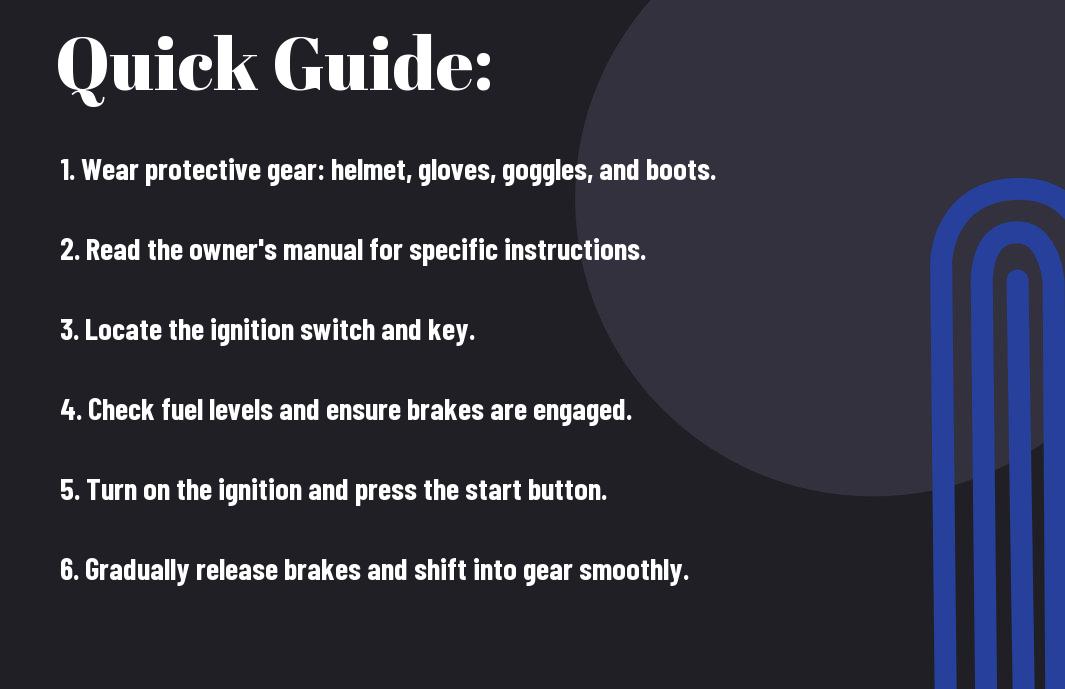
Many new ATV riders may find starting their vehicle a bit intimidating, but following these simple steps will ensure a smooth ignition process. Refer to the table below for a clear breakdown.
| Step | Description |
| 1 | Check fuel and oil levels. |
| 2 | Ensure the ATV is in neutral. |
| 3 | Engage the parking brake. |
| 4 | Turn the ignition key to the “on” position. |
| 5 | Start the engine using the ignition button. |
Pre-Start Checklist
Even if you feel ready to start your ATV, it’s wise to perform a pre-start checklist. Check the fuel level to ensure you have enough for your ride, verify the oil level to avoid engine damage, and inspect the tires for proper inflation. Additionally, ensure all lights and brakes are functioning properly before starting.
Ignition Procedure
To start your ATV, follow a carefully planned ignition procedure to ensure proper operation. After completing the pre-start checklist, turn the ignition key to the “on” position and press the start button. If your ATV has a choke, engage it as needed, especially in colder conditions.
StepbyStep, you want to allow the engine to crank for a few seconds; if it doesn’t start, release the button and wait a moment before trying again. You might need to use the choke if your engine struggles to ignite, particularly in cool temperatures. Once the engine roars to life, disengage the choke as it warms up.
Engine Warm-Up
Some ATVs require a brief warm-up period after starting to ensure optimal performance. Letting your engine run for a few moments allows the oils to circulate and ensures all systems are functioning correctly before you hit the trails.
With a few minutes of warm-up, your ATV will reach the necessary operating temperature, resulting in smoother performance and better throttle response. Once the engine is warm, you’re all set to enjoy your ride. Always stay aware of any unusual sounds during this period, as they might indicate a problem that needs addressing.
Helpful Tips for Beginners
Keep your safety a priority by following these necessary tips for ATV beginners:
- Always wear proper safety gear, including a helmet.
- Familiarize yourself with the ATV’s controls and features.
- Ride in designated areas to ensure safety and legality.
- Never ride alone; having a buddy increases safety.
- Avoid excessive speed, especially in unfamiliar terrain.
Perceiving these strategies can help instill confidence as you start your ATV journey.
Maintaining Control
Control your ATV by keeping your body positioned correctly and using your weight to balance. Shift your weight in the direction you want to turn, while keeping a firm grip on the handlebars. This way, you’ll maintain better traction and stability, especially during sharp turns or uneven terrain.
Practicing Basic Maneuvers
Beginners should focus on mastering basic maneuvers to build your confidence and skill level. Start with simple turns, accelerations, and stops to understand how your ATV responds. Gradually increase complexity by practicing skills like hill climbs and descents.
It is important to take your time and practice in a controlled environment. Find a flat, open area to safely refine your skills. As you gain familiarity with the ATV’s handling and braking, challenge yourself with more varied terrain. This gradual progression will help you develop muscle memory and improve your overall riding experience.
Pros and Cons of Riding an ATV
After assessing the thrill of ATV riding, it’s crucial to weigh its pros and cons to make an informed decision. Below is a breakdown of the advantages and disadvantages you might encounter:
| Pros | Cons |
| Versatile terrain capability | Higher risk of accidents |
| Fun and adventurous experience | May cause fatigue on long rides |
| Great for off-roading | Not suitable for all ages |
| Enhanced social engagement | Requires maintenance and upkeep |
| Accessible in various locations | Noise pollution |
Advantages of ATV Riding
Even though you may encounter some downsides, the advantages of ATV riding can significantly enhance your experience. You’ll enjoy the freedom of exploring various terrains, from forests to sandy beaches, and participate in exciting outdoor activities. ATVs offer an adrenaline-pumping adventure, allowing you to connect with nature while having fun. They also provide an excellent opportunity for bonding with friends and family during adventures.
Disadvantages and Safety Concerns
The potential drawbacks of riding an ATV should not be overlooked. Many riders face safety risks, from falls to collisions, which can lead to severe injuries. Additionally, ATVs can be physically demanding, leading to fatigue or discomfort during lengthy outings. It’s crucial that you understand these concerns before venturing into your ATV adventures.
Plus, safety gear is crucial. Wearing a helmet, goggles, and protective clothing can significantly reduce your risk of injury. Additionally, understanding and following local regulations is important to ensure both your safety and compliance with the law. Taking ATV safety courses can also empower you with the skills and knowledge needed for a safer riding experience.
Common Mistakes to Avoid
Not paying attention to common mistakes can lead to unsafe riding experiences. Make sure to check out How to Start Riding an ATV: 15 Steps (with Pictures) for detailed guidance on the basics of ATV riding.
Overconfidence
Avoid letting overconfidence cloud your judgment when navigating your ATV. It’s imperative to recognize your skill level and ride within your limits, especially when you’re just beginning.
Neglecting Maintenance
Neglecting maintenance can put you at risk and lead to costly repairs. Regularly checking your ATV’s oil, brakes, and tires is important for both safety and performance.
This attention to maintenance ensures that your ATV operates smoothly and reduces the likelihood of mechanical failures while riding. Additionally, staying on top of maintenance helps you develop a better understanding of your vehicle, making it easier to identify any potential issues before they become serious problems.
To wrap up
Considering all points, starting an ATV involves a few straightforward steps to ensure a safe and enjoyable ride. Begin by familiarizing yourself with the controls and safety features, checking the fuel and battery before attempting to start. Use the correct starting method, whether it be using a key or a starter button, and ensure you are in neutral. By following these guidelines, you’ll be equipped with the knowledge to confidently start your ATV and initiate on your adventure with peace of mind.
FAQ
Q: What is the first step to starting an ATV?
A: The first step to starting an ATV is to ensure that you are familiar with the controls and safety features. Check the owner’s manual for specific details related to your ATV model. Make sure the ATV is in neutral, the kill switch is in the ‘Run’ position, and that the ignition key is inserted.
Q: How do I check if my ATV has enough fuel before starting it?
A: To check the fuel level, locate the fuel gauge on the dashboard, if equipped. If not, simply lift the seat or check the fuel tank directly, depending on your model, to ensure there is adequate gasoline. It’s important to always have enough fuel before attempting to start the ATV.
Q: What should I do if the ATV doesn’t start on the first try?
A: If the ATV doesn’t start, first check for any warning lights on the dashboard. Ensure the choke (if equipped) is applied, especially in colder conditions. If it still doesn’t start after a few attempts, check the battery connections and the fuel supply to ensure they are functioning correctly.
Q: Is it necessary to warm up an ATV before riding?
A: Yes, it is advisable to let the ATV idle for a few minutes after starting, particularly in cold weather. This helps the engine oil circulate and warms up the engine, providing better performance and reducing wear.
Q: What kind of maintenance should I perform before starting my ATV?
A: Before starting your ATV, perform a quick inspection that includes checking the oil level, examining the tires for proper inflation and tread, ensuring the brakes are functional, and verifying that all lights and signals are operational. These checks help ensure safe operation.
Q: What gear should I wear to safely operate an ATV?
A: To safely operate an ATV, it is important to wear a helmet that meets safety standards, goggles or a face shield to protect your eyes, gloves for hand protection, long sleeves and pants to shield against branches and debris, and appropriate boots with good ankle support for footing.
Q: Can I start an ATV without a key?
A: Most ATVs are equipped with an ignition system that requires a key for starting. Attempting to start an ATV without a key could lead to damage from improper procedures and may not work with many models. Always have a functioning ignition key to ensure proper operation.
Leave a Reply