
You need to take proper steps to winterize your ATV engine to ensure it runs smoothly when the riding season returns. This comprehensive guide will walk you through necessary maintenance tips, protecting your engine, and preparing your vehicle for the cold months ahead. For more details, check out this resource on Winterizing Your ATV. With the right preparation, you can extend your ATV’s lifespan and enjoy many adventures in the years to come.
Types of ATVs
The different types of ATVs cater to specific needs and riding experiences. Understanding these categories can help you select the right ATV for your activities.
- Utility ATVs
- Sport ATVs
- Youth ATVs
- Side-by-Side ATVs
- Street Legal ATVs
After identifying the type of ATV that suits your needs, you can proceed with winterizing your engine accordingly.
| Type | Description |
|---|---|
| Utility ATVs | Designed for work and recreation, suitable for heavy loads. |
| Sport ATVs | Built for speed and agility, ideal for racing and leisure. |
| Youth ATVs | Smaller and safe options for younger riders. |
| Side-by-Side ATVs | Two or more passengers, great for families. |
| Street Legal ATVs | Designed for legal road use, equipped with lights and signals. |
Utility ATVs
ATVs in the utility category are rugged and versatile, making them perfect for tasks such as farming, trailering, and heavy lifting. These vehicles often have enhanced towing capabilities and cargo racks, allowing you to carry tools and supplies efficiently. Utility ATVs provide a solid balance between work and recreation, and they typically feature more durable tires and frames to handle rough terrain.
Sport ATVs
If you enjoy speed and agility, sport ATVs are designed for a thrilling riding experience. With their lightweight frames and powerful engines, these vehicles excel in performance on tracks and trails, delivering exceptional handling and acceleration.
ATVs in the sport category prioritize speed and precision over heavy-duty capabilities. They are engineered with higher suspension systems and advanced features that allow for dynamic cornering and jumps. Whether you’re racing against friends or tackling challenging terrains, sport ATVs enable you to fully unleash your adventurous spirit, making every ride exhilarating.
Essential Tips for Winterizing
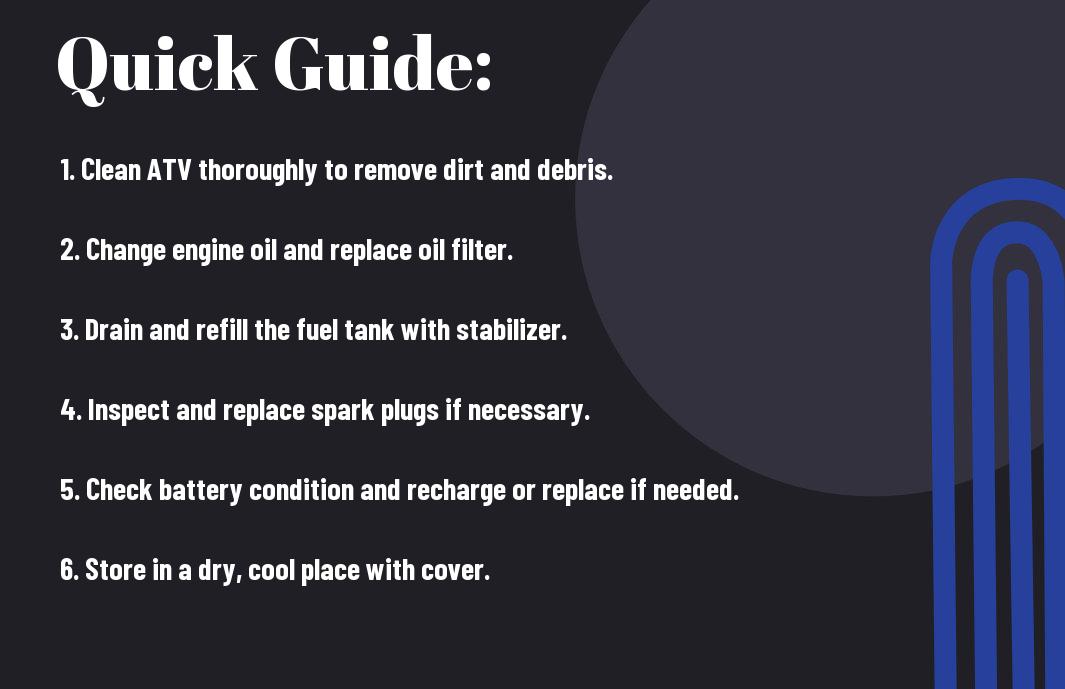
Assuming you want to keep your ATV in top shape during the winter months, consider these imperative tips:
- Change the oil and filter
- Inspect and clean air filters
- Check tire pressure and condition
- Store your ATV in a cool, dry place
- Utilize a cover for protection
The proper winterization of your ATV will ensure optimal performance when spring arrives.
Fuel System Maintenance
On top of the maintenance steps, you should treat your fuel system using a fuel stabilizer to prevent any degradation over the winter months. Fill the tank to help reduce moisture build-up. Run the engine for a few minutes to circulate the treated fuel throughout the system, ensuring all components are protected.
Battery Care
For optimal performance, you need to pay attention to your ATV’s battery during winterization. Disconnect the battery and store it in a warm place, ensuring it remains charged. Regularly check the battery’s voltage, and consider using a trickle charger to maintain its health throughout the colder months.
Understanding the importance of battery care can save you from a non-starting ATV when you’re ready to ride again. Using a multimeter, check the voltage; a fully charged battery should show around 12.6 volts. If the reading is low, recharge it as needed. Additionally, clean the terminals to prevent corrosion, and apply a protective coating on the connections to ensure a longer life. By following these battery care practices, you enhance your ATV’s reliability when you’re ready to enjoy the outdoors again.
Step-by-Step Winterization Process
For winterizing your ATV engine effectively, follow this structured process to ensure long-lasting performance during the cold months.
| Action | Description |
|---|---|
| Clean the Engine | Remove dirt and debris for optimal performance. |
| Oil Change | Replace old oil to protect engine components. |
| Fuel Stabilization | Treat fuel with stabilizer to prevent degradation. |
| Battery Maintenance | Disconnect and store your battery properly. |
Cleaning the Engine
Little attention to cleaning your ATV engine can prevent potential damage. Start by removing any dirt, mud, or debris that may have accumulated during rides. Use a gentle cleaner and a soft brush to avoid scratching surfaces. Ensure that all components, including air filters and vents, are free from clogs to maintain optimal airflow.
Oil Change and Filtration
Clearly, changing the oil and filter is imperative for your engine’s health. Fresh oil lubricates the engine effectively, reducing wear during operation, while a new filter ensures contaminants are removed from the oil that protects your engine.
Another important aspect of an oil change is selecting the right oil type for winter conditions. Synthetic oils, for example, flow better in colder temperatures, providing better protection for your engine. Be sure to follow the manufacturer’s recommendations when selecting the oil and filter to ensure maximum efficiency and longevity for your ATV engine.
Factors to Consider When Winterizing
Many factors come into play when winterizing your ATV engine. To ensure a smooth operation when warmer weather returns, take into account the following:
- Fuel quality and storage
- Oil changes
- Battery maintenance
- Tire pressure
- Cooling system checks
Knowing these factors will help you make informed decisions. For a deeper dive, check out How to winterize : r/ATV.
Climate and Weather Conditions
Assuming you live in an area with severe winters, it’s important to adapt your winterizing process to the specific climate and weather conditions you’re facing. Colder temperatures can have varying impacts on the engine and overall performance, so adjust your strategies accordingly.
Storage Options
For optimal protection, consider where you will store your ATV during winter. Storing it in a temperature-controlled garage can help prevent freezing temperatures from affecting the engine and battery, while an outdoor setup requires additional precautions.
Conditions like humidity and exposure to elements can lead to corrosion and other damage. Ensure that your storage option is dry, sheltered, and equipped with a battery maintainer to keep your ATV in prime condition throughout the colder months.
Pros and Cons of Winterizing Your ATV
Your decision to winterize your ATV can have significant implications for its performance and longevity. While it’s vital for maintaining engine health, there are also some drawbacks to consider. Below is a breakdown of the pros and cons:
| Pros | Cons |
|---|---|
| Prevents engine damage | Time-consuming process |
| Improves reliability in spring | Requires additional supplies |
| Protects fuel system | Potential for missteps if not done correctly |
| Extends lifespan of components | Can be cost-prohibitive |
| Enhances resale value | Some may lack expertise |
Advantages of Proper Winterization
Even with the time and effort it takes, proper winterization of your ATV offers substantial benefits, ensuring that your vehicle remains in excellent condition when you’re ready to ride again. This preventive measure minimizes the risk of damage from harsh winter conditions, protects vital systems from corrosion, and keeps your engine and fuel fresh, reducing repairs when spring arrives.
Disadvantages and Risks
Some challenges arise from the winterization process that may deter you from performing it. While the precautions are for the betterment of your ATV, the process can potentially lead to errors if not executed properly. Missing a step could result in issues down the line, leading to unforeseen repairs or maintenance.
With the complexity involved in winterizing, there’s a risk that you might overlook vital tasks, such as draining fuel or adding stabilizer. This negligence can lead to fuel degradation or engine damage, negating the benefits of winterization. Moreover, if you’re unaccustomed to working with ATVs, the learning curve might add to the frustration, making it seem like a daunting task more than a beneficial one.
Common Mistakes to Avoid
All ATV owners must take care when winterizing their engines, as overlooking key steps can lead to complications during warmer months. Many people rush the process, neglecting important checks like battery maintenance, fuel stabilization, and oil changes. It’s vital to equip your ATV with the proper care so that it remains functional and reliable when spring arrives.
Overlooking Key Components
Even small details can have significant impacts on your ATV’s performance. Failing to inspect or address key components, such as the battery and fuel lines, can result in trouble when you try to use your ATV again. Make a checklist and ensure each part is evaluated and serviced appropriately.
Using Wrong Products
The wrong products for maintenance can lead to damage and inefficient performance. Choosing the appropriate fuel stabilizer, oil type, or coolant is crucial for proper winterization. Always consult your owner’s manual for recommended products suited to your specific model.
With the vast array of products on the market, it’s easy to make the wrong choice. Stick to reputed brands and products specifically designed for your ATV to guarantee compatibility and effectiveness. Using inferior or incompatible supplies may result in corrosion, engine wear, and other issues that can cost you time and money when spring rolls around.
Summing up
To wrap up, winterizing your ATV engine is imperative for ensuring its longevity and optimal performance. Start by changing the oil and replacing the oil filter, then add fuel stabilizer to prevent fuel degradation. It’s also important to clean the air filter and spark plugs, as well as checking the battery’s charge. Store your ATV in a dry, temperature-controlled environment to protect it from the elements. By properly preparing your ATV for the winter months, you can ensure a smoother ride when spring arrives.
FAQ
Q: Why is it important to winterize my ATV engine?
A: Winterizing your ATV engine is vital because it helps protect the engine components from damage caused by low temperatures, moisture, and fuel degradation. Proper winterization can extend the lifespan of your ATV and ensure that it runs smoothly when you bring it out for the next riding season.
Q: What steps should I follow to prepare my ATV engine for winter?
A: To winterize your ATV engine, follow these steps: 1) Clean the ATV thoroughly, removing dirt and debris. 2) Change the oil and filter for fresh oil that will prevent contaminants from causing issues. 3) Stabilize the fuel by adding a fuel stabilizer and running the engine for a few minutes. 4) Check and top off all fluids, including coolant, brake fluid, and transmission fluid. 5) Disconnect the battery to avoid drain, or use a battery maintainer. 6) Store the ATV in a dry place, preferably inside, to minimize exposure to cold weather. 7) Cover the ATV to protect it from dust and moisture.
Q: How do I clean my ATV before winterizing it?
A: To clean your ATV, first remove any accessories and take it to a wash area. Use a pressure washer or garden hose to remove mud and dirt. Pay close attention to the engine compartment, undercarriage, and wheel wells. Use a mild detergent and a brush for stubborn stains. After rinsing, dry the ATV thoroughly to prevent rust. Waxing the plastics can also help protect them during storage.
Q: What type of oil should I use for the winter oil change?
A: It is advisable to use the oil recommended in your ATV’s owner manual. However, a synthetic oil often performs better in low temperatures, providing better protection for engine components. If you live in an area with particularly cold winters, a lower viscosity oil (like 0W-40) may be suitable for winter use.
Q: How does fuel stabilizer work, and why should I use it?
A: Fuel stabilizer works by preventing the fuel from degrading and forming deposits that can clog the fuel system. When added to your ATV’s gas tank, it helps keep the gasoline fresh for months. It is particularly beneficial if your ATV will sit unused for an extended period, as untreated gasoline can turn stale and lead to difficult starts or engine issues in the following season.
Q: What should I do with my ATV’s battery during winter storage?
A: For the winter, you should disconnect the battery to prevent it from draining and potentially freezing. If you have a maintenance-free battery, storing it in a warm place helps prolong its life. If it’s a lead-acid battery, consider using a trickle charger or battery maintainer to keep it charged while in storage. Always check the battery’s fluid levels beforehand and top off if necessary.
Q: Is there any maintenance I should perform on my ATV tires before winter storage?
A: Yes, prior to winter storage, inspect your ATV tires for wear and damage. Inflate them to the recommended pressure to prevent flat spots from forming while they are stationary. If your ATV will be stored outdoors, consider placing it on jack stands to keep the tires off the ground. This can help maintain their shape and prolong their lifespan.
Leave a Reply