
Riders spend 52 million hours on ATVs in the U.S. each year. With so many people riding, knowing how to handle tricky paths safely is key. Whether you’re just starting or you’ve been riding for a while, learning ATV skills is a must for off-road adventures.
Key Takeaways:
- Learning ATV riding skills is important for safe and sure off-road adventures.
- Starters should learn basic skills first and then try more complex ones.
- If you’ve been riding for a while, advanced ATV skills can make you even better.
- To master off-roading, keep learning, ride responsibly, and follow safety rules.
- Getting an ATV rider certificate shows you’re a skilled and careful rider.
Enroll in ATV Safety Courses for Off-Road Mastery
ATV safety courses teach you to ride off-road safely. They cover how to use ATVs, safe riding, trail rules, and handling emergencies. They’re good for both new and skilled riders. These courses help you get good at riding off-road.
These courses are taught by experts. They help riders at every level. You get lessons that fit your own skill level.
The Benefits of ATV Safety Courses
- You learn to ride an ATV well. You’ll learn balance, turning, going up and down hills, and getting past obstacles.
- You learn how to stay safe. The courses show why gear matters, why knowing the laws is important, and how to ride carefully. You also learn to avoid accidents.
- You learn trail manners and how to care for nature. It’s about respecting others and protecting the outdoors while having fun.
- You learn to handle emergencies and basic first aid. This knowledge can help you deal with accidents confidently.
Recognized Certifications
ATV safety courses can earn you special certifications. Groups like the ATV Safety Institute give these out. They prove your skills and responsible riding. It makes you a credible rider.
By taking these courses, you make riding safer for everyone. It’s key to enjoying off-road adventures with less risk. Start with these courses to get good at off-road riding.
Beginner Tips for Safe Off-Road ATV Riding
If you’re new to ATV riding, there are important tips to know. These tips will make your off-road adventure both safe and fun. Here is what you need to start:
- Choose a Beginner-Friendly ATV: Start with an ATV made for beginners. These have less power and a gentle suspension. This makes them easier for new riders. Look for ones with automatic transmissions too.
- Wear Appropriate Safety Gear: Always wear the right safety gear. You need a helmet approved by the DOT, goggles or face shield, strong boots, long pants, gloves, and a tough jacket or jersey. Your gear should fit right and protect you well.
- Stick to Well-Marked Trails: Begin with trails meant for ATVs. They are often upkept, with clear signs and different skill levels. Learn your local trail maps well. This makes sure you only ride where you’re supposed to.
- Respect the Environment: Riding off-road is exciting. But, we must care for nature. Do not harm the ecosystems. Only ride on allowed trails. Follow the rules. Take all trash with you, leaving the trail clean.
Off-road ATV riding needs carefulness, more so for beginners. The right ATV, proper gear, using marked trails, and caring for nature leads to safe, exciting rides.
Keep these tips in mind as you explore off-road ATV riding. Now, let’s explore more advanced ATV riding techniques next.

Mastering Advanced ATV Techniques
For experienced riders, advanced ATV skills are key. These skills help you handle tougher trails. You’ll learn to refine your riding positions and perfect turns.
Developing Advanced Riding Positions
Advanced ATV techniques need you to know proper ATV riding positions. You must balance well and adjust for different terrains. Mastering positions like the “attack” and “neutral” stances improves control and trail handling.
Perfecting Tight Turns
Tight turns are usual in off-road adventures. They require skill to do safely. Practice them in various settings to get better and more confident.
Winching and Recovery Techniques
Being ready for unexpected situations off-road is a must. Winching and recovery techniques are key. Knowing how to use a winch and recovery gear safely gets you out of tough spots.
Enhancing Navigation and Trail-Reading Skills
Good navigation and trail-reading skills are crucial off-road. They help you spot changes and hazards ahead. Improving these skills makes you a safer, more able rider.
Mastering these techniques opens new off-road chances. You’ll handle steep climbs, rough terrain, and obstacles better. Your off-road riding will surely improve.
Obtain ATV Rider Certifications for Expertise
Do you want to prove your ATV riding skills? You can get rider certifications. Groups like the ATV Safety Institute (ASI) have programs for this. They check your knowledge and skills. Getting certified shows you’re a good and careful off-roader.
Rider certifications teach you about riding off-road safely. You learn how to drive right, follow trail rules, handle emergencies, and care for the environment. By taking a certification course, you get the skills to ride well in tough places.
The ASI is known for good rider certification courses. They teach riders at all levels. Finishing a program from ASI means you’re serious about riding safely and well.
Being certified has many good points. It makes you safer and helps you handle surprises better. To join some rides or go on certain trails, you need to be certified. This lets you see special places and join fun rides.
“Getting certified not only proves that you have the necessary skills and knowledge to ride safely, but it also shows you’re committed to keeping yourself and others protected on the trail. It’s a mark of excellence in the ATV community.” – John Anderson, ATV enthusiast
To get certified, you need to do online courses and practice. Online, you learn theory, laws, and tips. In practice, you use what you learned for real. The ASI offers both types of learning across the country.
After you finish your certification, you get a certificate. It says you know how to ride ATVs safely. You can show it to others. It proves you care about being a good rider.
If being an expert ATV rider is your goal, think about getting certified. Doing this through a good organization like the ASI is wise. It improves your skills. It also makes you proud and responsible when riding off-road.
Continuous Learning and Responsibility
Learning all the time is super important for off-road riding. It’s key if you ride ATVs a lot or just started. You need to know the latest safety tips, rules to protect nature, and new ATV tech. This makes sure you’re safe and have fun without harm.
You have to know about ATV safety rules. They tell you what gear to wear and how to act on trails. By following these rules, you keep yourself and others safe. You also help protect nature.
Being responsible means caring about nature, other riders, and being safe. Ride only on paths meant for ATVs. Avoid places that are delicate. Knowing what you can do and not pushing too hard is important.
“Responsible off-roading is more than just following rules; it’s about understanding the impact our actions have on the environment and others. It’s about leaving trails better than we found them and preserving the off-road experience for future generations.”
Joining ATV clubs can make you better at off-roading. These clubs hold classes and go on group rides. Learning from those who have lots of experience is great. It also helps you meet people who love off-roading like you do.
Remember, riding right is more than just being good at it. It’s about showing what off-roading should be like. Safe and caring riding keeps the hobby going. It also encourages others to be good riders.
| Key Takeaways: |
|---|
| 1. Continuous learning is essential for responsible off-roading. |
| 2. Stay updated on ATV safety guidelines, environmental regulations, and technological advancements. |
| 3. Ride with a sense of responsibility towards the environment, other riders, and your personal safety. |
| 4. Join ATV riding clubs or organizations for educational opportunities and community involvement. |
| 5. Be an ambassador for responsible off-roading to inspire others and promote a positive image. |
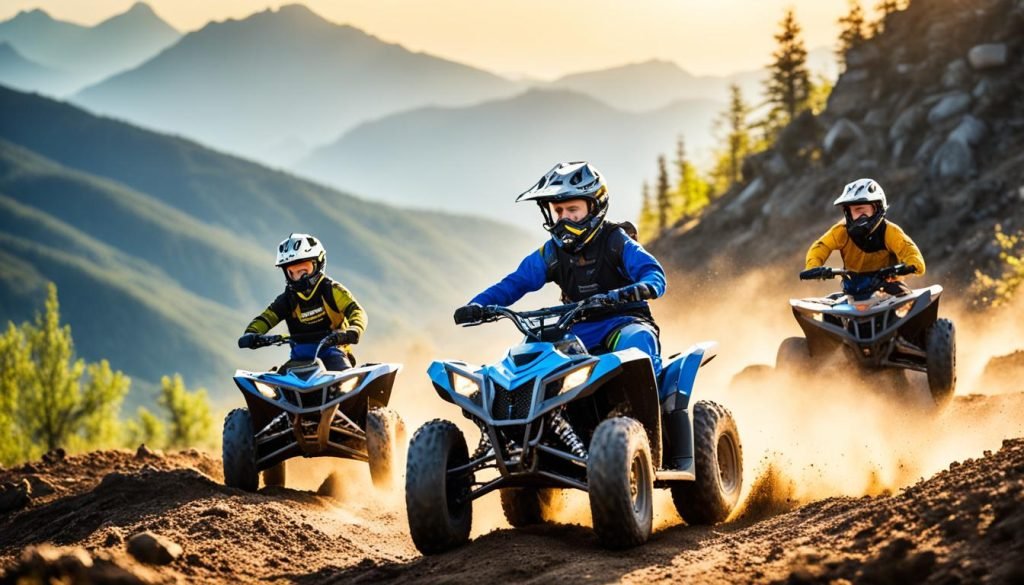
Preparing Kids for Off-Road Biking Adventures
Getting your kids into off-road biking is fun and exciting. But, making sure they are safe and skilled is very important. We will show you how to get kids ready for biking off the road. We’ll talk about safety gear, the right bike size, keeping the bike in good shape, and how to ride well.
Selecting the Right Safety Gear
Keeping kids safe while biking off-road is key. They need the right safety gear to avoid getting hurt. Consider these important items:
- A well-fitted helmet designed specifically for off-road biking
- Sturdy and durable knee and elbow pads
- Comfortable and supportive riding gloves
- Protective eyewear to shield their eyes from debris
- Appropriate footwear such as closed-toe sneakers or cycling shoes
Buying good safety gear helps kids ride safely and with confidence.
Choosing the Appropriate Bike Size
Choosing the right bike size for your child is crucial before they start biking off-road. A bike that doesn’t fit right won’t be comfortable or easy to control. Keep these tips in mind:
- Ensure the bike’s frame size matches the child’s height and build
- Check that the saddle height can be adjusted for proper leg extension
- Confirm that the child can comfortably reach and grip the handlebars
Picking the right bike size helps kids safely and easily ride on trails.
Teaching Basic Bike Maintenance
Teaching kids to look after their bikes is an important part of off-road biking. They should learn simple tasks like:
- Regularly cleaning their bike to remove dirt and debris
- Checking tire pressure and inflating them as needed
- Inspecting and lubricating the chain
- Tightening any loose bolts or components
Getting kids involved in caring for their bikes teaches them responsibility. It makes riding safer and more fun.
Mastering Riding Techniques
Learning important biking techniques is key for kids to ride well on trails. Help them work on these skills:
- Balance and stability: Practice maintaining balance on rough ground
- Braking: Show them how to use brakes safely in different situations
- Shifting gears: Teach them about changing gears for various terrains
- Cornering: Help them learn to turn corners with control and precision
With these skills, kids will feel confident and have fun biking off-road.
Remember, safety, the right gear, and suitable challenges are key for kids biking off-road. Make sure they follow trail rules and know their limits. With proper prep and advice, kids can go on great biking adventures safely and enjoyably!
| Safety Gear | Bike Size | Bike Maintenance | Riding Techniques |
|---|---|---|---|
| Helmet | Frame Size | Regular Cleaning | Balance and Stability |
| Knee and Elbow Pads | Saddle Height | Tire Pressure | Braking |
| Riding Gloves | Handlebar Reach | Chain Maintenance | Shifting Gears |
| Protective Eyewear | Tightening Bolts | Cornering | |
| Appropriate Footwear |
Gearing Up for Off-Road Biking in Different Weather Conditions
Riding an ATV changes with the weather. To stay safe and enjoy your ride, it’s important to dress right for each type of weather. This includes sunny and dry days, rainy and wet trails, and snowy paths. Being ready helps you have fun and keeps you safe.
Riding in Sunny and Dry Conditions
In sunny, dry weather, protection and comfort are key. Here are a few tips:
- Wear lightweight and breathable clothing to stay cool.
- Apply sunscreen to protect your skin from harmful UV rays.
- Wear polarized sunglasses to enhance visibility and reduce glare.
- Stay hydrated by carrying an adequate supply of water.
Even with good trail conditions, remember to stay safe. Always wear the right safety gear.
Riding in Rainy and Wet Conditions
Rainy and wet conditions need extra care and safety steps. Here are some important tips:
- Invest in waterproof gear, including a rainproof jacket and pants.
- Wear goggles or a helmet visor to maintain clear visibility.
- Check tire pressure regularly to ensure optimal traction.
- Reduce speed and maintain a safe distance from other riders.
When riding on wet trails, be careful of slippery spots. Adjust how you ride to stay safe.
Riding in Snowy Conditions
Snowy conditions make ATV riding an adventure. But, they also bring challenges. Here’s how to ride safely in the snow:
- Equip your ATV with snow tires or chains for enhanced traction.
- Dress in warm, layered clothing to stay comfortable in cold temperatures.
- Use handguards to protect your hands from snow and cold winds.
- Ride with caution and avoid sudden acceleration or braking.
Riding on snow needs extra care, as it can be hard to see and the ground can be unexpected. Always choose safety first and be ready for weather changes.
No matter the weather, always ride with care. Respect the environment and follow the rules. By dressing right for the weather, you can enjoy exciting and safe off-road biking.
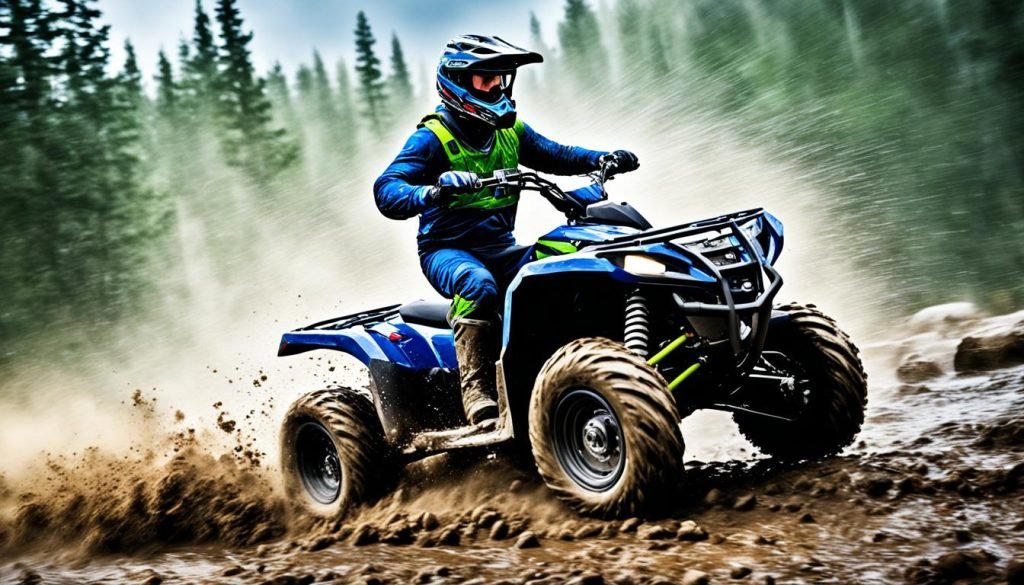
Understanding ATV and UTV Capabilities in Various Weather Conditions
Understanding ATVs and UTVs is key for outdoor fun. These vehicles shine in all terrains. They have special features for performance and safety. Let’s look at what makes them great for the wild.
Engine Performance
The engine is very important. It helps ATVs and UTVs go through tough weather. They have strong engines. This makes it easy to go over mud or snow. The engines are built to last, even in bad weather.
Tire Selection
ATVs and UTVs have special tires. They work well in different weathers. For mud or rain, you need tires with deep treads. For snow, tires with bigger grooves are better. Picking the right tire helps a lot in outdoor adventures.
Suspension Systems
Riding off-road means going over bumps and holes. ATVs and UTVs have strong suspensions. They make the ride smooth and easy. You can change the suspension for different weathers. This keeps you stable and comfy on rocky paths or in deep snow.
Protective Components
Weather can be tough when you’re outside. ATVs and UTVs are built to be tough. They have extra parts like strong frames and skid plates. These protect the vehicle from dirt and damage. So, you can enjoy your ride, no matter the weather.
Knowing about ATVs and UTVs helps you choose wisely. Think about engine, tires, suspension, and protection. With the right vehicle, you can enjoy any terrain. Brave the wild with confidence!
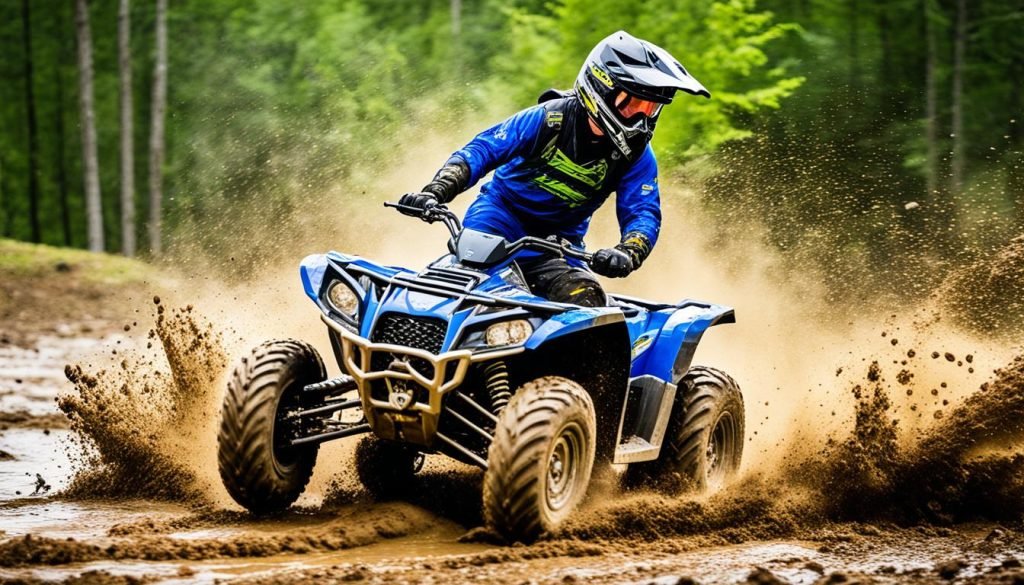
Customization and Maintenance Strategies for Weather Adaptability
Customizing and keeping your ATV ready for all weather boosts its performance. This makes off-roading more fun. You’ll learn how to upgrade and care for your ATV for any weather here.
ATV Customization for Weather Conditions
There are many ways to ready your ATV for different weathers. A winch helps in tough terrains like deep mud or snow. A snow plow lets you clear paths in snow, so riding stays easy.
For harsh weather, an enclosed cab keeps you dry and warm. This protects you from rain, snow, or strong winds. It makes sure you’re comfortable and safe while riding.
Finding the right upgrades for your ATV and weather is key. Talk to experts or other riders for advice. They can share their experiences and help you choose.
ATV Maintenance Tips
Good care is also key to having your ATV weather-ready. Here are tips to follow:
- Regular Cleaning: Clean your ATV after riding to remove mud and dirt. Focus on hard spots to prevent rust from harsh weather.
- Fluid Checks: Check and change your ATV’s fluids often. These include engine oil and brake fluid. Clean fluids mean better performance in all weathers.
- Tire Maintenance: Always check your tires for damage and keep them properly inflated. In snow or rain, special tires work better for safe riding.
- Protective Coatings: Use protective sprays on parts like the frame to stop rust. This is important if you face rain, snow, or salty roads.
- Storage Considerations: If you deal with extreme weather, store your ATV in a dry, safe place. This protects it and keeps it in good shape longer.
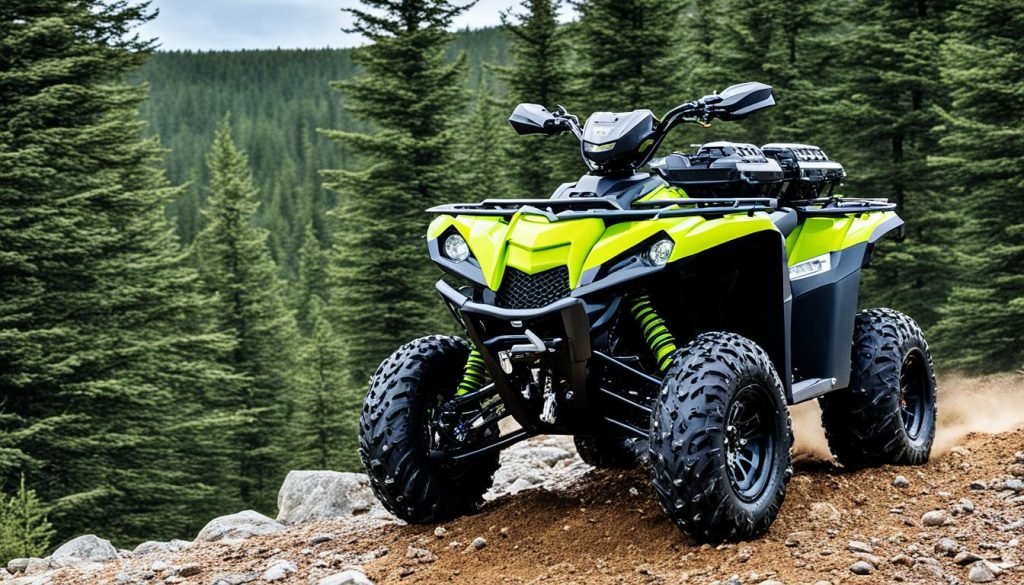
Making your ATV weather-ready is crucial. Using upgrades like winches and snow plows helps in all conditions. Also, regular care like cleaning and checking fluids keeps it running well. This way, your ATV can handle any adventure.
Sunny and Dry Conditions: Tips for Safe and Enjoyable Riding
When the sun shines and trails are dry, it’s perfect for ATV riding. You’ll get the best trail conditions for a fun adventure. Here are key tips for safety and fun on dry trails.
1. Maintain Visibility
Seeing clearly is key in sunny weather. Sunlight can make it hard to spot obstacles. Wearing polarized sunglasses helps your eyes and cuts down on glare. You can see better and ride smoothly.
2. Protect Your Skin from the Sun
The sun can harm your skin after long hours outside. Protecting your skin is a must. Use sunscreen with a high SPF. Also, cover your face, neck, and arms to avoid burns.
3. Stay Hydrated
Sun and dry air can make you sweat more and get dehydrated. Drinking plenty of water keeps you energized and safe. A hydration pack is handy for easy drinking while riding.
4. Wear Appropriate Safety Gear
Safety gear is crucial, even in good weather. Wear a helmet, goggles or shield, gloves, pants, and boots. Choose clothes that protect from the sun but are cool and comfy.
Pro Tip: Don’t underestimate the power of protective gear. It can significantly minimize the risk of injuries and provide you with the confidence to push your limits on the trails.
5. Know Your Trail Conditions
Learn about your trail before you go. Sunny weather can make trails dusty and loose. Be ready to adjust how you ride. Be prepared for changes in the terrain.
Follow these tips for a safe and fun ATV ride in the sun. Always put safety first, think about the weather, and care for the environment. Enjoy your off-road adventures to the fullest.

Riding in Rain and Wet Conditions: Challenges and Tips
Riding in wet weather on an ATV can be tricky. You’ll face things like less visibility and slippery paths. It’s very important to focus on safety and change how you ride.
To stay safe on wet trails, your tires must grip well. Make sure they are not worn out. You might even want tires made just for wet weather. Try letting out a little air from your tires for better grip.
Wearing the right gear is a must in the rain. You will need clothes that keep water out but let air in. Get a good rain suit and waterproof boots. And make sure your helmet has a clear face shield to see through the rain.
Changing how you ride is also key in the rain. Keep your speed down so you can react quickly if needed. Stay away from sudden stops or speed ups. They can make your ATV slide. Be very careful on turns and hills.
FAQ
What are some essential ATV riding techniques for mastering off-road terrain?
Essential ATV techniques include tackling tough terrains and learning sharp turns. They also include winching skills and trail reading.
Why is it crucial to enroll in ATV safety courses for off-road mastery?
ATV safety courses teach you to ride safely off-road. They cover vehicle operation, trail rules, and emergencies.
What are some beginner tips for safe off-road ATV riding?
Start with an easy ATV and wear the right safety gear. Stick to marked trails and care for the environment.
How can I master advanced ATV techniques for off-road riding?
To master advanced techniques, focus on tough terrains and sharp turns. Learn winching and trail reading too.
Is there a way to obtain rider certifications for ATV riding?
Yes, groups like the ATV Safety Institute offer certification. This shows you are a responsible rider.
How can I stay updated on the latest ATV riding guidelines and advancements?
Keep up with the latest safety rules and ATV tech. Always ride with care for safety and the environment.
How can I prepare children for off-road biking adventures?
Choose the right safety gear and bike size for them. Teach basic maintenance and riding techniques.
What are some tips for off-road biking in different weather conditions?
Different weather requires different tips. You need specific gear and safety steps for sun, rain, and snow.
How can I understand the design and capabilities of ATVs and UTVs for off-road riding?
Learn about ATV and UTV designs to enjoy off-roading. Explore their engines, tires, and safety features.
What are some customization and maintenance strategies for weather adaptability in ATV riding?
Customize your ATV for weather performance. Add winches and snow plows. Regular check-ups prevent rust and damage.
What are some tips for safe and enjoyable ATV riding in sunny and dry conditions?
For sunny rides, protect against the sun and stay cool. Wear sunglasses, sunscreen, and light clothes.
How can I navigate wet trails and ride safely in rain and wet conditions?
Wet rides need good tire grip and right gear. Adjust your style for slippery trails and low visibility.
Source Links
- https://riiroo.com/blogs/ride-on-toy-guides/basic-off-road-dirt-bike-riding-skills-for-your-kid
- https://utvdr.com/mastering-the-trails-a-comprehensive-guide-to-atv-rider-training-certifications-atv-safety-courses-beginner-tips-and-advanced-techniques/
- https://www.l1feoutdoorsatv.com/post/helpful-tips-for-navigating-your-atv-utv-through-diverse-climates
Leave a Reply