
This guide will help you understand the legal age requirements for riding an ATV. Laws can vary by state and country, so it’s important to know what applies in your area. You should also be aware that ATVs Are Not Safe for Children: AAP Policy Explained, which emphasizes the need for safety precautions and responsible usage. By familiarizing yourself with the regulations, you can ensure that you and your loved ones enjoy the thrill of ATV riding responsibly and legally.
Types of ATVs
Before you decide to hit the trails, it’s important to understand the different types of ATVs available. Here’s a quick overview of the main categories you can choose from:
- Sport ATVs
- Utility ATVs
- Side-by-Side (SxS)
- Youth ATVs
- 4×4 ATVs
Knowing which type fits your needs can enhance your riding experience.
| Type of ATV | Description |
|---|---|
| Sport ATVs | Designed for speed and agility |
| Utility ATVs | Geared for work and hauling |
| Side-by-Side (SxS) | Capacity for passengers and cargo |
| Youth ATVs | Smaller, safer models for younger riders |
| 4×4 ATVs | Better traction for rough terrains |
Youth ATVs
Little riders have a special category of ATVs designed just for them. These youth models are lighter and often come with speed limiters to ensure your child’s safety. They are perfect for teaching young ones responsible riding habits while offering a fun and thrilling experience.
Adult ATVs
An adult ATV is built for the seasoned rider, with more power and capabilities. These machines are designed to handle tougher terrains and are typically larger and faster than youth models. They come in various styles, catering to sport enthusiasts, utility tasks, or adventurous off-roading.
You should consider your riding style and experience level when choosing an adult model. They offer enhanced features such as better suspension, larger engines, and additional accessories that can greatly improve your riding experience in challenging environments. Therefore, making an informed choice is key to enjoying your ATV adventures responsibly.
Legal Age Requirements
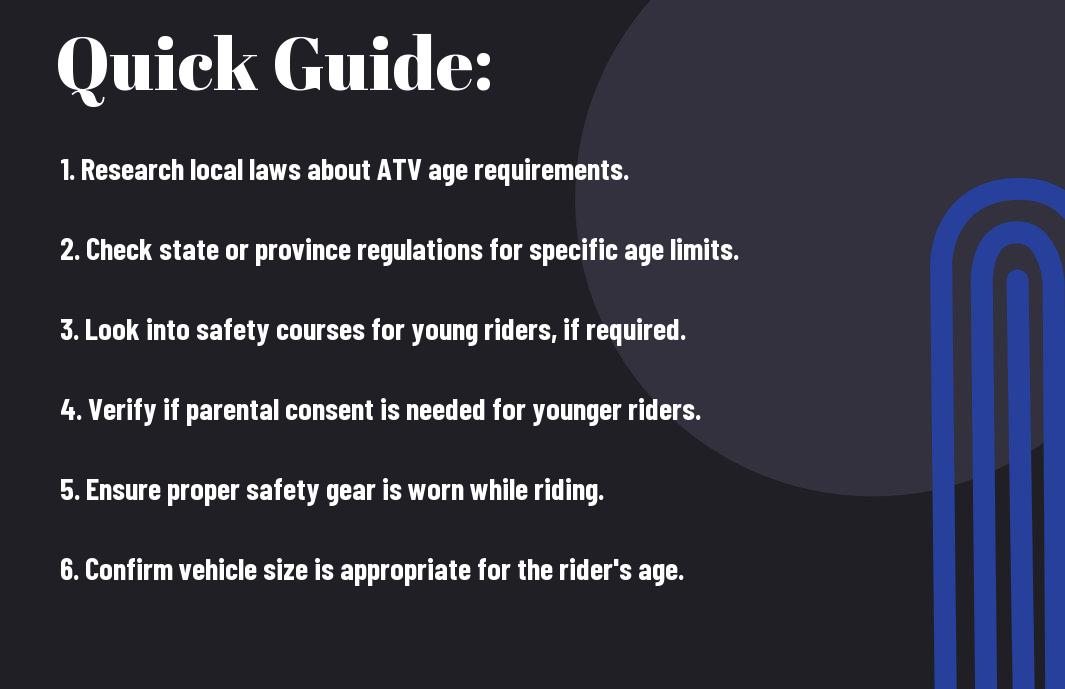
There’s no universal legal age for riding an ATV, as it varies by state. Generally, you must meet certain age requirements to ride legally. To learn more about specific regulations in your area, you can visit the ATV | Wisconsin DNR website.
State-Specific Regulations
Now, it’s important to check your state’s ATV laws, as they often outline the minimum age for operation and any necessary training. For example, some states require riders under a certain age to complete a safety course before hitting the trails.
General Age Guidelines
With a variety of age requirements in place, most states stipulate that riders must be at least 16 years old to operate an ATV alone. However, children as young as 6 may be permitted to ride on certain types of ATVs under adult supervision, varying by jurisdiction.
State-specific regulations demonstrate the importance of adhering to local laws concerning age guidelines for ATV operation. Familiarize yourself with the rules in your area to ensure safe and legal riding experiences. Some states offer exceptions and additional safety training for younger riders, so it’s wise to stay informed about all requirements that apply to you.
Tips for Beginner Riders
Many new riders find it helpful to follow specific tips to enhance their experience and safety. Consider these suggestions:
- Start on flat, open terrain.
- Practice turning and braking slowly.
- Always ride with a partner.
- Stay aware of your surroundings.
- Know your machine’s limits before venturing out.
Assume that building your skills gradually will lead to more enjoyable rides.
Safety Gear Recommendations
Clearly, wearing the right safety gear is necessary for your protection while riding an ATV. Always invest in a quality helmet designed for off-road use, gloves, and goggles to shield your eyes from debris. Additionally, padded clothing can provide extra comfort and protection. Sturdy boots that cover your ankles are also critical to avoid injuries.
Riding Techniques
Riders should familiarize themselves with basic techniques to ensure a safe and enjoyable experience. Start by positioning your body correctly; keep your knees bent and body relaxed for better control. Always keep both hands on the handlebars and your feet on the foot pegs, as this helps maintain balance and stability.
With practice, you can master turning and braking techniques. Shift your weight to the outside of the turn and look in the direction you want to go. When braking, apply pressure evenly to both brakes and ease off gradually to avoid skidding. Focusing on body posture and control will significantly improve your riding skills over time.
Step-by-Step Guide to Riding an ATV
Keep your safety and enjoyment in mind as you commence on your ATV adventure. Follow this step-by-step guide to ensure you ride responsibly and have fun.
| Step | Description |
|---|---|
| 1 | Wear appropriate safety gear, including a helmet and protective clothing. |
| 2 | Conduct pre-ride checks to ensure the ATV is in good condition. |
| 3 | Familiarize yourself with the ATV controls and features. |
| 4 | Practice starting, stopping, and navigating in a safe area. |
| 5 | Ride in designated areas and follow local laws and guidelines. |
Pre-Ride Checks
There’s a variety of pre-ride checks you should perform to ensure your ATV is safe to operate. Inspect the brakes, tires, lights, and throttle for any signs of wear or damage. Make sure the oil and fuel levels are sufficient, and check the chain and battery as well. These simple steps can prevent accidents and enhance your riding experience.
Riding Procedures
PreRide your adventure by mastering the necessary riding procedures. It’s imperative to maintain a proper grip on the handlebars while keeping your feet firmly planted on the footrests. Always position your body to shift weight appropriately when navigating turns or uneven terrain. Stay alert to your surroundings and adjust your speed accordingly based on the trail conditions. Following these procedures, you can ensure a smoother, safer, and more enjoyable ride.
Factors Influencing Legal Age
Your ability to ride an ATV legally is determined by several factors, including:
- Your local regulations
- The specific type of ATV
- The riding environment
- Safety training requirements
After considering these factors, you can better understand the legal age requirements in your area.
Vehicle Specifications
Specifications for ATVs can vary widely, affecting legal age regulations. Different sizes and engine capacities might have age restrictions, ensuring that younger riders are not operating vehicles that exceed their skill levels. Always check the manufacturer’s guidelines to ensure compliance with age-related laws.
Local Laws and Policies
Policies regarding the legal age for ATV riding differ by region, often dictated by state or local authorities. These laws can provide age-specific guidelines and safety requirements tailored to protect riders.
Another important aspect of local laws is that they frequently address helmet use, passenger regulations, and mandatory training courses. Understanding your area’s specific policies will help you navigate legal requirements, ensuring a safer riding experience while keeping you compliant with the law.
Pros and Cons of ATV Riding
After weighing the benefits and drawbacks, it’s clear that ATV riding comes with its own set of perks and challenges. Below is a breakdown to help you make an informed decision:
| Pros | Cons |
|---|---|
| Enhances outdoor adventure | Risk of accidents |
| Improves physical fitness | Potential for property damage |
| Openness to diverse terrains | Requires maintenance and costs |
| Fosters social bonding | Environmental impact concerns |
| Accessible for varying skill levels | Noise pollution issues |
Benefits of Riding
If you enjoy the great outdoors, riding an ATV can elevate your experience by offering thrilling adventures through diverse landscapes. You can discover new trails, connect with nature, and even participate in ATV events or group rides, enhancing your overall satisfaction and enjoyment.
Risks and Considerations
Benefits of ATV riding are accompanied by certain risks that you should take into account. Being aware of safety measures, wearing protective gear, and understanding traffic laws are important to minimizing hazards while riding.
A significant consideration is the potential for injuries, particularly if you lack experience or ride recklessly. It’s vital to engage in proper training, adhere to guidelines, and evaluate the terrain you plan to traverse. Additionally, understanding environmental regulations can help you navigate any legal restrictions while enjoying your ride responsibly.
To wrap up
On the whole, the legal age for riding an ATV varies by state or country, so it’s important to be aware of your local laws. Generally, many areas require riders to be at least 12 or 16 years old, with some stipulating age restrictions or safety certification for younger riders. Always verify the regulations in your region to ensure that you and your passengers are compliant and safe while enjoying your ATV adventures.
FAQ
Q: How old do you need to be to ride an ATV legally?
A: The legal age to ride an ATV varies by state and country. In the United States, some states allow children as young as 6 years old to operate smaller ATVs, while others may set the minimum age at 12 or older. Always check local regulations for specific age requirements.
Q: Are there restrictions based on the size of the ATV?
A: Yes, many states impose restrictions based on the size of the ATV. Generally, younger riders are permitted to operate smaller, less powerful ATVs, while older riders may operate larger vehicles. It’s important to follow these guidelines to ensure safety and compliance with the law.
Q: Do I need a special license to ride an ATV?
A: In some states, riders may be required to obtain a special ATV or off-road vehicle safety certification. This often involves completing a training course and can be necessary for riders below a certain age. Check your local laws to see if certification is required in your area.
Q: Can children ride ATVs with adult supervision?
A: Many regulations allow young riders to operate ATVs under adult supervision, provided they are riding on private property or designated riding areas. However, adults should ensure that the child is capable of handling the vehicle safely.
Q: What safety measures should be taken for underage riders?
A: When younger riders operate ATVs, they should always wear proper safety gear, including helmets, goggles, gloves, and protective clothing. Parents or guardians should also supervise riding activities and educate young riders about safe riding practices.
Q: Are there penalties for riding an ATV illegally?
A: Yes, operating an ATV illegally, including allowing an underage rider to operate one or riding without required safety equipment, can lead to fines, penalties, and potential liability for accidents. Always follow local laws and regulations to avoid these consequences.
Q: How can I find the legal requirements for my area?
A: To find the legal requirements for ATV riding in your area, you can visit your state’s department of motor vehicles or natural resources website, consult local law enforcement, or contact ATV organizations that provide information about regulations in your region.
Leave a Reply