
Over the years, organizing safe ATV group rides has evolved into an crucial skill for any rider. By applying some strategic planning and communication, you can ensure that your adventure is both thrilling and secure. This guide will walk you through the necessary steps to organize your ride effectively, from choosing the right trails to establishing safety protocols, ensuring everyone enjoys the experience while minimizing risks. Let’s gear up and prepare for an unforgettable journey on the trails!
Types of ATV Group Rides
ATV group rides can vary significantly based on the purpose and style of the outing. Understanding the different types can help you select the right experience for your group. Consider the following options:
- Recreational Rides
- Competitive Rides
- Scenic Tours
- Trail Exploration
- Adventure Rides
Recognizing the purpose of your ride will help in planning a safer and more enjoyable adventure.
| Type of Ride | Description |
| Recreational Rides | Leisurely outings focused on enjoyment and connection with nature. |
| Competitive Rides | Events where riders compete for time, skill, or endurance. |
| Scenic Tours | Rides that prioritize sightseeing and experiencing nature’s beauty. |
| Trail Exploration | Venturing into new or less-traveled paths for adventure. |
| Adventure Rides | Excursions that include obstacles, varied terrain, and excitement. |
Recreation Rides
Types of recreational rides are typically casual and relaxed, allowing riders to enjoy the scenery at an unhurried pace. This type of ride is perfect for groups looking to bond and experience the outdoors together. You can choose a familiar trail or a new path to explore nature’s beauty while socializing.
Competitive Rides
To participate in competitive rides requires a spirit of challenge, as these events are designed to test your skills, speed, and endurance against others. You may find yourself tackling various obstacles and racing against the clock.
Plus, competitive rides often feature well-established rules and safety measures to protect participants. You’ll engage in events ranging from timed races to obstacle challenges, providing an adrenaline rush while honing your ATV skills. Competing in a group can foster camaraderie and motivation, ultimately enhancing your riding experience.
Key Factors for Safe Group Riding
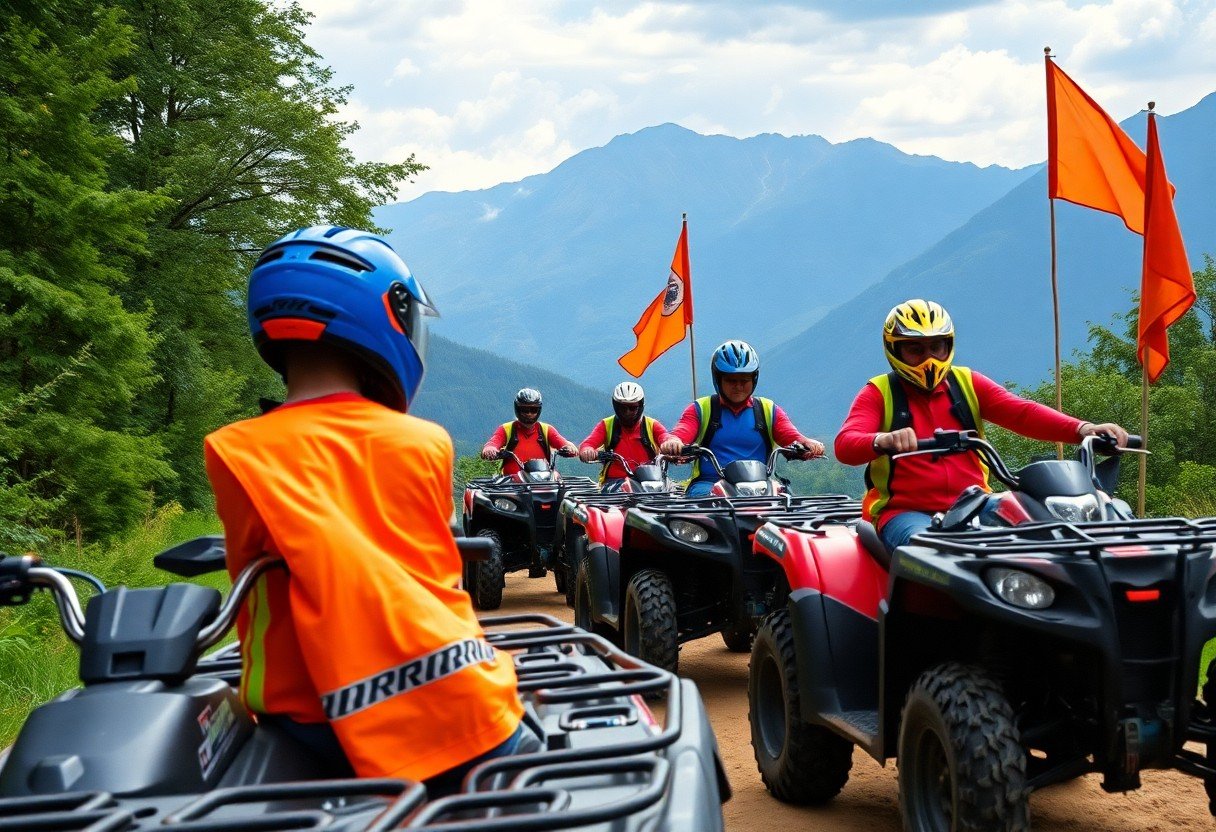
One of the most important aspects of safe group riding is to establish clear communication and protocols. Prior to setting out on a ride, ensure that everyone is aware of the ground rules and emergency plans. Key factors include:
- Establishing a leader and a sweep rider.
- Maintaining a safe distance between riders.
- Encouraging regular check-ins throughout the ride.
- Understanding hand signals for communication.
After implementing these practices, you’ll foster a safer environment for all participants.
Group Size Considerations
Any group size can be enjoyable for ATV riding, but it’s important to find a balance. A smaller group typically allows for better communication and easier navigation through obstacles, while a larger group can be fun but may complicate coordination and safety. Aim for a size that everyone can comfortably manage and one that encourages camaraderie without overwhelming participants.
Terrain Assessment
Little assessment of the terrain can lead to potentially hazardous situations. Understanding the landscape you’ll be riding on is vital for ensuring everyone’s safety. Evaluate the type of terrain and shared conditions to prepare for any unexpected challenges.
With various kinds of terrains—such as rocky paths, muddy trails, or sandy dunes—you need to tailor your riding approach accordingly. Before the ride, scout the area and identify potential hazards or obstacles that might affect pace and safety. Share this information with your group so that everyone knows what to expect, allowing you to choose an appropriate route and make informed decisions while riding. This proactive approach fosters a more enjoyable and secure experience for all riders involved.
Step-by-Step Guide to Organizing a Safe Ride
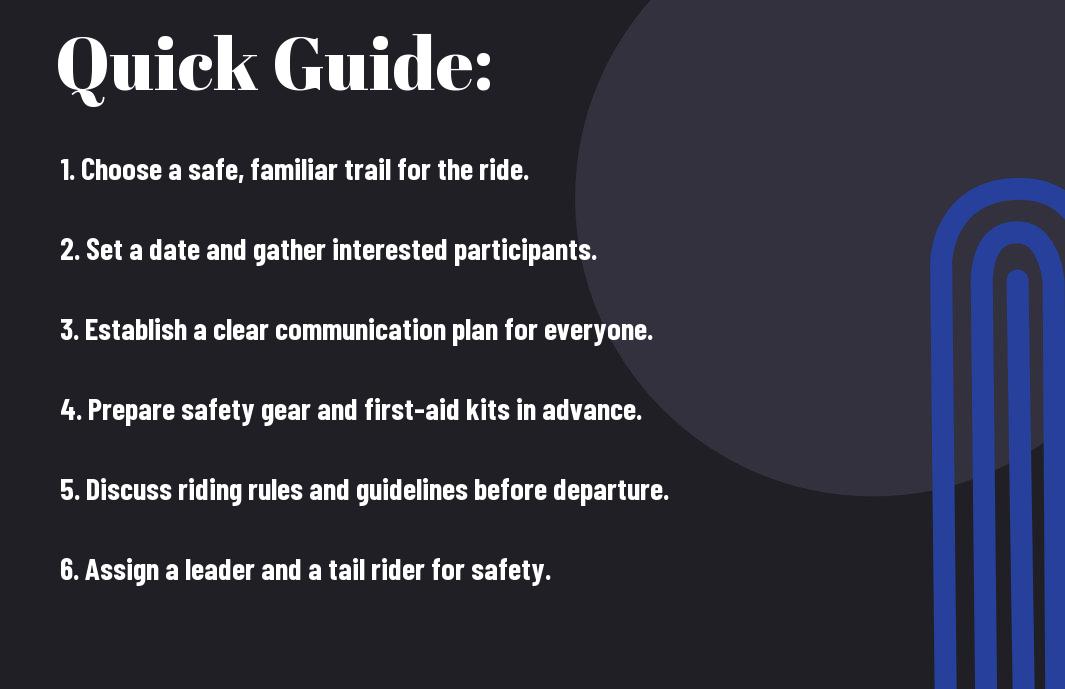
Not every ATV ride is born equal. To ensure a safe and enjoyable experience, follow this step-by-step guide that includes important components for your ride.
| Step | Action |
| 1 | Gather your group and discuss the ride details. |
| 2 | Select a suitable route based on skill levels. |
| 3 | Establish a communication plan for the group. |
| 4 | Plan for rest stops and emergencies. |
Pre-Ride Planning
There’s a lot of value in pre-ride planning. You should discuss the route, ensure everyone knows the plan, set a meeting time, and gather any needed supplies. Clear communication is vital for the group’s safety and enjoyment.
Safety Gear and Equipment Check
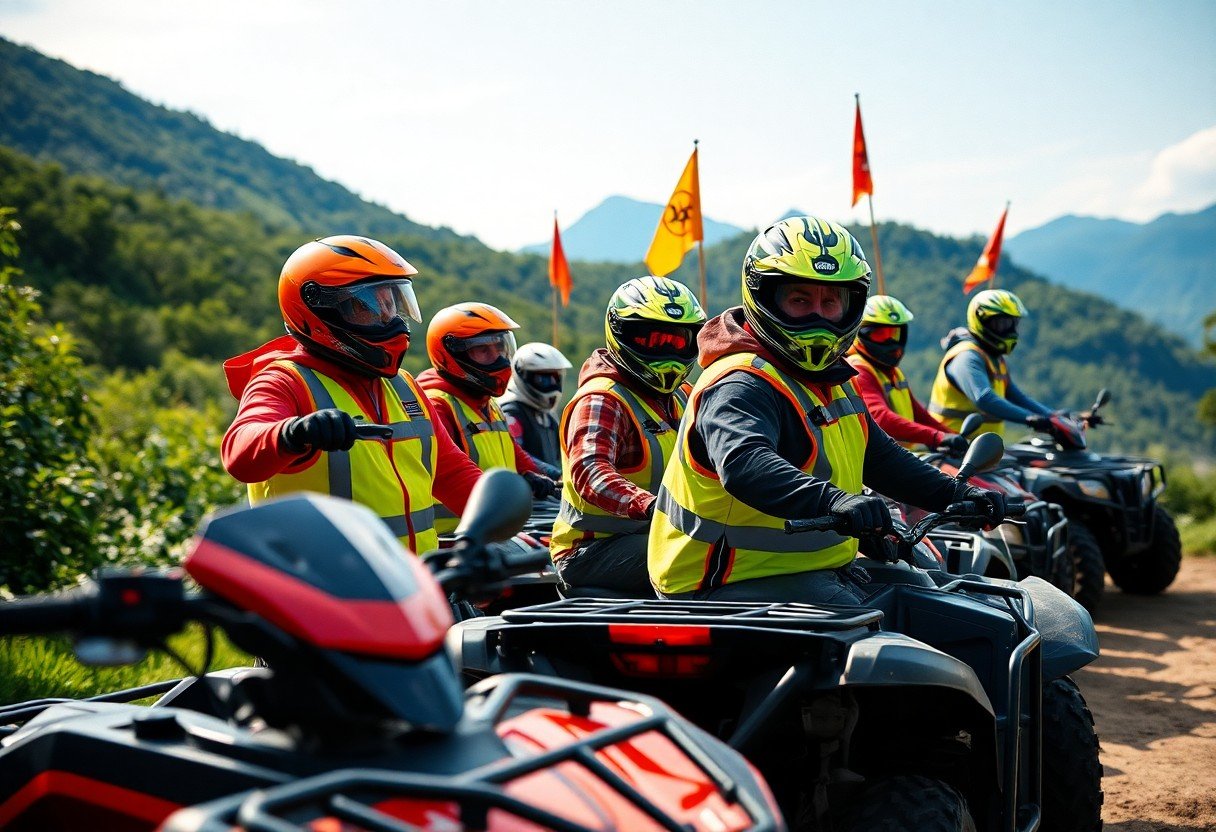
An equipment check is important before hitting the trails. Always inspect every member’s safety gear and ATVs for functionality and compliance with safety standards.
The checklist should include helmets, gloves, eye protection, and all necessary ATV safety equipment. Additionally, checking tire pressure, brakes, and lights can prevent accidents. Ensure everyone is equipped with a first aid kit and that their vehicles are in top shape so your ride can proceed without hitches.
Essential Tips for a Smooth Ride
Unlike solo adventures, group ATV rides require careful planning to ensure everyone has a great time. To achieve this, consider these tips:
- Establish a meeting point before the ride.
- Ensure all riders are familiar with their machines.
- Maintain a steady pace that suits the group’s skill level.
- Keep a safe distance between ATVs to avoid collisions.
- Encourage regular breaks to reassess and regroup.
Knowing how to maintain a smooth ride can enhance your overall experience. For more information, check out We Ride at Dawn: How to Plan a Group ATV Trip in Ontario.
Communication Among Riders
Communication is key during a group ride; it ensures that everyone is on the same page. Make use of hand signals or walkie-talkies to share information about obstacles, turns, or any changes to the plan. Regularly check on fellow riders, especially those who may be less experienced, and maintain open lines of communication for a safer experience.
Setting Riding Rules
Little does the average rider know that establishing riding rules is vital for a smooth outing. These rules help create consistency and expectations among all participants, minimizing the risk of accidents.
For instance, you might set guidelines on speed limits, specific trails to follow, or how to navigate obstacles safely. Discuss these rules with your group before the ride, and ensure that everyone understands and agrees. This solid foundation can make your group ride more enjoyable while ensuring everyone stays safe as you navigate the trails together.
Pros and Cons of Group ATV Riding
| Pros | Cons |
|---|---|
| Enhanced safety with multiple riders | Potential for group accidents |
| Shared knowledge and experience | Increased risk of conflicts |
| Support for mechanical issues | Difficulty in maintaining pace |
| Improved navigation | Group dynamics might affect enjoyment |
| Opportunity for socializing | Different skill levels may complicate ride |
Advantages of Riding in a Group
The benefits of riding in a group often outweigh the drawbacks. Having fellow riders enhances your safety, as someone is always there to assist in case of emergencies. You can navigate challenging terrain more effectively with shared knowledge, and technical support is readily available, helping to resolve mechanical issues on the fly. Plus, riding as a group offers a great opportunity to socialize and build camaraderie, making your outdoor adventure more enjoyable.
Challenges and Risks
Any group ride comes with its own set of challenges and risks. The dynamic of riding in a group can lead to unexpected complications, and it’s imperative for you to stay alert and mindful of your surroundings. Protecting everyone’s safety means being ready to adapt to various skill levels, decisions, or even conflicts that may arise.
With mixed skill levels in a group, you may encounter challenges such as differing speeds, which can create frustration or tension among riders. Additionally, the risk of accidents increases when riders are closer together. To mitigate these risks, ensure clear communication and establish guidelines that everyone agrees to. Being prepared for potential issues can help you enjoy the ride while prioritizing safety.
Common Mistakes to Avoid
After planning your ATV group ride, it’s imperative to acknowledge common mistakes that can impact safety and enjoyment. Many riders overlook the importance of communication and clear expectations among group members. Additionally, failing to establish a proper riding pace can lead to frustrating experiences. Being aware of these pitfalls can help ensure a smooth ride for you and your companions.
Poor Preparation
With inadequate preparation, you may find yourself facing unexpected challenges during your ride. Ensure that your ATV is in good condition and that you have all necessary gear, tools, and supplies before hitting the trail. Effective preparation helps not only you, but also the entire group, promoting a fun and worry-free adventure.
Ignoring Safety Protocols
Even if everyone in your group is experienced, overlooking safety protocols can lead to dangerous situations. It’s vital to conduct a pre-ride safety briefing, covering imperative rules, communication signals, and emergency procedures. Encourage everyone to wear appropriate safety gear and to understand their responsibilities while riding. By prioritizing safety, you create a more enjoyable experience for the entire group.
Safety should always be your top priority during an ATV group ride. Establish clear riding guidelines that every member must follow, such as maintaining a safe distance and sticking to designated paths. Encourage riders to communicate effectively by using hand signals or radios, ensuring that everyone stays informed of any hazards or changes in pace. Most importantly, instill a culture of caution where riders are empowered to speak up about unsafe behaviors, fostering a secure environment for everyone involved.
Summing up
Following this guide will help you organize an ATV group ride safely. Ensure you communicate with your group about safety protocols, establish clear ride guidelines, and have designated leaders and sweepers. Equip everyone with proper safety gear and check that all ATVs are in good working condition. For more comprehensive safety tips, refer to Your Family and ATV Safety. By prioritizing safety, you create an enjoyable and secure riding experience for everyone involved.
FAQ
Q: What is the first step to planning a safe ATV group ride?
A: The first step is to establish a clear route and destination. It’s important to choose suitable trails that match the skill levels of all participants. Checking local regulations and obtaining any necessary permits will also help ensure a smooth ride.
Q: How should I communicate with my group before and during the ride?
A: Effective communication is vital. Before the ride, discuss expectations, safety measures, and a meet-up time. During the ride, use hand signals or a two-way radio system to keep everyone informed. Designate a lead rider and a sweep rider to manage the group’s pace and ensure no one gets left behind.
Q: What safety gear should participants wear during the ride?
A: All participants should wear appropriate safety gear, including helmets, goggles, gloves, long pants, and sturdy boots. It’s advisable to consider additional protection such as knee and elbow pads to enhance safety in case of falls.
Q: How can we ensure the group stays together during the ride?
A: To keep the group together, maintain a manageable speed that accommodates all riders. Make regular stops to regroup and check in with each other. Establish a rule that if anyone gets separated, they should stop at a designated point until the group can catch up.
Q: What should we do in case of an emergency during the ride?
A: Having an emergency plan is imperative. Each group member should carry a first aid kit and know basic first aid techniques. Designate a person to handle any emergencies, and establish a meeting point and contact method, such as a cell phone, in case someone needs to seek help swiftly.
Q: How do I assess the skill levels of group participants before the ride?
A: Prior to the ride, have a discussion to gauge the experience of each participant. Ask about their previous riding experience, comfort level with different terrain types, and any specific concerns they may have. It may also be helpful to organize a practice session where everyone can demonstrate their skills in a controlled environment.
Q: What are some best practices for maintaining the ATV while preparing for the ride?
A: Before heading out, each rider should perform a thorough inspection of their ATV, checking fluid levels, brakes, tires, and lights. It’s advisable to perform necessary maintenance weeks in advance, ensuring that all vehicles are in top condition to prevent breakdowns or safety issues during the ride.
Leave a Reply