
Over the years, you’ve likely discovered that tackling mountain trails on your ATV requires more than just enthusiasm; preparation is key to a safe and enjoyable adventure. Ensuring your vehicle is ready to conquer rugged terrain and unpredictable weather will enhance your experience and keep you secure. In this guide, we’ll cover vital steps to help you prepare your ATV for the challenges of mountain climbing, so you can focus on the thrill of the ride and the beauty of nature. Get ready to elevate your outdoor escapades!
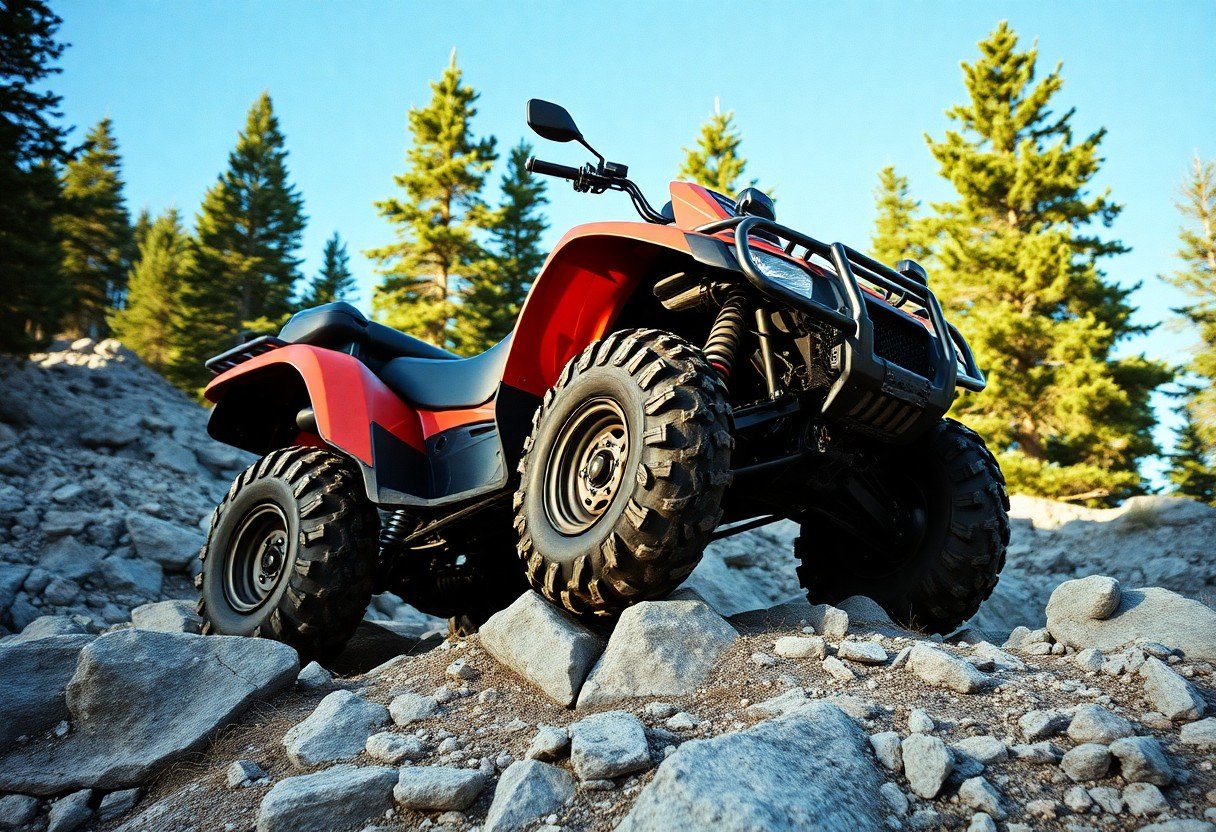
Types of ATVs for Mountain Climbing
Before you head out on your mountain climbing adventures, it’s important to choose the right ATV for the terrain you’ll encounter. Different ATVs cater to various needs, and understanding their characteristics can help you decide. Here’s a quick guide:
| ATV Type | Best For |
|---|---|
| Sport ATVs | Speed and agility on trails |
| Utility ATVs | Towing and heavy-duty tasks |
| Side-by-Sides | Carrying passengers and cargo |
| 4×4 ATVs | Rugged terrains and obstacles |
| Electric ATVs | Quiet and eco-friendly rides |
This guide assists you in selecting an ATV that suits your mountain climbing objectives, enhancing your experience.
Sport ATVs
Clearly, sport ATVs are designed for performance, allowing you to navigate trails with speed and agility. They feature lightweight structures and powerful engines, making them ideal for quick maneuvering through tight spots and steep inclines. If you’re seeking an adrenaline-fueled ride, sport ATVs can give you the thrill you desire while tackling challenging mountain pathways.
Utility ATVs
If you require a dependable ATV for heavy tasks, then utility ATVs are the right choice. These models are built for durability and functionality, supporting towing and transporting gear as you traverse the mountains.
Utility ATVs have spacious cargo capacities and are equipped with features such as winches and racks for extra gear. Their robust frames and powerful engines ensure that they can navigate steep inclines and rocky trails, making them perfect for outdoor enthusiasts who prioritize practicality in addition to adventure.
Essential Tips for Preparation
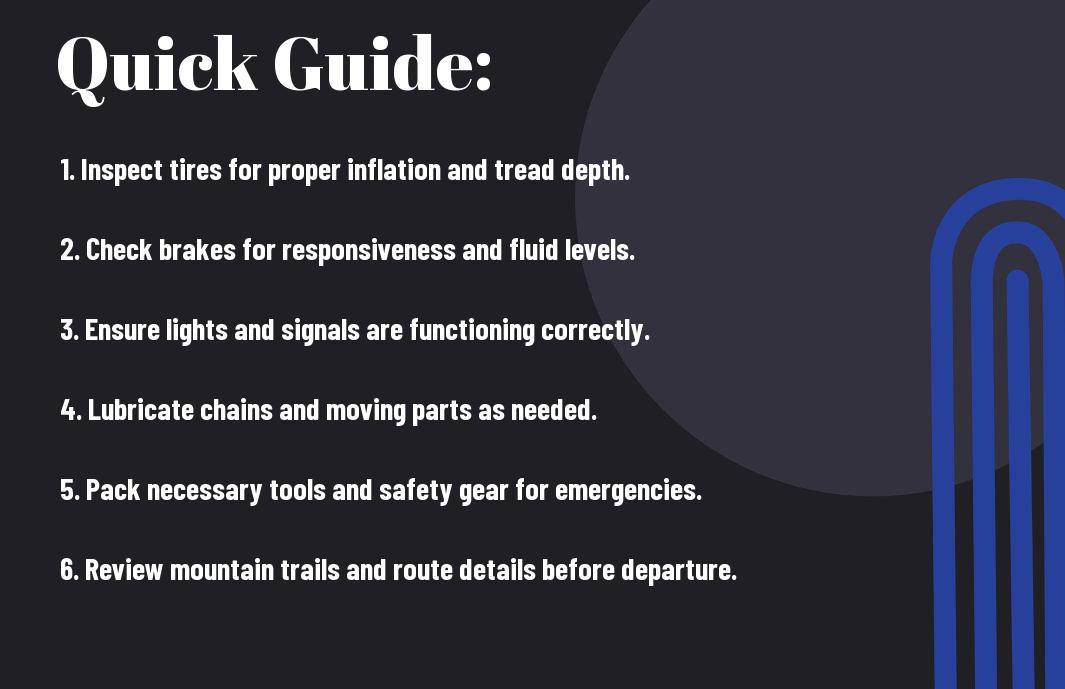
The key to a successful mountain climbing adventure with your ATV starts with proper preparation. Ensure you follow these vital tips:
- Inspect your ATV thoroughly.
- Familiarize yourself with the terrain.
- Pack necessary supplies and tools.
- Alert someone about your route and plans.
- Check local weather conditions.
Recognizing these factors will enhance your adventure and ensure a safe ride.
Safety Gear
Safety should be your top priority when preparing for mountain climbs. Always invest in high-quality helmets, gloves, and protective clothing to shield yourself from potential falls or brush with rough terrain.
Maintenance Checks
There’s no substitute for a well-maintained ATV when tackling mountain challenges. Before commenceing on your adventure, conduct thorough checks on your vehicle to avoid mechanical failures.
Maintenance checks involve verifying tire pressure, checking the oil and coolant levels, inspecting brakes and lights, and ensuring your battery is in good condition. A well-functioning ATV can make a significant difference in your performance and safety on rugged trails, allowing you to navigate the landscape with confidence.
Step-by-Step Preparation Guide
Not every mountain is the same, and preparation is key to conquering any terrain. Follow this step-by-step guide to ensure your ATV is ready for the challenges ahead:
| Check Fluid Levels | Ensure oil, coolant, and brake fluid levels are optimal. |
| Inspect Tires | Examine tire condition and adjust pressure for grip. |
| Battery Condition | Test your battery’s charge and clean any corrosion. |
| Brake Functionality | Confirm that both front and rear brakes are performing well. |
| Lights and Signals | Verify headlights, taillights, and turn signals are functioning. |
Preparing the ATV
Little adjustments can significantly enhance your ATV’s performance during your mountain climbing adventures. Start by thoroughly cleaning your ATV to remove any debris or mud. This not only helps you assess any maintenance needs but also keeps your vehicle looking sharp. Additionally, double-check that all components, from the suspension to the frame, are in perfect working order to tackle rugged paths.
Essential Toolkit
Some basic tools and supplies can make a world of difference during your journey. Having an imperative toolkit not only prepares you for minor repairs but also gives you peace of mind while navigating tough terrains.
A well-equipped toolkit should include items like a tire repair kit, a set of wrenches, pliers, a first-aid kit, and a multi-tool. Depending on your specific ATV model, consider adding any vehicle-specific tools to ensure you’re ready for unexpected issues. Always carry spare clothing, a flashlight, and extra fuel when headed into remote areas. Being prepared with the right tools can make all the difference in your adventure’s success.
Factors to Consider When Climbing
After deciding to tackle a mountain, it’s important to consider various factors that could affect your ride. These include:
- ATV’s weight and balance
- Trail difficulty and condition
- Your riding skills and experience
- Safety gear and emergency tactics
The ATV Trail Riding Tips can provide additional insights to enhance your safety and enjoyment during climbs.
Terrain Types
When preparing for your climb, understanding the terrain types you’ll encounter will help you adapt your approach. These include:
| Rocky Paths | Navigate with caution |
| Mud Flats | Maintain traction control |
| Steep Hills | Shift your weight forward |
| Loose Gravel | Use gentle throttle |
| Forest Trails | Watch for obstacles |
Thou must adjust your riding style to match these terrains for a safer experience.
Weather Conditions
Little can impede your climb more than unexpected changes in weather. Always check the forecast beforehand and consider how conditions like rain, snow, or high winds could impact your ride.
To ensure a successful trip, arm yourself with knowledge about potential weather challenges, such as decreased visibility or slippery surfaces. It’s advisable to avoid climbing in poor weather conditions, ensuring both you and your ATV remain safe and in control during your adventure.
Pros and Cons of Mountain Climbing with ATVs
Unlike traditional mountain climbing, using ATVs allows for greater access and expedience in navigating various terrains. However, it’s important to weigh the pros and cons associated with this method.
Pros and Cons Breakdown
| Pros | Cons |
|---|---|
| Increased speed and efficiency | Environmental impact |
| Accessibility to remote areas | Risk of accidents |
| Less physical exertion required | High maintenance costs |
| Ability to carry equipment easily | Lack of technical climbing experience |
| Fun and adventurous ride | Restrictions on trail usage |
Advantages
Little effort is required to cover long distances when you choose to climb mountains with your ATV. You’ll experience exhilarating rides while easily traversing rugged landscapes. This option also allows you to transport necessary gear without the strain of carrying it on your back.
Disadvantages
With the appeal of ATV mountain climbing come notable limitations. Environmental concerns arise due to potential damage to native vegetation and wildlife habitats, which you must be aware of when planning your adventure.
The reliance on ATVs may also deter you from developing technical climbing skills that are fundamental to the sport. Furthermore, some trails may have restrictions on motorized vehicles, limiting where you can go. If you’re not cautious, this can lead to accidents or costly repairs, making it necessary to consider these factors before setting off on your journey.
Additional Resources and Tools
Now, equipping yourself with the right resources can enhance your mountain climbing adventures. For tips tailored to new riders, check out Trail riding advice for new rider : r/ATV. You’ll find a wealth of shared experiences and practical advice from fellow enthusiasts that can help you prepare your ATV effectively.
Navigation Aids
Now, reliable navigation aids are necessary for finding your way in unfamiliar terrain. Consider investing in GPS devices designed for off-road use or utilizing mobile apps that work offline. These tools will help ensure you stay on the right path during your mountain adventures.
Communication Devices
On the mountain, staying connected is important for your safety. Communication devices can help you talk to your riding partners or call for assistance if needed. Utilizing two-way radios is often recommended for their reliability in remote areas, as they provide clear communication without relying on cell signal.
To ensure an efficient communication setup, select devices with durable construction and good battery life. Depending on your riding group size, consider using a group communication app or system that allows you to keep in touch seamlessly while navigating through rugged landscapes. Whether you choose radios or apps, being prepared can enhance your enjoyment and safety during your adventures.
Conclusion
Summing up, ensuring your ATV is ready for mountain climbing adventures is important for your safety and enjoyment. You should start by inspecting the tires for proper tread and pressure, checking the brakes for responsiveness, and ensuring your fluids are topped up. Equip your ATV with necessary accessories such as a winch, spare tire, and navigation tools. Don’t forget to review your riding gear and emergency supplies. By taking these steps, you set yourself up for a successful and thrilling experience in the mountains.
FAQ
Q: What basic checks should I perform on my ATV before heading into the mountains?
A: Before starting your mountain climbing adventure, inspect your ATV for any signs of wear or damage. Check tire pressure and tread, engine oil levels, and brake fluid. Ensure that your lights and horn are functional, and examine the battery for any corrosion. It’s important to check that the air filter is clean as well.
Q: How can I prepare my ATV’s tires for rough terrains?
A: For enhanced traction on rough mountain terrains, consider adjusting your tire pressure. Lowering the pressure slightly can improve grip on rocky surfaces. Ensure your tires are suitable for off-road conditions and check for any cuts or punctures. Carry a spare tire in case of emergencies.
Q: What imperative gear should I pack for ATV mountain climbing?
A: Essential gear includes a well-fitted helmet, gloves, goggles, and protective clothing. For the ATV, pack tools for basic repairs, a first-aid kit, extra fuel, and a map or GPS. Off-road lights or a flashlight are also handy for navigating in low-light conditions.
Q: Should I make modifications to my ATV for mountain climbing?
A: Depending on the terrain, modifications such as adding skid plates for underbody protection, installing a winch for potential recovery situations, and enhancing suspension can greatly improve your ATV’s performance in mountainous areas. Researching specific modifications suited for your model can provide the best results.
Q: How do I ensure my ATV can handle different altitudes?
A: Different altitudes can affect your ATV’s performance. It’s advisable to adjust the fuel mixture using a higher-octane fuel if you will be in high altitude areas. Check the manufacturer’s guidelines for altitude adjustments and be aware that air intakes may need attention as well.
Q: What safety measures should I consider before a mountain climbing trip?
A: Safety measures include informing someone of your route and expected return time, checking weather conditions, and never going alone. Carrying a comprehensive first-aid kit and having communication devices such as a fully charged cell phone or walkie-talkie can be lifesavers in emergencies.
Q: What should I do if I encounter technical issues while climbing?
A: If you face technical issues, pull over to a safe area. Assess the problem and use your tools and resources to troubleshoot. If you cannot resolve the issue, it’s wise to have a plan for contacting assistance, whether it’s a friend or a roadside service. Carrying a portable air compressor can also help if you have tire problems.
Leave a Reply