
Just when you think you’ve mastered your ATV, tackling sand dunes can present a new challenge. Riding through soft, shifting sands requires specific techniques to keep your vehicle moving smoothly without ending up stranded. In this guide, you’ll learn necessary tips and tricks to navigate the dunes confidently, ensuring your adventure remains exhilarating instead of frustrating. From tire pressure adjustments to throttle control, get ready to enhance your riding skills and conquer those sandy hills like a pro!
Types of Sand Dunes
Your ability to navigate sand dunes effectively relies on understanding the different types of sand dunes you may encounter. Key features of various dune types can impact your riding experience:
| Dune Type | Characteristics |
|---|---|
| Crescent Dunes | Formed by wind in a crescent shape, good for dynamic riding. |
| Linear Dunes | Long ridges of sand running parallel, ideal for straight paths. |
| Star Dunes | Radiating arms from a central peak, challenging to maneuver. |
| Parabolic Dunes | U-shaped with vegetation stabilization, usually easier to cross. |
| Coastal Dunes | Near beaches, often shifting due to tides and winds. |
Recognizing each dune’s characteristics will help you adapt your riding technique for an enjoyable and safe adventure.
Coastal Dunes
There’s a unique allure to coastal dunes as they seamlessly blend the beach with the dynamic shifting sands. These dunes are often influenced by ocean winds and tides, creating unpredictable riding conditions. You may find soft, loose sand that can cause your ATV to sink, necessitating a strategy to maintain speed and stability.
Inland Dunes
You will encounter inland dunes, which are typically more stable and predictable. These dunes are often formed from wind-blown sand deposited over time, resulting in compact surfaces that are easier to traverse. They may have vegetation stabilizing them, offering a different riding experience than coastal dunes.
This type of dune formation can provide various terrains, from steep slopes to flattened areas, making them ideal for both beginner and advanced riders. The compacted nature allows for greater control and versatility with your ATV, letting you navigate complex patterns. As you explore inland dunes, look for variations in terrain to enhance your riding skills and enjoy the adventure.

Essential Tips for Riding in Sand
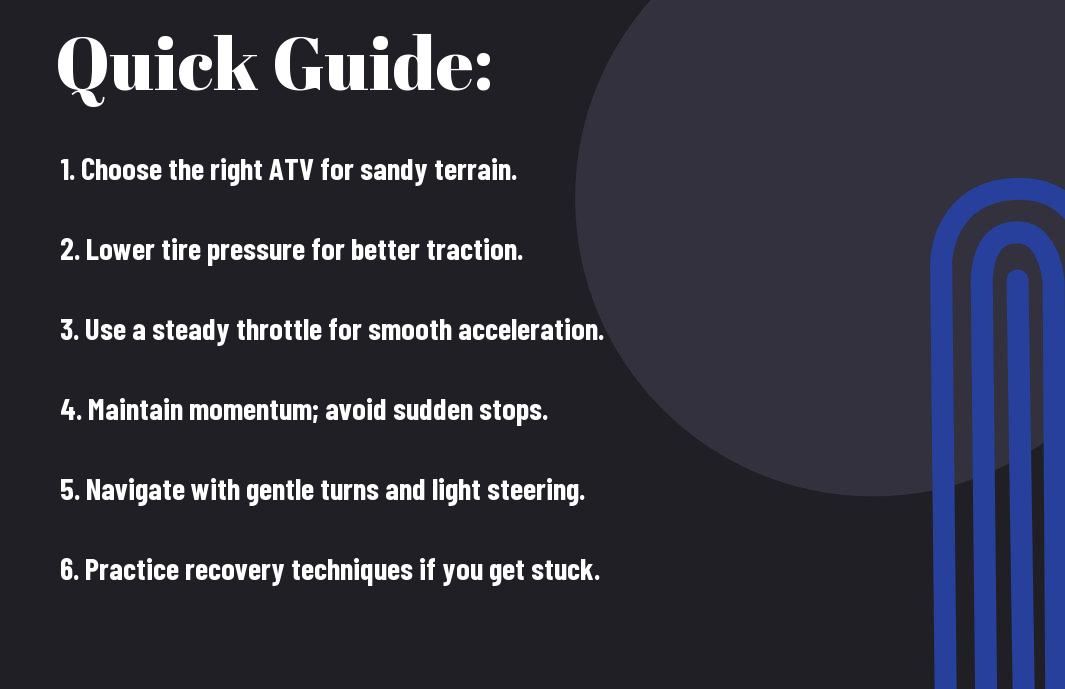
Clearly, mastering the sand dunes requires specific strategies for success. Keep these necessary tips in mind:
- Lower your tire pressure for better traction.
- Maintain a steady throttle to avoid bogging down.
- Shift your weight forward when climbing hills.
- Use side-to-side movements to maintain balance.
Thou shall not underestimate the power of preparation and technique.
Vehicle Preparation
An effective ride begins with proper vehicle preparation. Ensure your ATV is in optimal condition by checking tire pressure, inspecting the air filter, and ensuring all fluids are topped off. Sand can cause excess wear and tear, so consider using a high-grade filter and protective grease on exposed parts to minimize the risk of damage.
Riding Techniques
On the sand, specific riding techniques will help you maintain control and avoid getting stuck. You should practice using smooth throttle control, keeping your weight shifted forward, and navigating hills strategically. This will prevent your tires from digging in and help you glide over the surface.
Techniques such as applying a gentle throttle and keeping momentum will significantly enhance your riding experience. When approaching obstacles, maintain your speed and angles thoughtfully. If you start to lose traction, promptly shifting your weight backward can help to regain stability. Always anticipate the terrain, and practice staying relaxed to maneuver your ATV effectively, minimizing the chance of getting trapped in soft sand.
Step-by-Step Guide to Riding an ATV in Sand Dunes
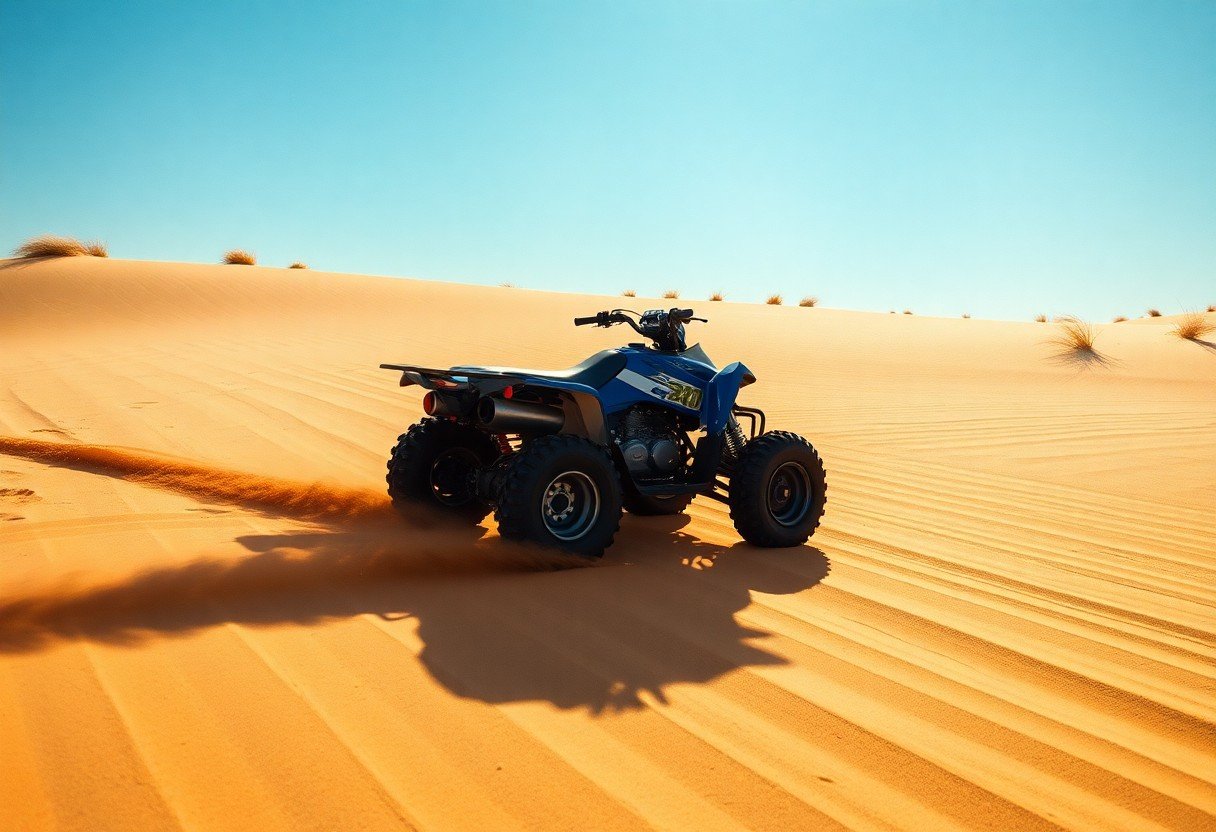
All ATV enthusiasts can conquer sand dunes with the right techniques and preparation. Following a step-by-step guide will help you navigate the sandy terrain more effectively and minimize the risk of getting stuck. This guide covers imperative pre-ride checks, riding techniques, and tips for tackling the unique challenges presented by sand dunes.
Pre-Ride Checklist
| Check tire pressure | Reduce pressure for better traction |
| Inspect the ATV | Ensure everything is functioning properly |
| Gather safety gear | Wear a helmet, goggles, and gloves |
| Plan your route | Know the area and potential hazards |
Pre-Ride Checklist
Now you are ready to begin on your adventure. A thorough pre-ride checklist ensures that your ATV functions properly and that you have adequate safety measures in place. Check your tire pressure and equipment condition, gather the necessary safety gear, and familiarize yourself with the area you’ll be exploring. This preparation sets the stage for a successful ride through the sand dunes.
Navigating the Dunes
Riding in sand dunes requires you to adjust your techniques for optimal performance. Focus on maintaining momentum, shifting your weight appropriately, and understanding how to handle inclines and declines. Adjusting your throttle control and managing speed will help prevent excessive sinking and enable you to smoothly traverse the ever-changing terrain.
For instance, when climbing a dune, you should gradually accelerate and lean forward to maintain traction. Conversely, when descending a steep slope, shift your weight back to keep your front end lifted. These techniques allow you to respond quickly to the dynamics of the sand, ensuring a safe and enjoyable ride. By mastering these strategies, you can glide over the dunes without getting stuck and enhance your overall experience in the sand.
Factors to Consider
Despite the thrill of riding on sand dunes, several factors can influence your experience and affect your ability to maneuver without getting stuck. Pay attention to the following:
- Your ATV’s tire pressure
- The weight distribution on your vehicle
- Your riding technique
- The terrain you will encounter
Knowing these factors can help you prepare effectively for your ride.
Weather Conditions
Some riders overlook how weather conditions can impact the sand and riding experience. Wind can change the dunes’ shape, making them unpredictable. Rain can pack the sand, or create mud-like conditions that can lead to getting stuck. Always check the forecast before heading out to ensure a safe ride.
Sand Texture
While riding on dunes, the texture of the sand plays a significant role in how your ATV performs. Different types of sand can vary from loose and soft to compact and hard, which can affect traction and momentum.
A proper understanding of sand texture will help you adjust your riding style accordingly. Loose, fine sand may require you to stay light on the throttle, allowing for smoother gliding, whereas coarse sand can provide better grip, allowing for quicker acceleration. The way your tires interact with the sand directly influences your ability to navigate hills and turns, so take a moment to assess the surface before hitting the throttle.
Pros and Cons of ATV Riding in Sand Dunes
Not every riding experience is created equal. Regarding tackling sand dunes on an ATV, there are pros and cons to consider. Below is a breakdown of some key points to help you decide if this adventure is right for you.
| Pros | Cons |
|---|---|
| Exciting and challenging terrain | Higher chance of getting stuck |
| Stunning natural scenery | Difficult to navigate for beginners |
| Boosts rider skills | Can be physically demanding |
| Thrilling speed opportunities | Potential for overheating engines |
| Opportunity for social riding | May require specialized equipment |
| Great for off-road enthusiasts | Environmental damage risks |
| Variety of riding styles | Limited access in some areas |
| Freedom to explore | Requires prior knowledge of terrain |
| Builds camaraderie | May require vehicle rentals |
| Can learn from experienced riders | Weather conditions can impact safety |
For more information on navigating the dunes, check out First time riding the dunes – suggestions, pointers, tips.
Advantages
There’s no denying that riding an ATV in sand dunes can be a thrilling experience. The excitement lies in the varied terrain, which not only tests your skills but also enhances your riding proficiency. The picturesque landscapes further add to the overall enjoyment, making each ride a memorable adventure.
Drawbacks
Cons may include the risk of getting stuck in the soft sand, especially for beginners. Navigating the dunes can be difficult without proper knowledge or experience, and it may result in increased physical exertion during rides. Other potential issues include overheating engines and the requirement for specialized equipment, which might not be readily available to everyone.
Drawbacks can also extend to environmental concerns, as riding in sensitive dune areas may lead to degradation. Limited access in certain regions and unpredictable weather affecting safety are further factors to consider. Being aware of these challenges will help enhance your preparation and overall riding experience in the sand.
Common Mistakes to Avoid
For your ATV adventure, it’s crucial to steer clear of common mistakes that can leave you stuck in the sand. One mistake is failing to adequately prepare or familiarize yourself with your vehicle. To get a better understanding, you can refer to this ATV Sand Riding Guide, which offers valuable tips to enhance your riding experience.
Incorrect Tire Pressure
Tire pressure plays a significant role in your ATV’s performance on sandy terrain. Ensure that your tires are deflated to a lower pressure than usual to increase their surface area. This enhances flotation and helps prevent your ATV from sinking into the sand, allowing for smoother maneuverability.
Ignoring Terrain Variations
On the sand dunes, variations in terrain can greatly affect your ride. Taking these changes lightly can lead to losing traction or getting stuck. You should be vigilant and adjust your speed and navigation techniques according to the dips, peaks, and sand types you encounter.
A keen awareness of the terrain allows you to identify potential obstacles and adjusts your riding strategy accordingly. For instance, when approaching steep inclines or soft patches, you can throttle appropriately to maintain momentum. Additionally, being mindful of other riders or vehicles can help you avoid unexpected challenges and navigate confidently across the dunes.
To wrap up
On the whole, successfully riding an ATV in sand dunes requires you to choose the right vehicle, maintain proper tire pressure, and adjust your riding style to suit the terrain. By keeping your momentum, learning to navigate the slopes effectively, and avoiding sudden stops, you can reduce the risk of getting stuck. Additionally, being mindful of your surroundings and planning your route will help ensure an enjoyable and safe experience. With these tips, you can confidently tackle the sandy terrain and maximize your ATV adventure.
FAQ
Q: What should I do to prepare my ATV for riding in sand dunes?
A: Before heading to the sand dunes, ensure your ATV is in top condition. Check the tire pressure, as lower tire pressure increases floatation in sand. Ideally, you want to reduce tire pressure to about 5 to 7 psi. Additionally, make sure your engine oil is fresh, and the air filter is clean to optimize performance. Always carry a maintenance kit for any quick fixes while on the ride.
Q: How does tire pressure affect my ATV’s performance in sand?
A: Tire pressure significantly influences how well your ATV performs in sandy conditions. Lower tire pressure allows the tires to conform to the sand surface, which increases traction and reduces the likelihood of getting stuck. However, it’s important not to go too low, as this can lead to damage to the tires or rims. Finding the right balance is key for optimal performance.
Q: What riding technique should I use in sand to avoid getting stuck?
A: When riding in sand, it’s important to maintain momentum. Use the throttle smoothly, being careful not to accelerate too aggressively, which can dig your tires in. Lean forward to distribute your weight towards the front of the ATV, and keep the wheels moving. Sharp turns or abrupt braking can also cause you to lose momentum, so navigate gently to maintain your speed.
Q: Is it better to ride in a straight line or to zigzag in sand dunes?
A: Riding in a straight line is usually preferred when ascending or descending dunes, as it helps maintain stability and momentum. Zigzagging can be effective when navigating around obstacles or during steep climbs, but it’s crucial to control your speed and avoid abrupt turns. Overall, assess the terrain and adjust your path accordingly while keeping momentum in mind.
Q: What should I wear and carry when riding an ATV in sand dunes?
A: Prioritize safety and comfort by wearing appropriate gear. A helmet, goggles, long-sleeved shirt, gloves, and sturdy boots are crucial to protect against falls and flying sand. Additionally, carry water for hydration, a first-aid kit, and a tool kit for mechanical issues. It’s also wise to have a recovery strap or rope in case you need assistance getting unstuck.
Q: How can I identify the best paths in sand dunes?
A: Look for established trails or tracks made by other riders, as these can indicate the most navigable paths. Observe the terrain for natural features, such as ridges or valleys, to help with navigation. Avoid steep, loose inclines where you may lose traction. If you’re new to the area, consider riding with a more experienced friend who knows the terrain.
Q: What should I do if I do get stuck in the sand?
A: If you find yourself stuck, remain calm and assess the situation. Avoid spinning your tires, as this can make the situation worse. Shift your weight towards the back of the ATV and try to rock it back and forth gently. If that doesn’t work, use a shovel to dig around the tires for better traction. Another option is to place a board or other flat object under the tires to help gain traction. If you’re still stuck, don’t hesitate to ask fellow riders for assistance.
Leave a Reply