
There’s a thrill in riding your powerful ATV, but safety should be your top priority. Understanding how to properly operate your vehicle can prevent accidents and ensure an enjoyable experience. In this guide, you’ll learn vital techniques to protect yourself and others while mastering your ATV skills. From gear selection to navigating terrain, being informed is key. If you’re new to the ATV community, check out this resource for newcomers that shares valuable tips and insights!
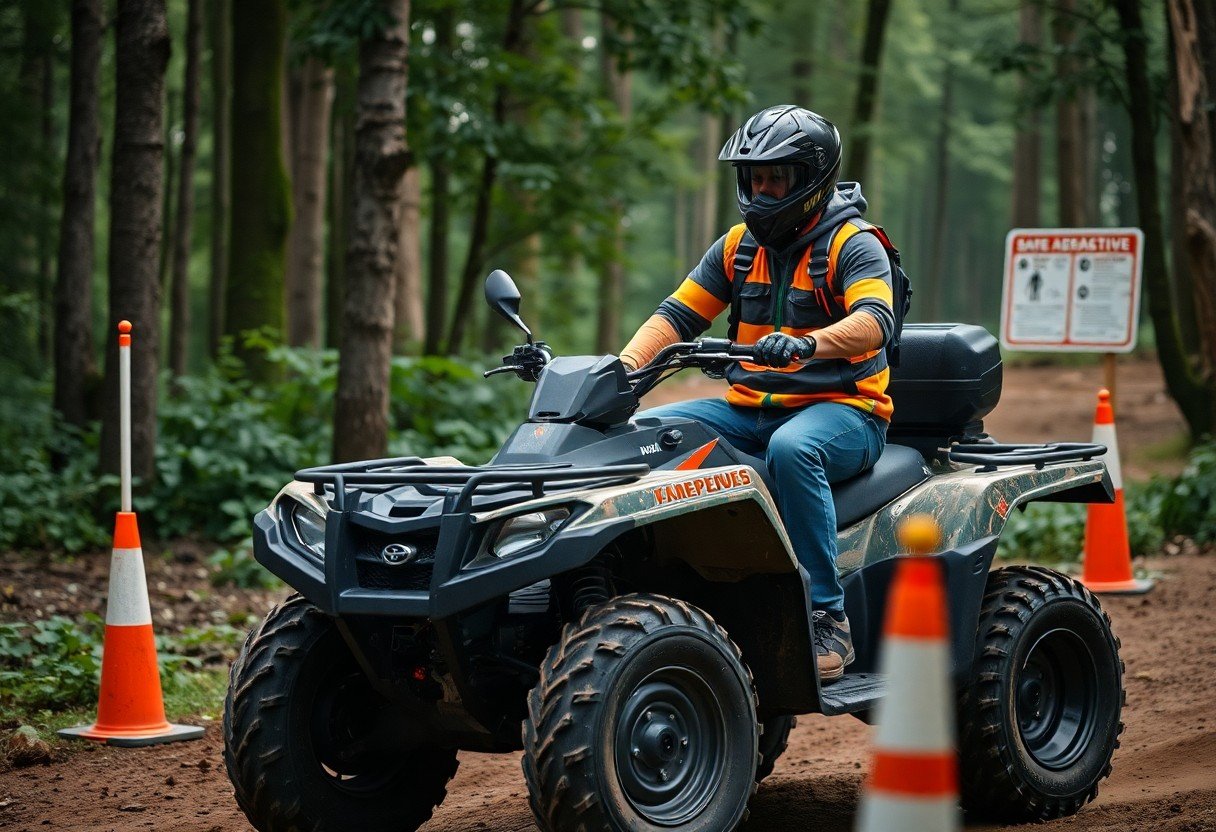
Understanding Your ATV
The world of ATVs is vast and exciting, and understanding your machine is necessary for safe operation. By familiarizing yourself with the functionalities, safety features, and specifications of your ATV, you can enhance your riding experience while ensuring safety on tough terrains. Strong knowledge of your vehicle leads to better handling, control, and enjoyment, making every ride exhilarating and safe.
Types of ATVs
- Sport ATVs – Designed for speed and agility.
- Utility ATVs – Built for work tasks like hauling or towing.
- Side-by-Side ATVs – Offer multiple seats for a shared experience.
- Racing ATVs – High-performance models made for competitive events.
- Recreational ATVs – Focused on leisurely riding adventures.
The understanding of these types will help you choose the one that best suits your riding needs.
| Types of ATVs | Characteristics |
| Sport ATVs | Speed and maneuverability |
| Utility ATVs | Versatility in work tasks |
| Side-by-Side ATVs | Multiple passenger seating |
| Racing ATVs | High-performance capabilities |
| Recreational ATVs | Leisure-focused design |
Key Features and Specifications
Your ATV comes with several key features that enhance both performance and safety. Understanding these specifications will help you operate your ATV confidently and effectively.
- Engine Capacity – Determines power output.
- Suspension Type – Impacts ride comfort and handling.
- Braking System – Essential for safety during operations.
- Weight Capacity – Indicates how much cargo or rider weight it can safely transport.
- Transmission Type – Affects performance and control.
Assume that understanding these specifications allows you to maximize your ATV’s capabilities while maintaining safety on rugged terrains.
Any ATV comes with several necessary components that influence its performance and your overall experience. Key features that should not be overlooked include:
- Power Steering – Provides ease of maneuvering.
- LED Lighting – Improves visibility during low-light conditions.
- 4WD Capability – Enhances traction on various landscapes.
- Storage Compartments – Useful for carrying gear and supplies.
- Safety Features – Such as roll cages and seat belts.
Assume that being aware of these attributes will make you a more competent and safe rider. Each feature contributes to a better riding experience and increased safety on the trails.
Plus, emphasizing the importance of features like power steering and 4WD capability can dramatically improve your safety and control. Additionally, be aware that lack of familiarity with your ATV’s braking system may lead to serious accidents. Make sure to read the owner’s manual to fully understand your specific model and its safety mechanisms. Ultimately, a well-informed rider not only enhances their own experience but also contributes to the safety of others.
Safety Gear and Preparation
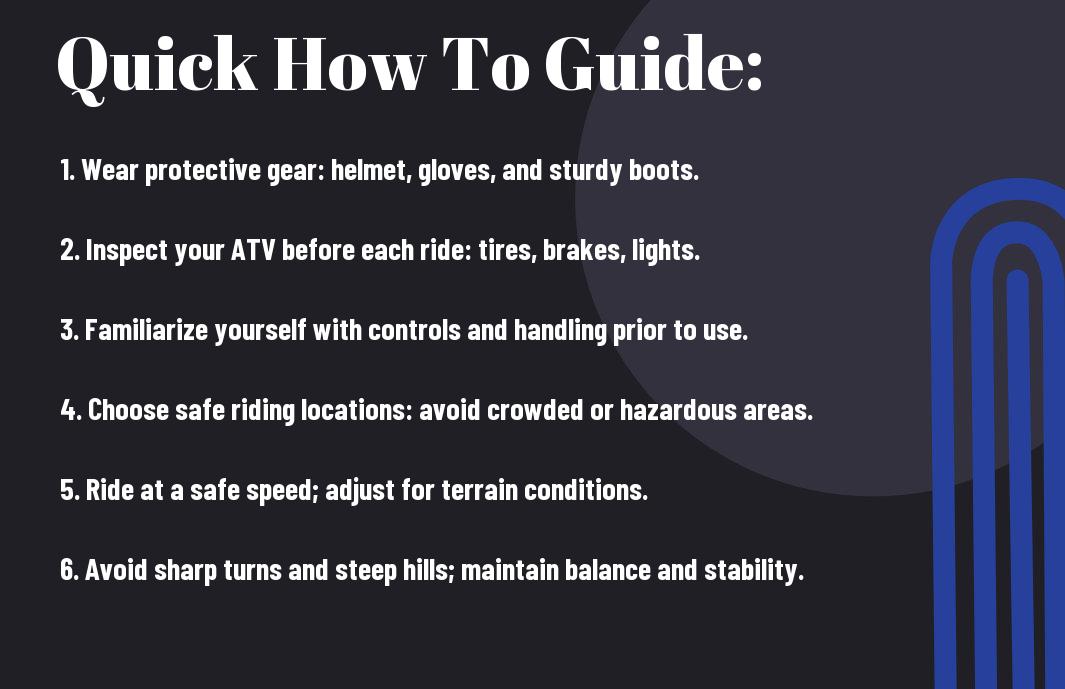
Any time you prepare to ride your ATV, ensuring your safety gear is in place is a top priority. This includes wearing proper attire, such as a helmet, goggles, gloves, long sleeves, and suitable footwear. Each component of your gear plays a significant role in protecting you from potential hazards. By prioritizing safety gear, you not only enhance your protection but also boost your confidence while riding, allowing you to fully enjoy the adventure ahead.
Essential Protective Equipment
Preparation for any ATV ride begins with securing proper protective equipment. Your helmet should fit snugly and comply with safety standards, while goggles or a face shield protect your eyes from debris. Gloves will keep your grip firm, and sturdy boots will help protect your feet and ankles. Together, this gear creates a barrier against injuries and enhances your overall riding experience.
Pre-Ride Safety Checks
On every ATV adventure, conducting pre-ride safety checks is vital to ensure your vehicle is in proper working condition. These checks include inspecting the brakes, tires, lights, and fluid levels, as well as confirming that your throttle and handlebars operate smoothly. Neglecting these steps can lead to dangerous situations out on the trails.
A thorough pre-ride safety checklist is important for a safe ATV experience. Check the brakes and tires to make sure they are in excellent condition, as this will significantly reduce the risk of accidents. Verify that all lights are functioning properly, which aids in visibility, especially in low-light conditions. Inspect fluid levels, such as oil and fuel, to prevent malfunction during your ride. Additionally, test the throttle and brakes to ensure immediate and reliable response. A meticulous pre-ride inspection can mean the difference between a thrilling adventure and a hazardous situation.
Basic Operation Techniques
You need to master the fundamental operation techniques of your ATV to ensure a safe and enjoyable ride. This includes understanding how to start, stop, steer, and control your vehicle effectively. For important safety guidelines, refer to these ATV Safety Tips | Red Bluff, CA.
Starting and Stopping
There’s a method to start and stop your ATV safely. Always ensure the vehicle is in neutral before starting the engine. Engage the throttle smoothly when you accelerate and apply the brakes evenly to bring your ATV to a controlled stop.
Steering and Control
Basic steering and control of your ATV are vital for navigating various terrains. You should practice smooth, gentle movements when steering. Avoid sudden jerks that can cause loss of balance or control.
With proper practice, you’ll enhance your steering and control skills significantly. Stay alert and maintain a firm grip on the handlebars while leaning your body in the direction of the turn. This improves stability and response time. Keep in mind, maintaining a low center of gravity will help prevent rollover accidents. Always stay within your limits to enjoy a safe and rewarding riding experience.
Tips for Safe Riding
Your safety is paramount when operating a powerful ATV. Follow these tips to ensure a secure ride:
- Always wear appropriate safety gear.
- Stay within your .
- Be aware of your surroundings.
- Follow all traffic laws.
- Keep your ATV well maintained.
After adhering to these practices, you can enjoy a safer riding experience.
Best Practices for Navigating Terrain
You should always be prepared for various terrains when riding your ATV. Assess the area for obstacles like rocks, mud, or steep slopes. It’s advisable to plan your route in advance and stick to marked trails to avoid hazards. Familiarizing yourself with the terrain not only enhances your riding experience but also minimizes risks.
Managing Speed and Distance
To effectively manage your speed and distance, you need to cultivate a sense of awareness of your surroundings. Always adjust your speed based on the terrain and conditions, as a faster pace increases your risk of losing control. Maintain a safe distance from other riders to avoid collisions and ensure that you have adequate time to react to any obstacles or changes in the trail.
Riding at the right speed is vital for ensuring both your safety and enjoyment. The faster you go, the more difficult it becomes to navigate tight turns or unexpected terrain changes. Always keep a safe distance from others, as tailgating can lead to serious accidents. Try to build a good sense of timing to anticipate other riders’ actions, and don’t hesitate to slow down when necessary. Maintaining a balanced speed allows you to stay in control and react to hazards effectively.
Environmental Factors
Unlike many outdoor activities, operating a powerful ATV requires you to be keenly aware of various environmental factors. These factors can significantly impact your safety and ability to navigate challenging terrain. Key elements to consider include:
- Weather conditions
- Terrain types
- Seasonal changes
- Wildlife presence
- Environmental regulations
Recognizing these factors ensures a safer and more enjoyable ride.
Weather Conditions
Any rider knows that unpredictable weather conditions can dramatically affect your ATV experience. Rain, fog, and extreme temperature can impact visibility and traction, making it necessary to check forecasts before heading out. Pay close attention to:
- Wind speed
- Precipitation
- Temperature
- Humidity levels
- Thunderstorm risks
Being aware of potential weather changes will help you stay prepared and safe.
Terrain Types and Challenges
You will encounter various terrain types while riding, each presenting unique challenges. Understanding these conditions is vital to operating your ATV safely. Some common terrain types include:
- Rocky paths
- Muddy trails
- Sand dunes
- Steep hills
- Water crossings
This knowledge prepares you to adapt your riding technique to the environment.
| Terrain Type | Challenge |
|---|---|
| Rocky paths | Uneven surfaces increase risk of rollovers |
| Muddy trails | Loss of traction can lead to stuck ATVs |
| Sand dunes | Requires skill to avoid collisions |
| Steep hills | Can cause losing control |
| Water crossings | Risk of drowning your ATV |
Terrain presents varying challenges that you must navigate effectively. From rocky paths requiring careful maneuvers to muddy trails that could leave your ATV stuck, adjusting your riding techniques and speed will enhance your safety. Engaging with different surfaces, like sand dunes or confronting steep hills, requires vigilance. Lastly, be cautious at water crossings to prevent potentially damaging your vehicle. This awareness ultimately enhances your experience.
| Challenge | Safety Tip |
|---|---|
| Uneven surfaces | Maintain a low center of gravity |
| Loss of traction | Reduce speed in soft terrain |
| Risk of collisions | Stay aware of surroundings |
| Losing control | Use brakes wisely on steep descents |
| Drowning your ATV | Gauge water depth and current |
Maintenance and Troubleshooting
All ATVs require consistent maintenance to ensure their safe operation and longevity. Regular checks and timely repairs help to avoid unexpected breakdowns or unsafe situations when enjoying your ride. Understanding the symptoms of potential issues will allow you to identify problems early and perform necessary maintenance or seek professional help as needed.
Routine Maintenance Tips
Any ATV owner should prioritize routine maintenance tasks to keep their vehicle in top condition. Follow these crucial tips:
- Check and replace oil regularly.
- Inspect tires for proper inflation and wear.
- Clean or replace air filters as necessary.
- Examine brakes for responsiveness.
- Perform regular battery checks.
Recognizing the importance of these tasks can save you from costly repairs down the line.
Common Issues and Solutions
Assuming you take good care of your ATV, you might still encounter some common problems. Knowledge of these issues and their solutions enhances your preparedness for any challenges on the trail.
This section covers typical ATV issues ranging from a dead battery to overheating engines. If your ATV won’t start, it may simply be a matter of replacing the battery or checking the connections. For overheating, ensure the coolant is at the right level and that the radiator isn’t obstructed. Understanding these issues will enable you to handle problems effectively before they escalate into dangerous situations, ensuring your safety and enjoyment on every ride.
Conclusion
With these considerations in mind, you are now equipped to safely operate your powerful ATV. Prioritizing safety equipment, understanding your vehicle’s features, and adhering to local regulations will enhance your riding experience. Always stay alert, maintain your ATV regularly, and practice responsible riding techniques. By doing so, you ensure your adventures are enjoyable and secure, allowing you to fully appreciate the thrill that comes with navigating the great outdoors on your all-terrain vehicle. Happy riding!
Leave a Reply