
Over time, towing a trailer with your ATV can open up new adventures, whether you’re hauling equipment or exploring the outdoors. However, safety should always be your top priority. In this guide, you will learn vital tips and techniques to ensure that your towing experience is not only enjoyable but also secure. From understanding weight limits to ensuring proper hitching, this post will equip you with the knowledge you need to tow confidently and responsibly.
Types of Trailers for ATV Towing
For safe ATV towing, you should consider various types of trailers that match your needs. Each type serves unique purposes and capacities:
| Utility Trailers | Great for transporting equipment and supplies. |
| Dump Trailers | Ideal for hauling loose materials. |
| Enclosed Trailers | Provides protection for sensitive cargo. |
| Car Haulers | Specifically designed for transporting vehicles. |
| Travel Trailers | Perfect for outdoor adventures and camping. |
Recognizing the appropriate trailer type for your needs ensures a safer towing experience.
Utility Trailers
Trailers designed for utility purposes are versatile and commonly used for towing with ATVs. These trailers can carry tools, materials, and equipment, offering easy loading and unloading. They come in various sizes and designs, making it easy for you to find one that suits your requirements.
Dump Trailers
Dump trailers are perfect for transporting and unloading loose materials like gravel, dirt, or sand. Their hydraulic lift systems make it easy to efficiently dispose of cargo without manual effort, ideal for jobs that demand frequent loading and unloading.
Types of dump trailers provide you with an array of features, including different weight capacities and dimensions. Some even include sidewalls to enhance load security while you’re on the move. If you often handle construction or landscaping materials, a dump trailer can significantly simplify your tasks.
Enclosed Trailers
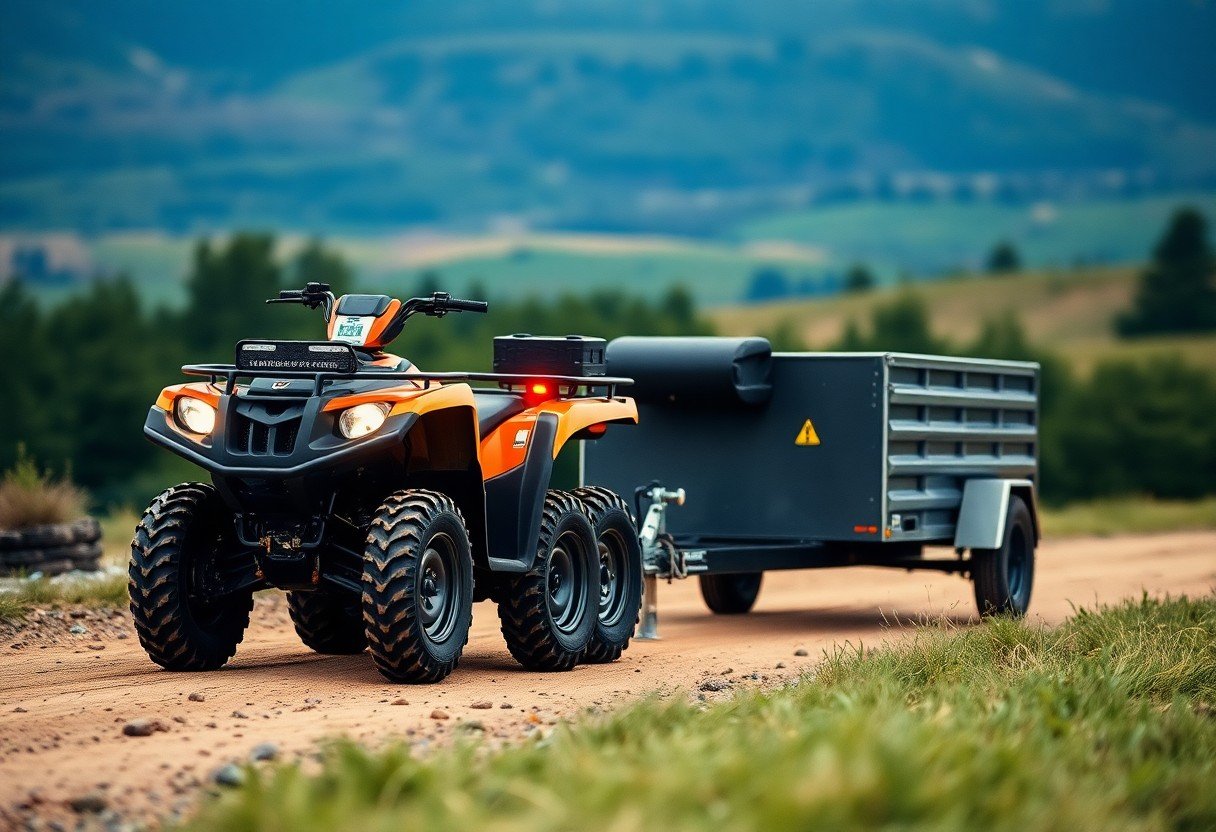
To protect your valuable cargo, enclosed trailers offer a secure and weather-resistant option. Ideal for transporting sensitive items or equipment, they keep everything safe from the elements and theft during travels.
Towing an enclosed trailer with your ATV not only safeguards your belongings but also enhances your overall traveling experience. Depending on your specific needs, you can choose different sizes and configurations to ensure a perfect fit for your gear.
Important Factors to Consider
Clearly, towing a trailer with your ATV requires careful consideration of several factors to ensure safe operation. Key points to keep in mind include:
- ATV weight capacity
- Trailer size and weight
- Hitch compatibility
The right combination of these factors can significantly impact your towing experience and safety.
ATV Weight Capacity
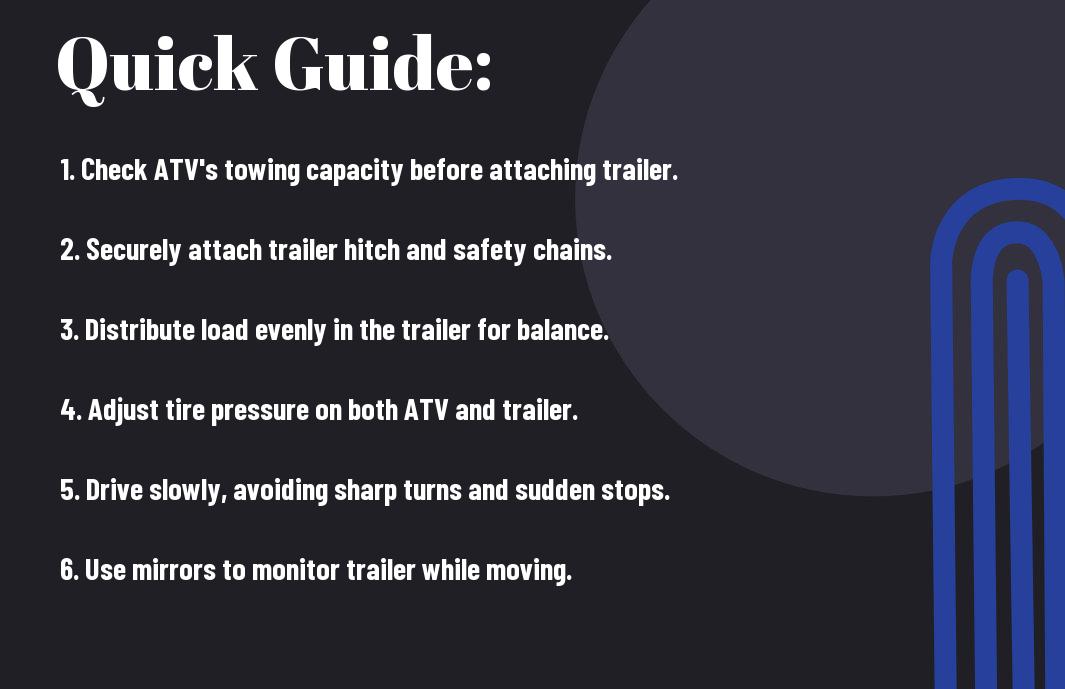
Now, it’s vital to check your ATV’s weight capacity before towing a trailer. Exceeding this limit can lead to stability issues, affecting handling and braking, which can pose safety risks. Always refer to your owner’s manual to find the manufacturer’s recommended capacity.
Trailer Size and Weight
Clearly, selecting the appropriate trailer size and weight is vital for safe towing. An oversized or heavy trailer can strain your ATV, making it harder to maneuver and control. Ensure that the trailer fits comfortably within your ATV’s towing limits.
Consider choosing a trailer that complements your ATV’s capabilities. A lightweight and compact trailer will offer better handling and stability, making towing more manageable. Additionally, take into account the length and width of the trailer concerning your ATV’s size, ensuring a balanced load that avoids swaying or tipping during transit.
Hitch Compatibility
For proper towing, it’s also necessary to check for hitch compatibility. Your ATV’s hitch should match the trailer’s connection system to ensure a secure and stable attachment. An incompatible hitch can lead to accidents or damage during towing.
For instance, some trailers may require specific hitch types such as ball hitches or pin hitches. If you are unsure which hitch type you need, consult with your ATV’s manual or seek expert advice. Ensuring a proper fit not only safeguards your equipment but also enhances your towing experience.
Tips for Safe Towing
Many factors contribute to safe towing with an ATV. Here are some tips to keep in mind:
- Ensure your ATV is rated for towing.
- Check the trailer’s brakes and lights.
- Secure your load properly.
- Maintain a lower speed when towing.
- Keep a safe distance from other vehicles.
Thou must prioritize safety at all times.
Pre-Towing Inspections
While preparing for a towing trip, conduct thorough pre-towing inspections. Check the ATV’s tow hitch and receiver for wear and tear. Ensure that the trailer is in excellent condition, including tires and brakes. Inspect the safety chains and wiring connections to guarantee everything is secure.
Proper Weight Distribution
The right weight distribution is vital for safe towing. When loading your trailer, place heavier items over the axle to maintain balance. This will prevent swaying during transit and reduce the risk of tipping.
With appropriate weight distribution, you enhance stability while towing. A well-balanced load minimizes strain on your ATV and improves handling. Distributing weight evenly across the trailer not only helps maintain control during turns but also ensures that you do not exceed your ATV’s towing capacity.
Driving Techniques
Proper driving techniques are important for safe towing. Always accelerate smoothly and avoid sudden movements, as abrupt changes can destabilize your load. Practice gradually braking to allow for the additional weight behind you.
Distribution of your driving techniques can significantly impact your overall towing experience. Pay attention to your surroundings and adjust your speed based on road conditions. Anticipate turns and stops well in advance, providing ample time to maneuver the added length and weight of your trailer for safer navigation.
Step-by-Step Guide to Towing a Trailer
Unlike what some may think, towing a trailer with an ATV requires careful preparation and execution. This step-by-step guide will ensure you do it safely and efficiently. Below is a breakdown of the necessary steps you need to follow:
| Step | Description |
| 1 | Preparing the ATV and Trailer |
| 2 | Connecting the Trailer to the ATV |
| 3 | Testing the Setup |
Preparing the ATV and Trailer
Now, before you begin towing, ensure your ATV is in good condition. Check the tires, brakes, and lights. Also, make sure the trailer is compatible with your ATV and inspect it for any damages or issues. Proper preparation sets the foundation for a safe towing experience.
Connecting the Trailer to the ATV
Some key steps are involved in securely connecting the trailer to your ATV. First, align the trailer with the ATV’s hitch and lower the trailer coupler onto the hitch ball. Ensure the coupler is securely latched to avoid any detachment during travel.
Trailer stability is dependent on a proper connection. After latching the coupler, attach a safety pin or clip if available. Then, connect the safety chains by crossing them beneath the trailer tongue and attaching to the ATV. Lastly, check that all electrical connections, if applicable, are functioning properly.
Testing the Setup
One important step is to test the setup before hitting the road. With the trailer secured, perform a quick walk-around inspection to ensure everything is in place, and adjust as needed. Take a short test drive in an open area to check for stability and the responsiveness of your ATV with the trailer attached.
Trailer responsiveness is vital for safe towing. Pay attention to how your ATV handles during this test drive. Listen for any unusual noises and feel for lack of control or swaying. Address any issues immediately before proceeding on your journey.
Pros and Cons of Towing with an ATV
Despite the versatility of ATVs, towing with them comes with both advantages and disadvantages. Understanding these can help you make informed decisions for safe and efficient towing.
| Pros | Cons |
|---|---|
| Higher maneuverability | Limited towing capacity |
| Access to rugged terrain | Stability concerns |
| Easier to park | More challenging to connect/disconnect |
| Lower maintenance costs | Potential for overheating |
| Efficient for small loads | Less visibility with a trailer |
Advantages of ATV Towing
Even with limitations, towing with an ATV can offer numerous advantages. Their compact design allows you to access tight spaces and rugged areas that larger vehicles cannot reach. You’ll also find that ATVs are typically lighter, which can result in better fuel efficiency when towing smaller loads.
Disadvantages and Limitations
Little do many realize, towing with an ATV does come with some notable downsides. Their limited towing capacity means they are not suited for heavier trailers, which could lead to strain and potential breakdowns.
For instance, many ATVs have a towing capacity between 1,200 to 2,000 pounds, significantly lower than standard trucks or SUVs. Additionally, the stability of a loaded trailer can become an issue, especially on uneven terrain. You may find that connecting or disconnecting a trailer can be cumbersome, requiring more effort than with a standard vehicle. Finally, visibility can be compromised when a trailer is hitched, making it harder to navigate tight spots safely. Recognizing these limitations is important for safe towing practices.
Maintenance and Care for Towed Trailers
Once again, ensuring the longevity and safety of your towed trailer requires ongoing maintenance and care. Regular inspections of your trailer’s tires, brakes, and hitch connection will help you avoid unnecessary problems. For a comprehensive guide, visit this A Guide To Using ATV Trailers that covers vital maintenance practices.
Regular Checks
To ensure your trailer is safe for towing, perform regular checks of its tires, lights, and braking systems. Inspect the hitch and coupling mechanism for any visible wear or damage. This way, you’ll catch potential issues before they become significant problems on the road.
Repairs and Upkeep
Upkeep of your trailer is an ongoing process that involves promptly addressing any repairs needed. Regular maintenance tasks such as lubricating moving parts and cleaning undercarriage components will extend the life of your trailer. Additionally, replacing worn-out brake pads or tires as they show signs of deterioration will ensure safe operation.
It’s vital to maintain a repair checklist and schedule routine inspections to keep your trailer in top condition. By doing so, you minimize the risk of unexpected breakdowns and improve the overall towing experience. Staying proactive with upkeep helps you enjoy your adventures with peace of mind.
Final Words
So, ensuring safe towing with your ATV involves understanding the proper techniques and adhering to safety guidelines. Always check your equipment, maintain the correct weight distribution, and practice your turning and braking with a trailer. For further insights on Securing the ATV and Driving With a Trailer, you can enhance your knowledge and improve your skills. With the right approach, you can enjoy a safe and efficient towing experience.
FAQ
Q: What type of trailer is best for towing with an ATV?
A: The best type of trailer for towing with an ATV typically includes lightweight options like utility trailers or small camping trailers. Look for a trailer that is within the towing capacity of your ATV, and ensure it has a proper hitch compatible with your ATV’s towing setup.
Q: How can I determine the towing capacity of my ATV?
A: The towing capacity of your ATV can usually be found in the owner’s manual or on the manufacturer’s website. If these options are unavailable, you can also contact the manufacturer directly. Check the specifications for your specific model to ensure safe towing practices.
Q: What should I consider when loading a trailer for towing?
A: When loading a trailer, distribute the weight evenly from front to back and side to side. Keep heavier items closer to the axle of the trailer to maintain balance and stability. Avoid exceeding the trailer’s weight limit, and consider the total weight in relation to your ATV’s towing capacity.
Q: Are there any safety gear requirements for towing a trailer with an ATV?
A: Yes, safety gear requirements may vary by region, but generally include using a properly rated hitch and safety chains. Additionally, consider using a trailer brake system if towing heavier loads, and always wear a helmet and other protective gear while riding the ATV.
Q: What driving techniques should I use when towing with an ATV?
A: When towing with an ATV, adopt driving techniques that enhance stability and control. Slow down when cornering, avoid abrupt movements, and maintain a safe distance from other vehicles. Also, anticipate braking distances as towing will affect your stopping power.
Q: How can I ensure that my trailer is secure before towing?
A: To ensure your trailer is secure before towing, double-check that the hitch is properly connected and locked. Verify that safety chains are secured and in place, inspect the lights and brakes, and make sure tires are correctly inflated. Conduct a walk-around inspection of the trailer prior to departure.
Q: What precautions should I take when unloading a trailer after towing?
A: When unloading a trailer, ensure the ATV is parked on a stable surface and the trailer is securely attached with the parking brake engaged. Lower the trailer’s ramp gently, if applicable, and unload items one at a time to maintain balance and prevent tipping. Always be cautious of the load shifting as items are removed.
Leave a Reply