
There’s a lot to consider when planning your next ATV adventure, especially regarding trail permit requirements that vary from state to state. This guide will equip you with the imperative information you need to ensure you meet local regulations before hitting the trails. From permits to safety gear, we’ll help you navigate the rules in your area and provide tips for a smooth riding experience. Let’s get started so you can explore the great outdoors confidently and responsibly!
Types of ATV Trail Permit Requirements
To navigate the diverse landscape of ATV trail permit requirements, it’s imperative to understand the different types that may apply in various states. Each state may have specific regulations and categories for permits. Here are some common types:
| Permit Type | Description |
|---|---|
| Annual Permits | Permits valid for a full year. |
| Day Passes | Short-term permits for single-day use. |
| Seasonal Permits | Permits valid only during specific times of the year. |
| Local Area Permits | Permits for specific trails or regions. |
| Non-resident Permits | Special permits for out-of-state riders. |
After understanding the types of permits, you can better prepare for your next ATV adventure.
Motorized vs. Non-Motorized Trails
Requirements for using motorized versus non-motorized trails can differ significantly. For motorized trails, you typically need a permit specific to the vehicle type and sometimes registration for the ATV. Non-motorized trails may not require any permits, but it’s imperative to verify local regulations to ensure compliance.
Seasonal Variations in Permit Requirements
Motorized trail permit requirements can change with the seasons. Many states implement seasonal regulations that dictate when and where you can use your ATV based on environmental conditions and wildlife protection measures.
Understanding these seasonal variations is important for planning your outings. For example, certain trails may close during specific months to protect wildlife during breeding seasons, or winter trails may require different permits due to snowmobiles being allowed. Always check local guidelines before heading out, as this will ensure you have the correct permit type and avoid any potential fines while enjoying your ride.
Step-by-Step Guide to Obtaining Permits
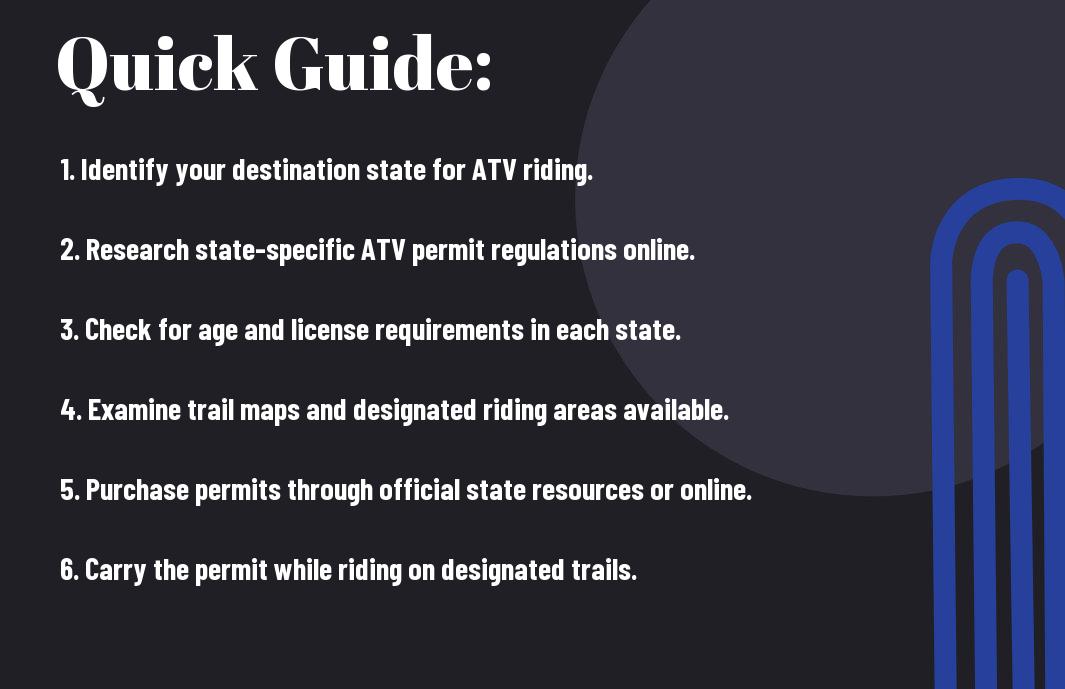
While navigating the process of obtaining your ATV trail permits, it’s imperative to follow a series of steps to ensure compliance with state regulations. This guide will outline the necessary actions you need to take, from research to application submission.
Permit Acquisition Steps
| Step | Description |
|---|---|
| 1 | Research the specific regulations in your state regarding ATV use. |
| 2 | Gather required documentation, such as identification and vehicle registration. |
| 3 | Complete the application form for the permit. |
| 4 | Submit the application along with any required fees. |
| 5 | Wait for approval and receive your permit by mail or email. |
Researching State Regulations
Any successful permit application begins with thorough research into your state’s specific regulations regarding ATV use. Understanding restrictions, designated trails, and permit requirements will set a solid foundation for your application process.
Application Process Overview
If you’re ready to apply for your ATV trail permit, understanding the application process is imperative. Each state may have different application procedures, including forms to fill out and fees required, all of which you’ll need to complete accurately to ensure timely approval.
Plus, many states offer online applications, making it even simpler for you to submit your permit request from the comfort of your home. Ensure that you provide all necessary documentation and double-check for accuracy before hitting submit. This will save you time and potential complications down the road when accessing the trails.
Factors Influencing ATV Trail Permit Requirements
Despite the excitement of hitting the trails, various factors significantly influence ATV trail permit requirements across states. These may include:
- State legislation
- Local governance policies
- Environmental protection regulations
- Safety and education requirements
This complex web of considerations underscores the importance of understanding the guidelines specific to your area.
State and Local Laws
With differing regulations from state to state, it’s important for you to stay informed about local laws governing ATV use. Each state may have its own set of rules concerning registration, permits, and other legal requirements that you must follow to ensure safe and legal riding.
Environmental Considerations
Even if you are thrilled about exploring new ATV trails, environmental protections should remain at the forefront of your planning. Each state often establishes regulations to safeguard natural resources, wildlife habitats, and public lands from erosion and damage caused by ATV riders.
Requirements may dictate the type of trails available for your use, the best practices for minimizing environmental impact, and specific seasons when certain areas might be closed to protect wildlife breeding. It’s your responsibility to be aware of these regulations to avoid fines and ensure sustainable trail use that preserves nature for future enthusiasts.
Tips for Navigating Permit Applications
Your success in obtaining an ATV trail permit depends largely on how well you navigate the application process. Here are some tips to help you:
- Research state-specific requirements
- Gather necessary documents early
- Check application deadlines
- Contact local offices for guidance
- Keep a copy of your application for future reference
This will ensure a smooth permit application experience. For more details, you can explore ACTIVITIES :: Off-Highway Vehicles | Montana FWP.
Common Pitfalls to Avoid
Any oversight in the application process can lead to delays or denials. Make sure you double-check all forms for completeness and accuracy, as missing information can stall your permit. Additionally, ensure you’re applying for the correct type of permit relevant to your ATV use to avoid unnecessary complications.
Resources for Assistance
Permit applications can be complex, but you can simplify the process by seeking help. Many state agencies provide resources and contacts dedicated to assisting with permit inquiries. Check local government websites, or directly reach out to officials who handle ATV registrations and permits for expert guidance.
Pitfalls in the permit application process can often be avoided by consulting these resources. Use your local state agency’s hotline or online platforms to clarify any confusion and gather the most accurate information. This proactive approach will help you stay informed and enhance your chances of a successful permit application.

Pros and Cons of ATV Trail Permits
Keep in mind that ATV trail permits come with both benefits and drawbacks. Understanding these can help you make informed decisions about your riding experience.
Pros and Cons of ATV Trail Permits
| Pros | Cons |
|---|---|
| Ensures responsible riding | Costs associated with permits |
| Funds trail maintenance | Potential restrictions on access |
| Promotes safety and education | Complex permit processes |
| Encourages environmental protection | Limited trail options without permits |
| Enhances rider experience through managed trails | Variability in regulations by state |
Benefits of Compliance
Pros of adhering to ATV trail permit regulations include safer riding experiences and increased opportunities for trail access. By following the rules, you contribute to better-maintained trails, benefiting the community and future riders. In addition, your efforts support sustainability and encourage responsible use of natural resources.
Challenges and Limitations
Compliance with ATV trail permit regulations can present challenges for you. Navigating complex rules and varying state requirements may lead to confusion about what is needed for legal riding.
To further elaborate, the difficulty of understanding regulations can sometimes deter riders from obtaining necessary permits, potentially leading to unintentional violations. In addition, varying state laws can create inconsistency, which may complicate travel to multiple states. Balancing the desire for adventure with legal requirements is important, so remaining informed is vital to your riding enjoyment.
State-by-State Permit Summary
Now that you have a comprehensive understanding of ATV trail permit requirements, it’s crucial to note that various states have distinct rules and regulations. This summary will equip you with quick insights to ensure you stay compliant with state-specific ATV yield with permits. It all depends on where you plan to ride.
Overview of Key States
With each state having its unique permit requirements and fees, you must familiarize yourself with the nuances to enjoy a seamless riding experience. Key states like California, Texas, and Florida each offer different regulations, so it’s advisable to check local laws to avoid any penalties.
Comparison of Permit Processes
Permit processes can vary significantly across states. Here’s a quick comparison:
| State | Permit Requirement |
|---|---|
| California | State permit required for most trails |
| Texas | No state permit required; local regulations apply |
| Florida | Permit required for certain areas, check local guidelines |
A detailed understanding of the permit processes will help you navigate your adventures more efficiently. Pay attention to specific state rules, timelines for obtaining permits, and whether online or in-person applications are needed. By being proactive, you can focus on what matters most – enjoying your ATV experience!
| State | Process Details |
|---|---|
| California | Visit state website for application forms and fees; online renewals available |
| Texas | Check with local authorities; usually straightforward with fewer regulations |
| Florida | Applications available online; additional safety courses may be required |
To wrap up
Following this overview of state-by-state ATV trail permit requirements, you should now have a clearer understanding of the regulations that apply to your riding adventures. Each state has unique laws that may affect your access to trails, and it’s crucial to stay informed about the specific permits and registrations needed in your area. By ensuring you comply with these requirements, you can enjoy a safe and enjoyable experience while minimizing legal complications and contributing to the preservation of trails for future riders.
FAQ
Q: What are the general ATV trail permit requirements for each state?
A: Each state has different ATV trail permit requirements based on their laws and regulations. Generally, riders must ensure that their ATVs are registered and may need to purchase a specific trail permit or sticker to use designated ATV trails. It is advisable to check with the state’s natural resources or wildlife department for precise information and updates regarding these requirements.
Q: Do I need a driver’s license to operate an ATV on public trails?
A: The requirements for having a driver’s license to operate an ATV on public trails vary by state. Some states require riders to have a valid driver’s license, while others may allow youth or novice riders to operate ATVs under certain conditions, such as being accompanied by an adult. Checking state-specific regulations is important to ensure compliance.
Q: Are there age restrictions for ATV riders in different states?
A: Yes, age restrictions for ATV riders differ from state to state. Many states have age limits and may require young riders to complete an ATV safety course or adhere to certain regulations such as riding under adult supervision. Review specific state laws to understand the age-related restrictions that apply.
Q: How do I obtain an ATV trail permit in my state?
A: To obtain an ATV trail permit, you typically need to apply through your state’s wildlife or natural resources department. The application process may involve submitting forms, paying a fee, and sometimes providing proof of registration. Most states offer the option to apply online, by mail, or in-person at designated locations.
Q: Are there different permits for different types of trails in a state?
A: Yes, some states issue different permits for various types of trails, such as designated ATV trails, state parks, and off-road areas. Each type of trail may have specific rules and permit requirements. It’s vital to consult the relevant state department for the specific trails you plan to use to determine which permit applies.
Q: What should I do if I plan to travel through multiple states with my ATV?
A: If you plan to travel through multiple states, check the ATV trail permit requirements for each state you will be traversing. Ensure that you have the necessary permits and understand the regulations specific to each state. It may be beneficial to keep documentation of your registration and permits accessible while riding.
Q: Is it possible to get fined for not having the appropriate ATV trail permit?
A: Yes, riding an ATV on designated trails without the proper trail permit can result in fines and penalties. Enforcement varies by state, but authorities typically patrol popular riding areas to ensure compliance with local laws. To avoid fines, ensure you are familiar with and adhere to all permit requirements before you ride.
Leave a Reply