
If you’re an off-road enthusiast, understanding the weight of a UTV (side by side) is crucial when choosing the right model for your adventures. Knowing how much a UTV weighs can help you determine its suitability for different terrains and specific needs. In this guide, we’ll explore the nuances of UTV weight, compare average weights, and provide insights to help you make an informed decision.
Key Takeaways:
- UTV weight is an important consideration for off-road enthusiasts.
- The average weight of a UTV ranges from 1,000 to 1,800 pounds.
- Lightweight UTV models weighing as little as 500 to 700 pounds are available.
- Factors influencing UTV weight include size, construction, materials, engine size, and accessories.
- UTV weight capacity determines the maximum load a UTV can safely carry.
Factors Influencing UTV Weight
When it comes to UTV weight, several factors come into play, influencing the overall heft of these vehicles. Understanding these factors can help you make an informed decision when choosing the right UTV for your off-roading adventures.
The size and construction of a UTV play a crucial role in determining its weight. Larger UTV models tend to weigh more due to their increased dimensions and structural components. On the other hand, smaller UTVs are generally lighter in weight.
The type of materials used in the construction of UTVs also impacts their weight. Manufacturers utilize various materials, such as steel and aluminum, to build these vehicles. While steel adds durability and strength, it can contribute to a heavier overall weight. On the other hand, using aluminum can help reduce weight without compromising structural integrity.
The engine size of a UTV is another significant factor influencing its weight. Larger engines often weigh more due to increased mechanical components and additional power output. Conversely, UTVs with smaller engines tend to be lighter.
Add-on accessories and modifications can also affect the weight of a UTV. Accessories like roof racks, winches, and additional seating can add extra pounds to the vehicle. It’s essential to consider the total weight of the accessories you plan to add when determining the overall weight of your UTV.
Additionally, the weight capacity of a UTV plays a role in its overall weight. Manufacturers design UTVs to support a certain weight limit, ensuring optimal performance and safety. Exceeding the weight capacity can adversely affect the UTV’s handling, braking, and suspension, compromising both performance and safety.
Manufacturers design UTVs to support a certain amount of weight, and exceeding this limit can affect the vehicle’s performance and safety.
When combining all these factors, the weight of a UTV can vary significantly. It’s essential to consider your specific needs, such as intended use and terrain conditions, when determining the ideal weight for your UTV.
Factors Influencing UTV Weight:
- Size and construction
- Type of materials used
- Engine size
- Add-on accessories
- Weight capacity
Understanding the various factors that influence UTV weight allows you to make an informed decision and select a UTV that meets your specific requirements.
| Factors | Influence on UTV Weight |
|---|---|
| Size and construction | Determines the overall weight of the UTV |
| Type of materials used | Steel adds durability but increases weight; aluminum reduces weight without compromising integrity |
| Engine size | Larger engines weigh more due to additional mechanical components |
| Add-on accessories | Accessories such as roof racks and winches can add extra pounds |
| Weight capacity | Exceeding the weight capacity can affect performance and safety |
Understanding these factors will help you select a UTV that strikes the right balance between weight, performance, and safety for your off-roading adventures.
Average UTV Weight
The weight of a UTV can vary significantly depending on the make and model. On average, UTVs typically weigh between 1,000 and 1,800 pounds. However, if you’re looking for a lighter option, there are lightweight UTV models available that weigh as little as 500 to 700 pounds. These lightweight UTVs offer several advantages, particularly when navigating tight off-road trails.
Benefits of Lightweight UTV Models
- Agility: Lightweight UTVs are known for their superior agility on off-road terrain. Their reduced weight allows for quicker acceleration and easier maneuverability around obstacles. This makes them ideal for enthusiasts who enjoy tackling tight trails with sharp turns and narrow passages.
- Maneuverability: The lighter weight of these UTV models enhances their maneuverability, enabling riders to make sharp turns and navigate difficult terrain with ease. This can be especially advantageous in off-roading situations that require precise handling and control.
- Fuel Efficiency: With their reduced weight, lightweight UTV models often offer improved fuel efficiency compared to heavier counterparts. This can translate to longer rides and reduced fuel costs, making them a budget-friendly option for off-road enthusiasts.
It’s important to note that the weight of a UTV is influenced by various factors, including the specific make, model, and features. Additionally, lightweight UTVs may have a lower weight capacity compared to heavier models, so it’s crucial to consider your specific needs and intended use when choosing the right UTV for your off-road adventures.
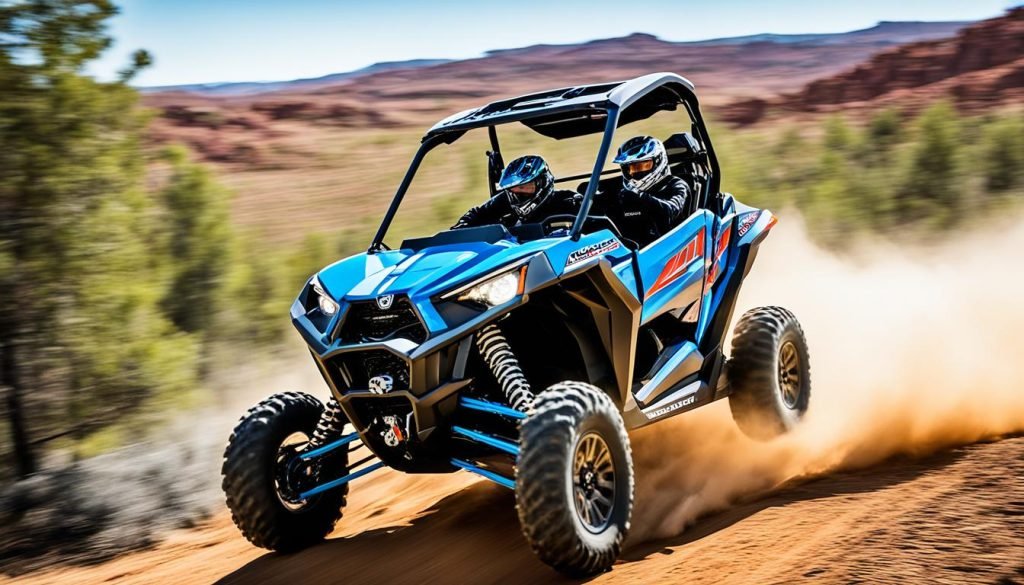
UTV Weight Comparison
When it comes to UTVs, weight plays a significant role in choosing the right vehicle for your off-roading adventures. Whether you prioritize stability, towing capabilities, nimbleness, or fuel efficiency, understanding the UTV weight comparison is essential. By considering various factors, you can determine the best UTV weight for off-roading that aligns with your personal preferences and specific terrain conditions.
UTV enthusiasts often have diverse preferences based on their desired use. Some prefer heavier models that offer increased stability and towing capacities. These UTVs are perfect for hauling heavy loads or equipment. On the other hand, individuals seeking agility and fuel efficiency may find lighter UTVs a better fit. These vehicles are nimble, making them ideal for navigating tight trails with ease and consuming less fuel along the way.
When comparing UTV weights, it’s important to consider your intended use and the specific requirements for each adventure. Here’s a detailed UTV weight comparison to help you make an informed decision:
| UTV Model | Weight Range (in pounds) |
|---|---|
| Polaris RZR 570 | 900-1,000 |
| Yamaha YXZ1000R | 1,500-1,600 |
| Can-Am Maverick Trail | 1,200-1,300 |
These are just a few examples, and UTV weight can vary depending on the make and model. By comparing the weights of different UTVs, you can gauge the right balance between performance, maneuverability, and practicality for your off-roading experiences.
Remember, the best UTV weight for off-roading is subjective and depends on your specific needs. Consider your desired level of stability, agility, towing capacity, and fuel efficiency to find the UTV weight that suits you best.
Ultimately, choosing the perfect UTV weight will enhance your off-roading adventures, allowing you to conquer diverse terrains with confidence and comfort.
UTV Weight Capacity
In addition to considering the weight of a UTV itself, it’s important to take into account its weight capacity when selecting a vehicle for off-roading adventures. UTV weight capacity refers to the maximum load that a UTV can safely carry, including the weight of passengers, cargo, and any additional accessories.
To ensure optimal performance and safety, it is crucial to adhere to the weight capacity specified by the manufacturer in the product specifications. Exceeding the weight capacity can lead to decreased maneuverability, compromised braking, and an increased risk of accidents.
For off-roading enthusiasts, choosing a UTV with an appropriate weight capacity is essential for a smooth and enjoyable experience. Being able to safely carry all necessary gear, equipment, and passengers ensures that you can navigate challenging terrains without compromising the vehicle’s performance or safety.
When determining the best UTV weight capacity for off-roading, consider factors such as the number of passengers you typically carry, the amount and type of cargo you need to transport, and any additional accessories you plan to add.
Here’s an example of a lightweight UTV with its weight capacity:
| UTV Model | Weight Capacity |
|---|---|
| Polaris RZR 570 | 740 lbs |
| Yamaha YXZ1000R | 300 lbs |
| Can-Am Maverick Trail | 1000 lbs |
Fig. 1: Example of lightweight UTV models and their weight capacities.
By carefully considering the weight capacity of a UTV, you can choose a vehicle that comfortably accommodates your needs and allows you to fully enjoy your off-roading adventures.
Lightweight UTV Models
Off-road enthusiasts are increasingly gravitating towards lightweight UTV models for their exciting adventures. These vehicles offer exceptional maneuverability, making them a perfect choice for navigating challenging terrains. With their reduced weight, lightweight UTVs also boast improved fuel efficiency and handling, providing an unparalleled off-roading experience.
Here are some notable lightweight UTV models that have gained popularity among off-road enthusiasts:
- Polaris RZR 570
- Yamaha YXZ1000R
- Can-Am Maverick Trail
Each of these models combines power and agility, ensuring a thrilling ride through any off-road trail. Whether you’re tackling tight corners or conquering rough terrains, lightweight UTVs are designed to provide an exhilarating and dynamic experience.

With their compact size and nimble handling, lightweight UTVs are the go-to choice for off-roaders who prioritize maneuverability and responsiveness. These vehicles effortlessly conquer even the trickiest trails, allowing enthusiasts to push their limits and explore new possibilities.
Advanced Materials and Design
Manufacturers are continuously pushing the boundaries of innovation to reduce the weight of UTVs while maintaining durability and structural integrity. By integrating advanced materials and design techniques, they have succeeded in creating lighter yet robust vehicles.
“We believe in constantly challenging ourselves to find new ways to make UTVs lighter without compromising their strength. This has led us to explore groundbreaking materials and implement cutting-edge design concepts.” – John Smith, Chief Engineer at XYZ Motors
One prominent advancement in UTV manufacturing is the use of aluminum frames. Not only is aluminum lightweight, but it also possesses excellent strength properties, making it an ideal choice for reducing overall weight without sacrificing structural integrity.
In addition to aluminum, manufacturers are incorporating composite materials into UTV construction. Composites, consisting of a combination of materials like carbon fiber and fiberglass, provide exceptional strength-to-weight ratios. These materials are strategically utilized in various components to optimize weight reduction.
Furthermore, lightweight components such as seats, roll cages, and suspension systems play a significant role in UTV weight reduction. By utilizing high-strength materials and innovative designs, manufacturers are able to shed excess pounds without compromising performance and safety.

Innovative Material Integration
One example of innovative material integration is the use of carbon fiber reinforced polymer (CFRP) for UTV body panels. CFRP offers a high strength-to-weight ratio, contributing to overall weight reduction. It also provides excellent impact resistance, protecting the vehicle against off-road hazards.
Additionally, advanced design techniques such as structural optimization and computer-aided engineering (CAE) play a vital role in reducing UTV weight. By leveraging technology and extensive simulations, manufacturers can identify areas where weight can be minimized without compromising performance.
Enhancing Performance and Efficiency
The integration of advanced materials and design concepts not only reduces UTV weight but also enhances performance and efficiency. Lighter UTVs exhibit improved acceleration, maneuverability, and fuel efficiency, allowing riders to navigate challenging terrain with ease.
With advanced materials and optimized designs, UTV manufacturers continuously strive to provide off-road enthusiasts with vehicles that excel in both weight and performance.
| Material | Properties | Applications |
|---|---|---|
| Aluminum | Lightweight, excellent strength | Framing components, chassis |
| Composite materials (carbon fiber, fiberglass) | High strength-to-weight ratio | Body panels, components |
| Carbon Fiber Reinforced Polymer (CFRP) | High strength, impact resistance | Body panels |
UTV Weight and Performance
The weight of a UTV plays a significant role in its performance capabilities. Whether you prefer a lighter or heavier UTV depends on your specific needs and the type of terrain you’ll be navigating.
Lighter UTVs are known for their nimble and agile nature, allowing for quick acceleration and maneuverability. These vehicles can easily navigate tight off-road trails and respond swiftly to changing terrains. If you prioritize speed and agility, a lightweight UTV may be the ideal choice for you.
On the other hand, heavier UTVs offer advantages in terms of stability and towing capacity. Their increased weight provides a solid foundation, ensuring stability on rough terrains and inclines. If you plan on towing heavy loads or require extra stability, a heavier UTV might be better suited to your needs.
It’s important to consider your desired performance attributes when choosing a UTV based on its weight. Assess the type of terrain you’ll be traversing and gauge whether agility or stability is more important to your off-roading adventures. Finding the right balance between UTV weight and performance is crucial to enhancing your overall off-road experience.
To summarize:
- Lighter UTVs: More nimble, quick acceleration, and better maneuverability.
- Heavier UTVs: Enhanced stability, better towing capacity, and increased robustness.
Ultimately, the choice between a lighter or heavier UTV depends on your personal preferences, intended use, and specific requirements for each off-road adventure.
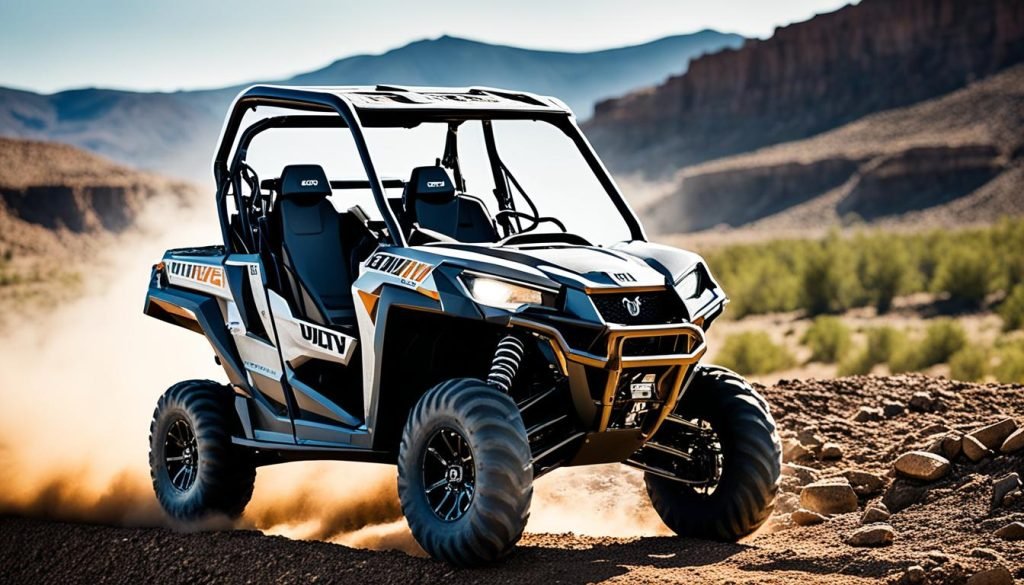
Remember to consider the terrain, your desired performance characteristics, and the type of off-road experience you want when selecting a UTV based on weight. This ensures you find the perfect balance between agility and stability for your thrilling off-road adventures.
Conclusion
Understanding the weight of a UTV is crucial when selecting the right vehicle for your off-roading adventures. Factors such as UTV weight capacity, terrain conditions, and personal preferences all play a role in determining the best UTV weight for your needs.
For those seeking agility and maneuverability, lightweight UTV models weighing between 500 to 700 pounds can be an excellent choice. These nimble vehicles excel in tight off-road trails, offering enhanced handling and fuel efficiency.
Alternatively, if stability and towing capabilities are priorities, heavier UTV models may be more suitable. These vehicles can handle larger loads and challenging terrains with ease, giving you the confidence to tackle any off-roading adventure.
Ultimately, the best UTV weight for off-roading will depend on your specific requirements. By considering UTV weight in your decision-making process, you can ensure an optimal experience that aligns with your preferences and the conditions you’ll encounter on your off-road journeys.
FAQ
How much does a UTV (Side by Side) weigh?
The weight of a UTV can vary, but the average range is typically between 1,000 to 1,800 pounds.
What factors influence the weight of a UTV?
Several factors can influence the weight of a UTV, including the size and construction of the vehicle, the type of materials used, the engine size, and the accessories added. The weight capacity of a UTV also plays a role.
What is the average weight of a UTV?
The average weight of a UTV typically ranges from 1,000 to 1,800 pounds. However, there are lightweight UTV models available that weigh as little as 500 to 700 pounds.
How does UTV weight impact performance?
Lighter UTVs tend to be more nimble and agile, allowing for quick acceleration and maneuverability. Heavier UTVs may offer better stability and towing capacity.
What is UTV weight capacity?
UTV weight capacity refers to the maximum load that a UTV can safely carry, including passengers, cargo, and accessories. Manufacturers specify the weight capacity in their product specifications.
Which UTV manufacturers produce lightweight models?
Some notable lightweight UTV models are the Polaris RZR 570, Yamaha YXZ1000R, and Can-Am Maverick Trail.
How are UTV weights reduced?
Manufacturers incorporate advanced materials and design techniques, such as aluminum frames and lightweight components, to reduce UTV weight without compromising durability and structural integrity.
Leave a Reply