
ATV backfiring can be frustrating and concerning for any rider. Understanding the causes behind this issue is imperative to maintaining your vehicle’s performance and longevity. In this guide, you’ll explore potential reasons for the backfiring, from fuel problems to ignition issues, and discover effective solutions to get your ATV running smoothly again. By addressing these concerns promptly, you can ensure a safer and more enjoyable riding experience.
Understanding Backfiring in ATVs
While riding your ATV, experiencing backfiring can be alarming. This phenomenon typically occurs when combustion within the engine does not happen cleanly, resulting in a loud popping noise. Understanding backfiring is important as it can signify underlying issues that, if not addressed, may lead to more severe damage over time. By observing how your ATV responds, you can identify potential problems early on.
Definition of Backfiring
On a technical level, backfiring is the result of fuel igniting outside of the combustion chamber, often in the exhaust system. This premature detonation creates pressure waves that manifest as loud popping sounds. Understanding this process can help you diagnose and resolve any issues leading to backfiring in your ATV.
Common Types of Backfiring
Identifying the specific type of backfiring your ATV experiences can guide you toward effective solutions. Common types include:
- Exhaust Backfire
- Intake Backfire
- Deceleration Backfire
- Afterfire
- Misfire
Recognizing the symptoms and causes of these backfire types will allow you to troubleshoot effectively.
| Type of Backfire | Description |
|---|---|
| Exhaust Backfire | Occurs when unburnt fuel ignites in the exhaust. |
| Intake Backfire | A combustion event occurs in the intake system. |
| Deceleration Backfire | Backfiring happens when the throttle closes suddenly. |
| Afterfire | Ignition happens after the engine stroke. |
| Misfire | A failure to ignite properly during the combustion cycle. |
For instance, exhaust backfire is particularly common when there are issues with the ATV’s fuel-to-air mixture or exhaust system. Each type of backfire can indicate different engine problems that require attention. Here are some additional types:
- Engine Timing Issues
- Faulty Spark Plugs
- Leaking Exhaust Gaskets
- Air Filter Blockages
- Rich Fuel Mixture
Recognizing the specific backfire type can help you take informed steps toward repairs and maintenance.
| Common Cause | Consequence |
|---|---|
| Richer Fuel Mixture | Causes engine to run improperly. |
| Worn Spark Plugs | Results in inefficient combustion. |
| Exhaust Leaks | Creates abnormal pressures. |
| Faulty Carburetor | Leads to improper fuel delivery. |
| Deteriorated Ignition System | Causes misfires and incomplete combustion. |
Causes of ATV Backfiring
You may be wondering what causes your ATV to backfire, and there are several common culprits. Issues can stem from fuel-related problems, ignition system faults, or exhaust system malfunctions. Identifying the exact cause is vital for effective troubleshooting. For more detailed information on how to address these problems, check out How to Fix ATV Backfiring | Finntrail Blog.
Fuel-Related Issues
Now, fuel-related issues can lead to backfiring, often due to a rich or lean fuel mixture. An improper balance can create incomplete combustion, resulting in unburned fuel igniting in the exhaust. Check your fuel lines, filters, and carburetor settings to ensure everything is functioning properly.
Ignition System Problems
Backfiring can also occur due to problems in your ignition system. Worn-out spark plugs, damaged wires, or inadequate timing can all contribute to backfiring issues.
For instance, if your spark plugs are old or improperly gapped, they may fail to ignite the fuel-air mixture efficiently. This can lead to unburned fuel entering the exhaust system and igniting, causing the backfiring sound you’ve noticed.
Exhaust System Malfunction
Assuming your exhaust system has a leak or blockage, it can significantly impact engine performance and lead to backfires. Proper exhaust flow is vital for your ATV’s overall function.
Issues like cracks in the exhaust or a faulty muffler can prevent gases from escaping efficiently. This can create pressure build-up, causing unburned fuel to ignite and result in loud backfiring noises. Regular inspections can help you spot these problems before they escalate.
Factors Contributing to Backfiring
Many factors can contribute to your ATV backfiring. Understanding these elements will help you troubleshoot and fix the issue:
- Incorrect air-fuel mixture
- Faulty spark plugs
- Leaking exhaust systems
- Dirty carburetors
- Improper timing adjustments
This knowledge can help you prevent backfiring issues and enhance your ATV’s performance.
Environmental Influences
While riding in extreme temperatures or at high altitudes, your ATV’s engine can experience changes in air density and oxygen levels. These environmental influences may affect the air-fuel mixture, leading to backfiring when your engine runs lean or experiences detonation. Pay attention to these factors, especially when riding in unconventional conditions.
Maintenance Practices
On the other hand, regular maintenance of your ATV can significantly reduce the likelihood of backfiring. Ensuring that you inspect and clean the spark plugs, air filter, and fuel system can keep your engine running smoothly.
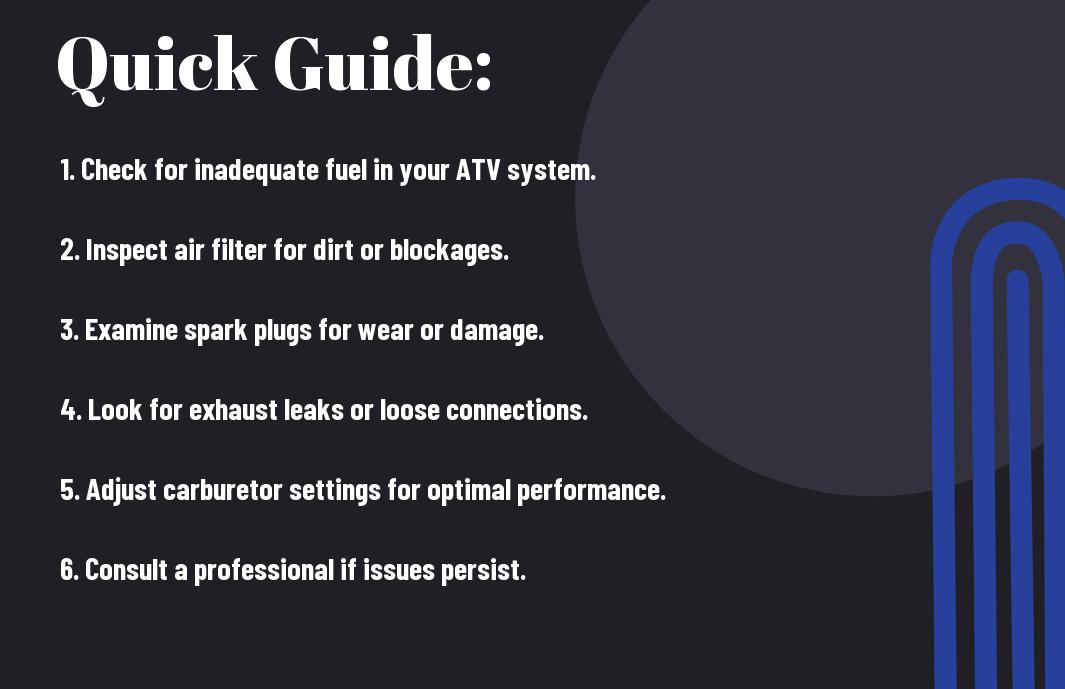
A well-maintained ATV is less prone to issues that could lead to backfiring. Regularly check the air filter for dirt, inspect the spark plugs for wear, and clean out your fuel system to prevent blockages. Also, ensure that your carburetor is functioning properly and that there are no leaks in your exhaust system. By prioritizing these maintenance tasks, you can keep your ATV’s engine in optimal condition and minimize the risk of backfiring.
Step-by-Step Inspection Guide
Keep your ATV performing at its best by following this inspection guide. This will help you identify the source of backfiring in a systematic manner.
Inspection Checklist
| Check Fuel Quality | Ensure you are using clean, high-octane fuel. |
| Inspect Spark Plug | Look for wear and deposits, and replace if necessary. |
| Examine Air Filter | Clean or replace if clogged with dirt. |
| Check Exhaust System | Inspect for leaks or damage. |
Tools Needed
Assuming you are ready to tackle the inspection, here are some crucial tools you will need:
- Socket wrench set
- Screwdriver set
- Fuel line cleaner
- Air filter cleaner
- Replacement spark plugs
Inspection Process
For an effective inspection, begin with the fuel quality and work your way through each component methodically.
StepbyStep, start by checking the fuel quality to ensure it meets the specifications for your ATV. Next, remove the spark plug and check for carbon buildup or wear. After that, examine the air filter for any blockages that could restrict airflow. Finally, inspect the exhaust system for leaks or damage that could cause backfiring. Keep track of any irregularities you find, as they may indicate what needs to be fixed to resolve your ATV’s backfire issue.
Tips for Preventing Backfiring
To minimize the chances of your ATV backfiring, consider implementing these preventive measures:
- Perform regular maintenance on your ATV.
- Check and adjust fuel and air mix settings.
- Inspect the exhaust system for leaks.
- Use high-quality fuel.
- Keep your engine and exhaust clean.
This attention to detail can greatly enhance your ATV’s performance and longevity.
Regular Maintenance
Little neglect can lead to significant issues, including backfiring. Consistently change your oil, replace air and fuel filters, and inspect the spark plugs for wear and tear. Keeping your ATV in top shape can prevent backfiring and ensure smooth operation.
Adjustments to Fuel and Air Mix
Regular adjustments to the fuel and air mix may be necessary to prevent backfiring. An improper ratio can cause incomplete combustion, leading to backfire sounds. You should be aware of your vehicle’s specifications and adjust accordingly to ensure optimal performance.
Understanding the balance between fuel and air is vital for your ATV’s engine to work efficiently. A rich or lean mixture can result in backfiring, so fine-tuning these settings according to your manufacturer’s guidelines will help you achieve the right balance. Conduct regular checks and make adjustments as needed to maintain peak performance and prevent those disturbing backfire pops.
Pros and Cons of Different Fixes
Unlike some fixes that may provide a quick solution to your ATV’s backfiring issue, others could lead to more complex problems down the line. It’s vital to weigh the benefits and drawbacks before attempting any repairs. The following table outlines various approaches and their respective pros and cons:
| Fix | Pros | Cons |
|---|---|---|
| Adjusting Fuel Mixture | Improves performance | Requires precision |
| Replacing Spark Plug | Easy to do | May not solve the issue |
| Checking Exhaust System | Identifies leaks | Time-consuming |
| Using Fuel Additives | Quick fix | Temporary solution |
| Adjusting Timing | Enhances power | Complex adjustment |
| Clean Carburetor | Boosts efficiency | Requires mechanical skill |
| Upgrade Exhaust | Improves sound | Costly |
| Professional Diagnosis | Expert assessment | Higher costs |
| Replacing Fuel Filter | Protects engine | Limited impact |
| Visiting Forums for Advice | Community support | May lead to misinformation |
DIY Solutions
The process of addressing backfiring in your ATV can often be tackled with DIY solutions. Conducting simple checks, such as inspecting hoses and changing the spark plug, can save you time and money. With a little patience and the right tools, you can resolve minor issues yourself before escalating to more complex repairs.
Professional Services
With professional services, you gain access to experienced technicians who can accurately diagnose and repair your ATV’s backfiring. These experts possess the tools and knowledge necessary to address underlying issues that may not be immediately apparent.
Different service centers may offer a variety of diagnostics and tuning options, ensuring your ATV receives the proper care. While opting for a professional approach may entail higher costs, it often results in a thorough evaluation and a long-term fix, giving you peace of mind while riding.
Summing up
Now that you understand the potential causes of your ATV backfiring, such as fuel issues, ignition problems, or exhaust leaks, you can effectively diagnose and address the issue. By maintaining your machine and promptly fixing these problems, you can enjoy a smoother ride. For further insights on ‘Backfiring & loss of power’, you can explore additional resources here. Ensuring your ATV runs optimally will enhance your riding experience.
FAQ
Q: What causes my ATV to backfire?
A: Backfiring in an ATV can be caused by several factors, including a rich fuel mixture, an exhaust leak, or ignition timing issues. A rich fuel mixture means there is too much fuel and not enough air in the combustion chamber, leading to unburned fuel igniting in the exhaust system. An exhaust leak can allow oxygen to enter the exhaust, causing combustion to occur outside the engine. Lastly, incorrect ignition timing can cause the fuel to ignite at the wrong moment, resulting in a backfire.
Q: How can I tell if a rich fuel mixture is causing the backfire?
A: Signs of a rich fuel mixture include black smoke coming from the exhaust, a strong fuel odor, and rough idling. If your ATV exhibits any of these symptoms alongside backfiring, it is likely that the mixture is too rich. Adjusting the carburetor or fuel injection settings can often resolve this issue.
Q: Can a dirty air filter lead to backfiring in my ATV?
A: Yes, a dirty or clogged air filter can restrict airflow to the engine, leading to a rich fuel mixture which often results in backfiring. Regularly checking and cleaning or replacing the air filter can prevent this problem and help maintain optimal engine performance.
Q: What role does the ignition system play in backfiring?
A: The ignition system’s timing is vital for proper combustion. If the timing is off, it can lead to premature or delayed ignition of the air-fuel mixture, causing a backfire. Checking the spark plugs and ensuring they are functioning correctly, along with verifying ignition timing, can help eliminate this issue.
Q: Could any modifications to my ATV increase the chances of backfiring?
A: Yes, modifications such as installing a high-performance exhaust, changing the carburetor, or adjusting fuel mappings can increase the likelihood of backfiring if not done correctly. These modifications might alter the air-fuel mixture or exhaust flow, so it’s important to either understand these changes or consult a professional to ensure proper adjustments are made.
Q: How do I fix an exhaust leak that may cause backfiring?
A: To fix an exhaust leak, start by inspecting all connection points and the exhaust pipes for cracks, holes, or loose clamps. You can use a visual inspection, listen for hissing sounds, or apply soapy water to check for bubbles in suspected areas. Once identified, you can either tighten connections, replace damaged pipes, or use high-temperature sealant to repair small leaks.
Q: When should I seek professional help for my ATV backfiring issues?
A: If after performing basic checks—like inspecting the air and fuel filters, spark plugs, and exhaust system—the problem persists, or if you suspect a deeper mechanical issue, it is best to seek the assistance of a professional. They have the tools and expertise to diagnose complex problems, including issues related to the fuel system, ignition components, or engine timing.
Leave a Reply